TFT LCD Modules for EV Charger Control Panels
EV charger control panels need readable TFT LCD modules, robust front glass, and stable supply for outdoor and semi-outdoor use.
EV charging equipment has moved from simple power hardware to connected industrial infrastructure. The display on the charger is not only a user interface; it is also a service window for technicians, operators, and maintenance teams. A well-selected TFT LCD module can make charging status, payment workflow, fault information, energy data, and service prompts easier to understand in demanding outdoor and semi-outdoor conditions.
For OEM buyers and engineers, the display decision should be made early. EV chargers often combine sunlight exposure, wide temperature change, electrical noise, touch operation, vandal-resistant cover glass, and long lifecycle expectations. Sunshine Display supplies industrial display modules, including LCD display modules up to 32 inches and small to medium-size TFT LCD modules for OEM applications. Teams comparing module options can start from the Sunshine Display industrial display module product range and narrow the specification according to charger type and installation environment.
Define the Charger Interface First
Not every EV charger needs the same display. A compact AC charger may need a small status screen for basic charging information. A public DC fast charger may require a larger color TFT LCD with touch input, multi-language UI, service menus, QR payment prompts, and clear fault messages. Fleet charging stations, energy storage cabinets, and charging control cabinets may prioritize maintenance readability over consumer-style visual polish.
Before selecting a module size, define the real screen content. Confirm the number of UI pages, expected font size, warning colors, icons, data fields, and operator distance. A 4.3 inch or 5 inch display can work for simple equipment status, while 7 inch, 10.1 inch, or larger TFT LCD modules may be more appropriate for interactive control panels and public-facing charging terminals.
Brightness and Sunlight Readability Matter
EV charging panels are often installed near parking areas, building entrances, solar energy systems, or outdoor cabinets. Even when the display is not under direct sunlight all day, strong ambient light can reduce contrast and make warning information harder to read. Brightness should be evaluated together with cover glass, surface treatment, viewing angle, and enclosure shading.
High brightness is useful, but it is not the only factor. A reflective front lens, air gap, low contrast UI, or poor viewing angle can still make a bright display difficult to read. Anti-glare or anti-reflective cover glass may help, and optical bonding can improve readability by reducing internal reflection. For applications that require stable viewing from different positions, IPS TFT LCD modules are often worth considering.
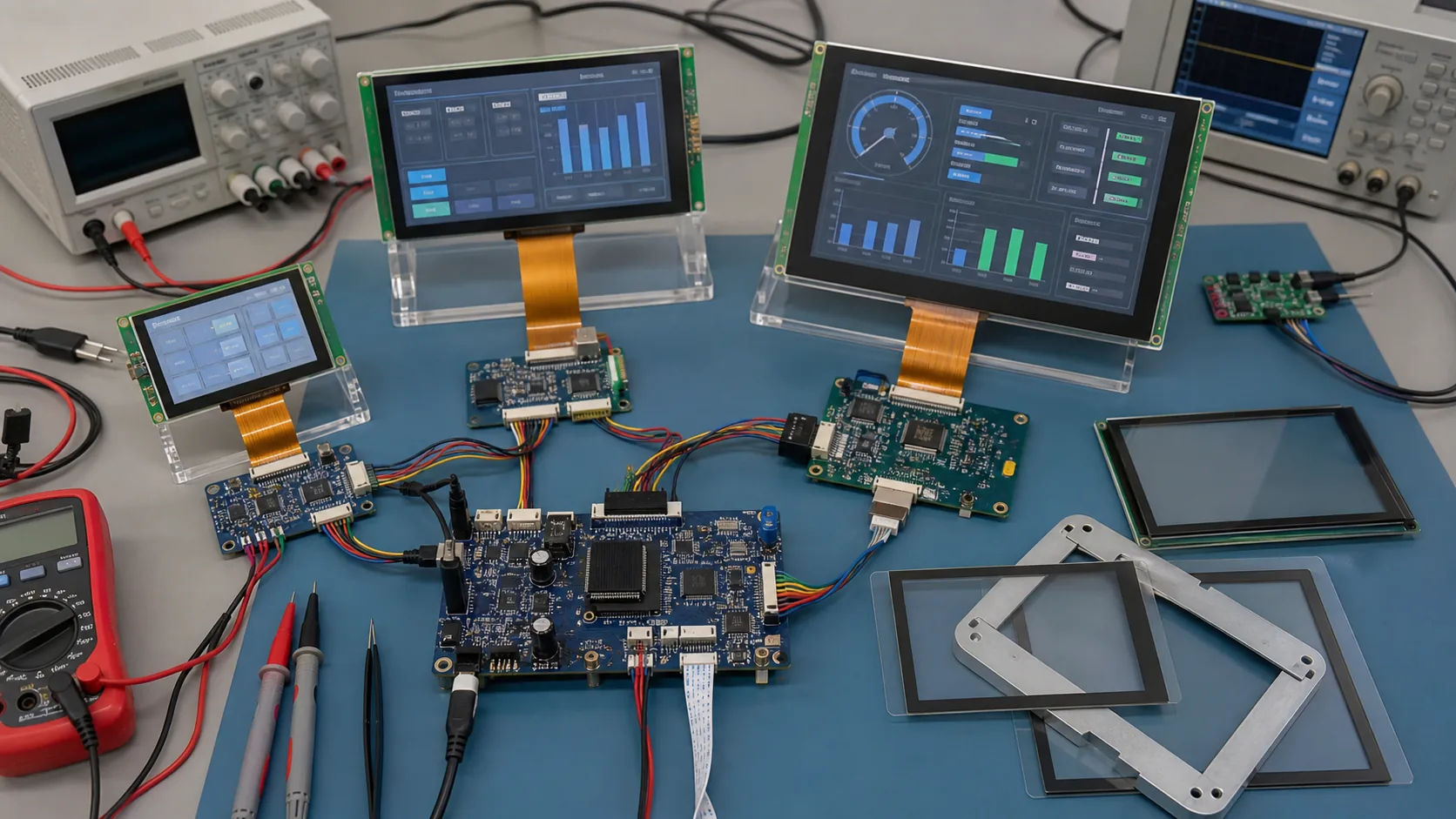 Validation should include interface, backlight, touch, cover lens, electrical noise, and mechanical mounting conditions.
Review Touch Operation and Cover Glass
Many EV charger panels use capacitive touch, physical keys, or a combination of both. If the charger is installed outdoors, the touch stack must be reviewed for wet fingers, gloves, cover glass thickness, false touch risk, and controller tuning. A module that works well on a lab bench may need adjustment after it is placed behind the final front panel.
Cover glass also affects mechanical strength and optical performance. Thicker glass can improve durability, but it may change touch sensitivity and increase reflection. The mechanical team should define cover lens thickness, printing area, bonding method, gasket compression, active area alignment, and installation tolerance before the display module is finalized. For touch-based charger interfaces, Sunshine Display's capacitive touch TFT LCD modules can be reviewed when a complete touch display stack is required.
Interface and Electrical Design
EV charger systems may use different host platforms, from simple MCU boards to embedded Linux controllers. The display interface must match the controller architecture, cable distance, EMC target, and available development resources. Common options may include RGB, LVDS, MIPI DSI, HDMI through an adapter board, or a customized control solution depending on size and resolution.
For industrial equipment, electrical noise is not theoretical. Power conversion, relays, contactors, long cable runs, and grounding conditions can affect display stability. Engineers should check power sequencing, backlight driver design, ESD protection, signal integrity, grounding, shielding, and connector retention. Early display samples should be tested in the real charger electrical environment whenever possible.
Temperature Range and Long-Term Supply
Charging equipment may be installed in hot parking lots, cold outdoor cabinets, or enclosed power rooms with limited airflow. The display module should be selected according to operating temperature, storage temperature, backlight lifetime, and expected service life. For outdoor or semi-outdoor projects, wide temperature TFT LCD modules may reduce project risk when standard modules cannot meet the environment.
Supply continuity is another major buying point. EV charger platforms often stay in production for years, and a display change can affect the enclosure, firmware, certification, and service parts. Buyers should ask about panel lifecycle, driver IC availability, FPC change control, backlight alternatives, and second-source options before moving from sample approval to mass production.
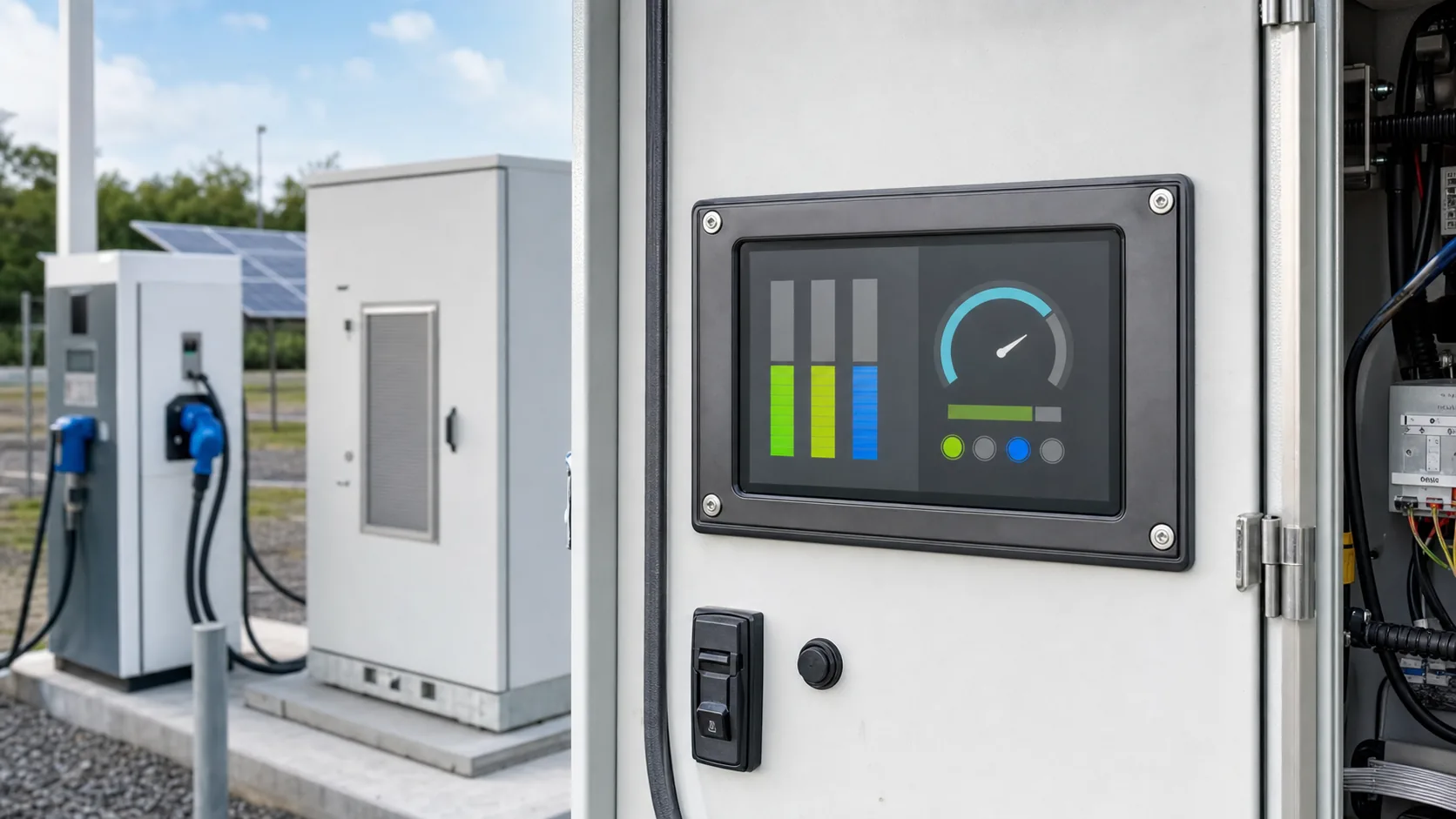 Outdoor and semi-outdoor equipment should review brightness, viewing angle, cover glass reflection, sealing, and temperature range together.
Practical Buying Checklist
When choosing a TFT LCD module for EV charger control panels, confirm display size, resolution, brightness, viewing angle, operating temperature, interface, touch type, cover glass, optical bonding option, backlight lifetime, connector direction, FPC length, mounting method, sample availability, MOQ, and lifecycle support.
The engineering team should also test the real UI, not only a colorful demo image. Use the final font size, warning colors, charging progress screens, service pages, and low-brightness/night mode. Check readability from standing height, seated driver position, side approach, and maintenance access position.
When E-Paper May Also Be Useful
Although this article focuses on TFT LCD modules, some EV charger and energy equipment projects can also use e-paper display modules for low-power asset labels, service tags, cabinet identification, or maintenance status. E-paper is useful when information changes occasionally and must remain visible without continuous display power. For interactive charger operation, however, TFT LCD remains the stronger choice.
Sunshine Display can support OEM display selection for industrial charging and energy equipment, including standard TFT LCD modules, IPS displays, touch modules, wide temperature options, and custom display integration. Share your charger type, screen size target, interface, brightness requirement, touch condition, and installation environment through the Sunshine Display contact page for a practical recommendation.
FAQ
What size TFT LCD is common for EV charger panels?
Compact chargers may use 4.3 inch or 5 inch displays, while public or interactive charging terminals often use 7 inch, 10.1 inch, or larger TFT LCD modules. The right size depends on UI content, reading distance, enclosure design, and installation position.
Is high brightness enough for outdoor EV charger displays?
No. Brightness should be reviewed together with contrast, viewing angle, cover glass reflection, anti-glare treatment, optical bonding, and UI design. A bright display can still be hard to read if the front optical stack is poorly designed.
Should EV charger panels use capacitive touch?
Capacitive touch is common for interactive charger interfaces, but it must be tested with the final cover glass, wet or gloved operation requirements, controller tuning, and installation environment. Some industrial systems may still use physical keys for service reliability.
How can OEMs reduce display supply risk?
Ask the supplier about panel lifecycle, driver IC stability, FPC and connector change control, backlight alternatives, and second-source options before mass production approval. Stable supply is especially important for industrial equipment with long service life.