Choosing LCD Modules for Industrial Test Instruments
Industrial test instruments need LCD modules that keep data readable while meeting interface, enclosure, and lifecycle requirements.
Industrial test instruments depend on display quality in a very practical way. A power analyzer, signal generator, calibration device, handheld meter, or production test fixture may show waveforms, numeric values, alarm states, menus, and configuration data for long working hours. If the screen is hard to read, slow to update, unstable in temperature, or difficult to integrate mechanically, the entire instrument feels less reliable.
For OEM buyers and engineers, choosing the right LCD module for industrial test instruments is not only about resolution or price. The display must match the instrument's user interface, enclosure, electrical design, production lifecycle, and operating environment. Sunshine Display supplies industrial display modules, including LCD display modules up to 32 inches, small and medium-size TFT LCD modules, touch display modules, and custom display solutions. Engineers can start by reviewing the Sunshine Display industrial display module product range before narrowing the display specification.
Start With the Real Measurement UI
Test instruments often display dense information: curves, numeric readings, status bars, menu trees, trend data, and warning messages. A display that looks acceptable with a colorful demo image may fail when the real UI uses small fonts, thin lines, low-contrast grids, or multiple channels on one screen.
Before selecting a module, define the actual UI content and viewing distance. A compact handheld instrument may need a 3.5 inch, 4.3 inch, or 5 inch TFT LCD with carefully designed font sizes. A benchtop instrument may use 7 inch, 10.1 inch, or larger LCD modules to show more channels and settings at once. The best size is the one that keeps key data readable without forcing the user through too many menu pages.
Brightness, Contrast, and Viewing Angle
Industrial test instruments may be used in production lines, service benches, equipment rooms, and field maintenance environments. Lighting conditions vary from dim cabinets to bright factory floors. Brightness should be high enough for the target environment, but contrast and viewing angle are just as important.
IPS display technology is often useful when operators view the instrument from standing, seated, or side positions. It can help maintain stable color and contrast across wider angles. When a product needs better side readability or a more premium control interface, IPS TFT LCD modules are worth evaluating. For simpler instruments with a controlled viewing position, a standard TFT LCD may still be suitable, especially when cost and supply stability are important.
Interface Choice Affects Development Risk
The display interface should match the host controller, resolution, refresh requirement, cable length, and available engineering resources. Common choices may include RGB, LVDS, MIPI DSI, SPI for smaller modules, or HDMI through an adapter board. The right choice depends on the instrument architecture.
For compact instruments, SPI may reduce pin count, but it can limit refresh performance at higher resolutions. RGB and LVDS are common in many industrial TFT projects, while MIPI DSI may be selected when the processor platform supports it well. Buyers should confirm initialization code, timing parameters, voltage levels, connector pinout, and driver support before approving the module.
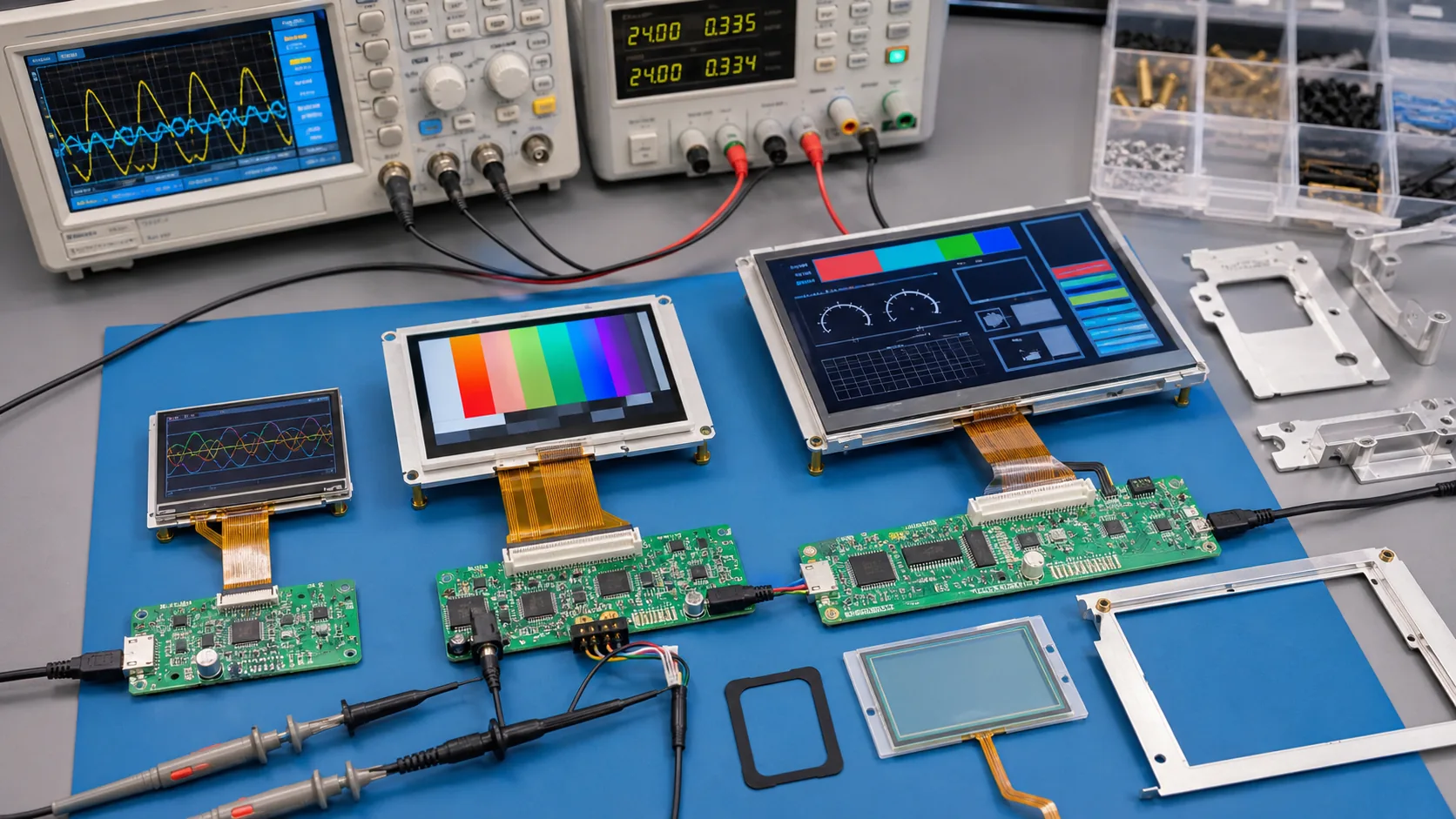 Bench validation should include interface timing, color readability, touch stack, connector fit, and electrical behavior.
Touch, Keys, and Front Panel Design
Many industrial test instruments still use physical keys and knobs because operators need tactile control during measurement. Others use capacitive touch to simplify menu navigation and make the interface more flexible. The display module should be selected together with the front panel design, not after the enclosure is finished.
If touch is required, test the final cover glass thickness, air gap or bonding method, glove requirements, wet operation risk, and EMC behavior. Capacitive touch can work well, but it needs correct controller tuning and mechanical design. Sunshine Display's capacitive touch TFT LCD modules can be considered when the project requires a complete touch display stack.
Physical keys and knobs also influence the display area. The screen may need to leave enough space for labels, indicators, or bezel structure. Engineers should confirm active area, viewing area, cover lens printing, gasket compression, and mounting tolerance during sample review.
Electrical Noise and Reliability
Test instruments often sit close to switching power supplies, high-speed signals, motors, relays, probes, and long cables. Electrical noise can create display flicker, unstable touch behavior, reset issues, or communication errors. A stable display design should include proper grounding, ESD protection, cable routing, shielding, power sequencing, and connector retention.
The backlight driver also deserves attention. Backlight current, PWM frequency, dimming range, heat generation, and lifetime should match the product requirement. If the instrument is used continuously, backlight lifetime and thermal design become important buying points, not small details.
Temperature and Portable Use
Some instruments stay on a lab bench; others travel to factories, outdoor equipment, or maintenance sites. Portable industrial instruments may face drops, vibration, low temperature storage, sunlight exposure, and battery constraints. The selected LCD module should be checked against operating temperature, storage temperature, mechanical protection, and power budget.
For cold rooms, outdoor service work, or equipment installed in harsh environments, wide temperature TFT LCD modules may be safer than standard panels. If the device only needs to show static asset identity, calibration date, or service status with very low power, an e-paper display module can also be considered as a secondary label display. E-paper is not a replacement for fast waveform display, but it can be useful for low-power status information.
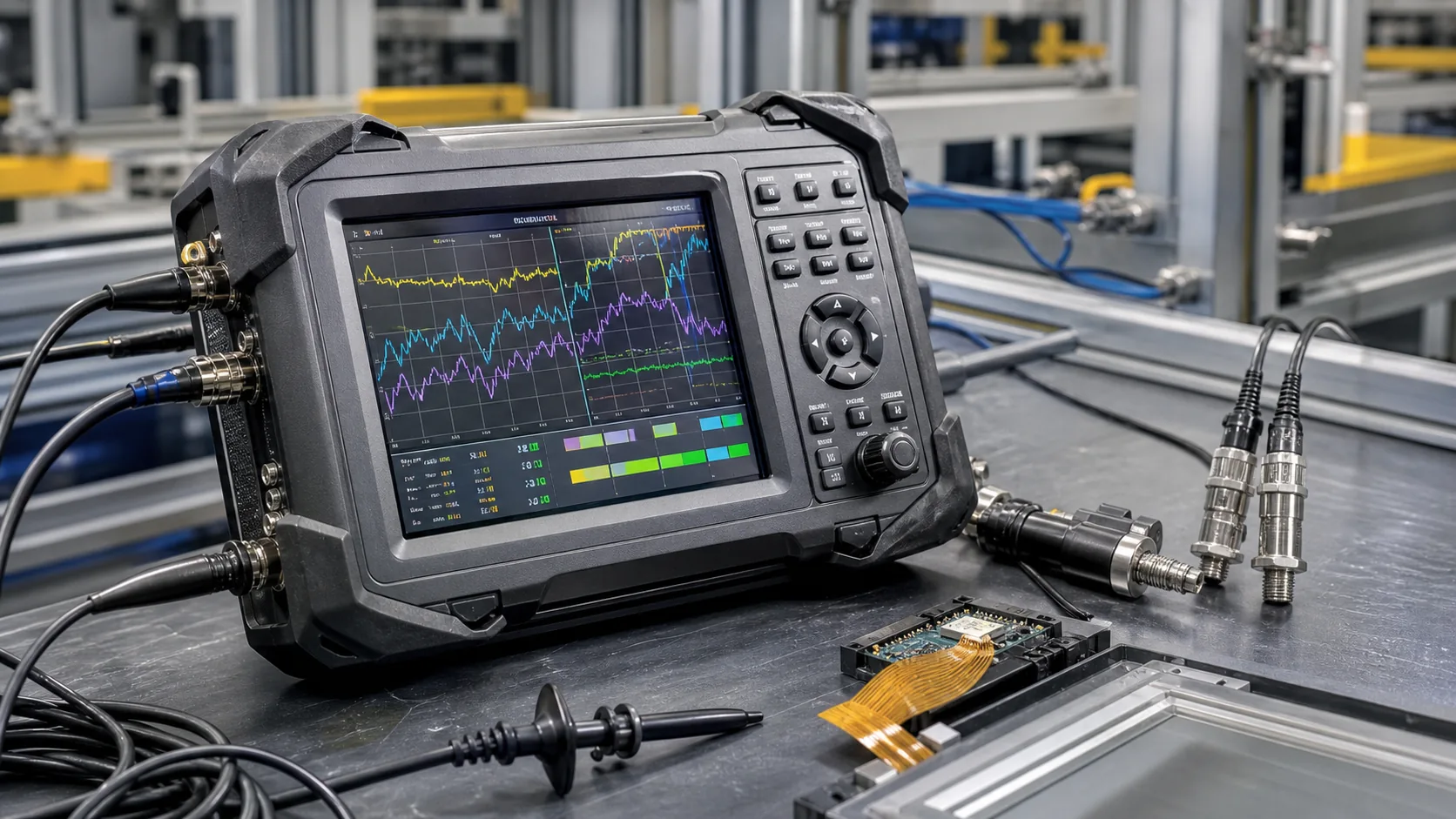 Portable industrial instruments should balance readability, power, protection, and long-term display availability.
Lifecycle and Supply Planning
Industrial test instruments often remain in production for many years. A display change can affect the PCB, enclosure, firmware, front panel, documentation, and certification. Buyers should ask about panel lifecycle, driver IC availability, FPC change control, connector stability, backlight alternatives, and sample approval records.
When possible, approve the display with a full documentation package: drawing, electrical specification, optical data, interface timing, inspection standard, reliability test summary, and change notice process. This reduces the risk of unexpected changes after mass production starts.
Practical Buying Advice
When sourcing an LCD module for industrial test instruments, send the supplier your target size, resolution, interface, operating temperature, brightness target, touch requirement, cover glass structure, expected annual quantity, project lifetime, and sample schedule. Include screenshots of the real UI if available. A waveform screen, menu screen, alarm screen, and low-light mode can reveal different readability issues.
Sunshine Display can help OEM teams compare standard TFT LCD modules, IPS modules, capacitive touch options, wide temperature displays, and custom industrial display solutions. If your project needs a display for a benchtop instrument, portable meter, production tester, or industrial calibration device, share your requirements through the Sunshine Display contact page for a practical recommendation.
FAQ
What LCD size is best for an industrial test instrument?
It depends on the UI density, viewing distance, enclosure size, and user workflow. Compact meters may use 3.5 inch to 5 inch modules, while benchtop instruments often benefit from 7 inch, 10.1 inch, or larger displays.
Should test instruments use IPS TFT LCD modules?
IPS is useful when users view the screen from different angles or when stable color and contrast are important. Standard TFT LCD modules can still work well when the viewing position is controlled and cost is a priority.
Is capacitive touch suitable for industrial instruments?
Yes, but it should be validated with the final cover glass, grounding, EMC conditions, glove or wet operation requirements, and controller tuning. Some instruments still combine touch with physical keys or knobs.
What should buyers confirm before mass production?
Confirm lifecycle, driver IC stability, connector and FPC details, backlight lifetime, interface timing, inspection standard, sample test results, and change control process before approving the LCD module.