E-Paper Display Modules for Industrial Status Labels
E-paper display modules can show equipment status and service information without continuous display power.
Industrial equipment does not always need a bright, always-on screen. In many applications, the most valuable display is a clear status label that keeps showing the last approved information even when the device is sleeping, disconnected, or waiting for the next service cycle. This is where an e-paper display module can be a practical alternative to a conventional TFT LCD.
For OEM teams building industrial status signs, warehouse labels, smart instrumentation tags, power equipment markers, or low-power field devices, e-paper offers a different set of strengths: ultra-low power use, sunlight readability, wide viewing angle, and a thin module structure. Sunshine Display supports industrial display projects that include LCD display modules up to 32 inches, TFT LCD modules for OEM applications, and custom e-paper display solutions. Buyers can review the broader industrial display module product range when comparing the right technology for each product.
Why E-Paper Works for Industrial Status Labels
The key advantage of e-paper is bistable image retention. After the image is refreshed, the display can hold visible content with little or no continuous display power. That makes it useful for equipment labels that change occasionally but must remain readable for a long time. Examples include maintenance state, inspection status, shelf position, asset identity, alarm history, battery state, or field configuration information.
E-paper is also easy to read in bright ambient light because it reflects light instead of relying on a backlight. For warehouse aisles, outdoor cabinets, solar equipment, utility meters, or factory areas with strong overhead lighting, this reflective behavior can reduce glare and improve legibility. The wide viewing angle helps technicians read the label from standing, crouched, or side positions.
However, e-paper is not a universal replacement for TFT LCD. It is best for information that changes intermittently. If the application needs fast animation, video, continuous graphs, frequent touch interaction, or rich color UI, an industrial TFT LCD may still be the better fit. Sunshine Display's standard TFT LCD modules and IPS TFT LCD modules are more suitable when refresh speed, color, and active user interaction are the priority.
Start With the Update Pattern
Before choosing a module size or driver, define how often the information changes. A warehouse location label may update only when stock moves. An industrial status tag may update after a maintenance action. A battery-powered field sensor may refresh when a measurement crosses a threshold. These are good e-paper use cases because the display spends most of its life holding information instead of redrawing.
If the product updates every few seconds, check the refresh time, ghosting behavior, temperature limits, and user expectation carefully. E-paper can show partial refresh on some platforms, but the exact behavior depends on the panel, controller, waveform, temperature, and content pattern. For B2B equipment, the refresh behavior should be tested with the real screen layout, not only a demo image.
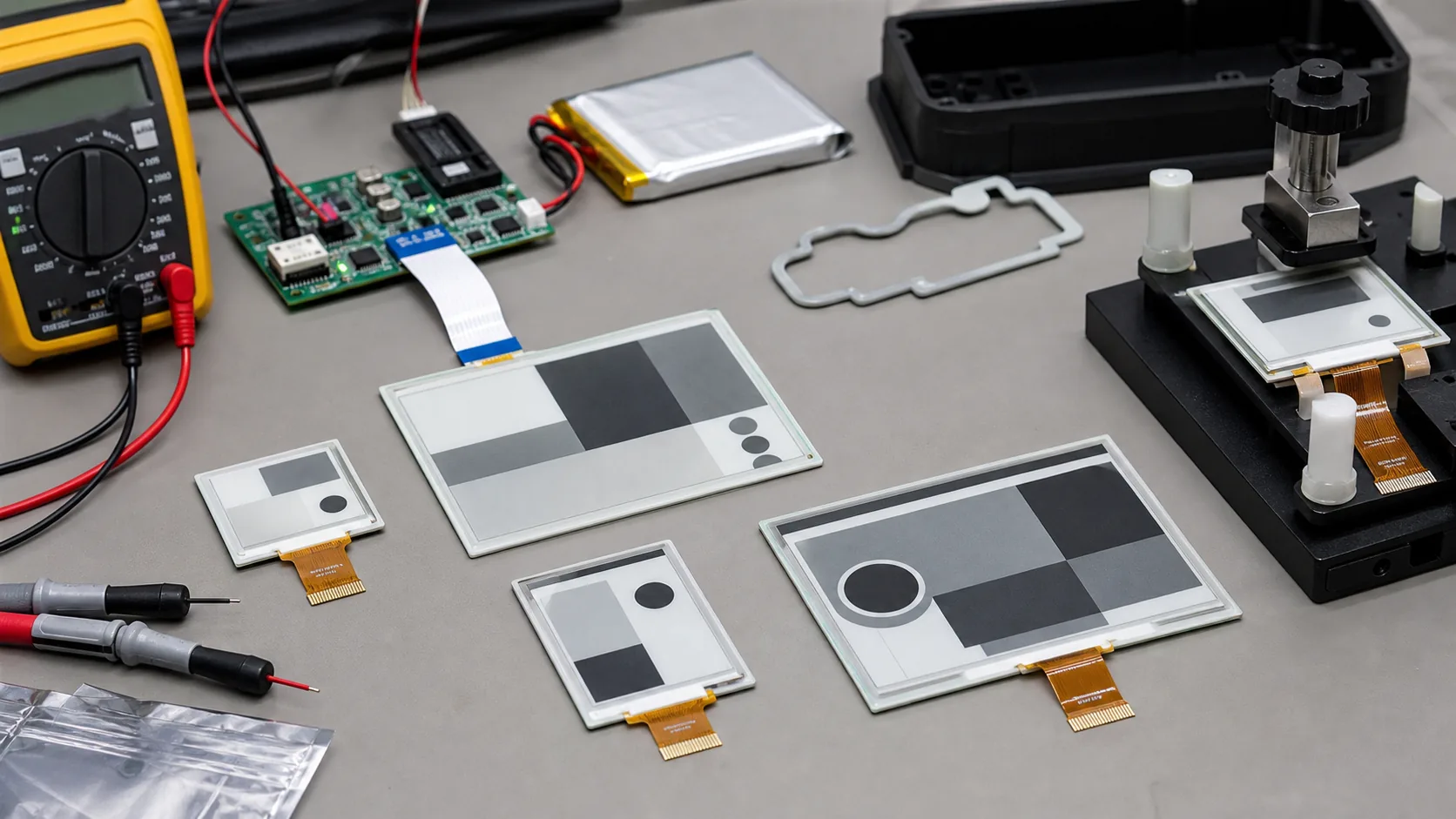 Bench testing should confirm refresh behavior, controller integration, power budget, and mechanical fit.
Review Power Budget and System Architecture
E-paper is often selected for battery-powered or energy-sensitive products, but the full system power budget still matters. The display may not need holding power, but the controller, wireless module, sensors, MCU, memory, and power management circuit still consume energy. The design team should calculate both standby current and active refresh current.
For a custom e-paper OEM product, confirm whether the display will be driven directly by the main board or through a dedicated controller board. A dedicated controller can simplify integration, especially when the host system has limited display experience. It can also help with waveform handling, SPI communication, image conversion, and firmware updates.
Interface choice is another practical buying point. Many small and medium e-paper modules use SPI because the data rate and pin count are suitable for label-style content. The OEM should confirm operating voltage, connector type, FPC direction, initialization sequence, available demo code, and long-term driver support before locking the mechanical design.
Match Display Size to Reading Distance
An industrial label has to be read in a real environment. A small e-paper tag may be perfect for handheld inspection tools, shelves, and asset IDs. A larger module may be better for power equipment, cabinet status, or equipment rooms where technicians read from a distance. Instead of selecting size only by product appearance, define the reading distance, expected content density, and lighting conditions.
Black and white e-paper is often enough for asset labels and status information. Red, yellow, or multi-color options may help when the product needs visual priority, warning states, or category separation, but color e-paper can have different refresh characteristics and cost structure. Buyers should confirm color requirements early so the supplier can recommend a suitable panel and controller combination.
Mechanical Design Is Part of the Display Decision
E-paper modules are thin, but they still need careful mechanical protection. The display stack may include the e-paper panel, FPC, PCB, front lens, adhesive, gasket, enclosure, and mounting features. Industrial equipment may face vibration, cleaning, dust, temperature changes, or installation stress. The module should not be compressed unevenly, and the viewing area should remain aligned after final assembly.
For outdoor or semi-outdoor labels, enclosure sealing and front surface material become important. The design should protect the panel while preserving readability. If the product needs touch input, button input, NFC, wireless update, barcode scanning, or QR-style visual patterns, these requirements should be reviewed during the early architecture stage.
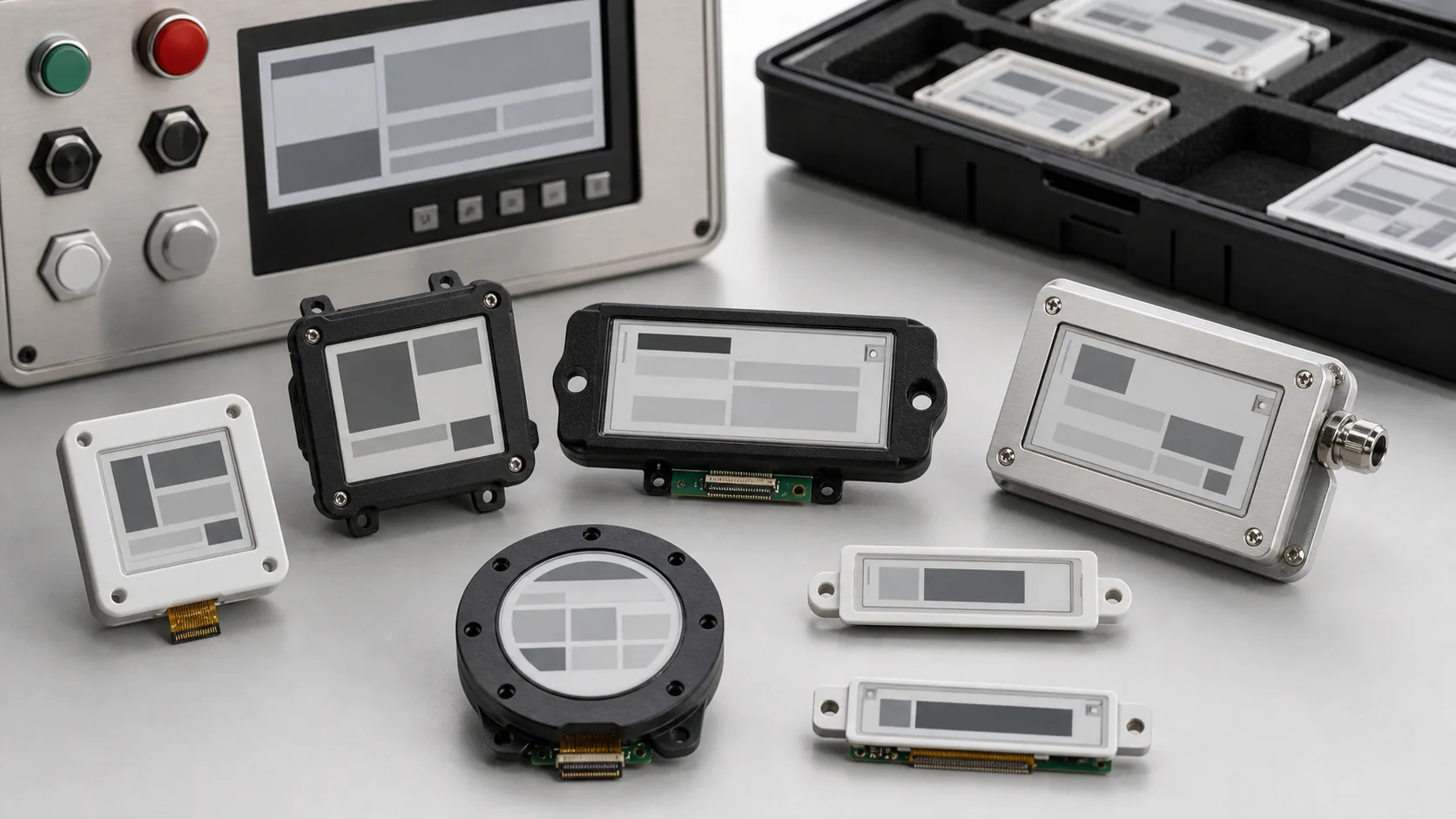 OEM e-paper products often require display, driver board, enclosure, mounting, and firmware decisions to be reviewed together.
When to Choose E-Paper Instead of LCD
Choose e-paper when the product needs persistent information, low standby power, strong sunlight readability, and limited refresh frequency. Choose TFT LCD when the product needs a rich active UI, fast data updates, color graphics, touch menus, or continuous monitoring. For some industrial systems, the best design may use both: a TFT LCD HMI for operation and an e-paper label for service identity, safety state, or asset information.
If the product needs touch operation and a more interactive interface, a capacitive touch TFT LCD module may be more appropriate. If the product must operate in cold or hot industrial environments, compare e-paper temperature behavior with wide temperature TFT LCD modules and validate the display under realistic conditions.
Buying Checklist for OEM Projects
When sourcing an e-paper display module, ask the supplier about module size, active area, resolution, color mode, refresh time, full and partial update support, operating temperature, storage temperature, interface, voltage, connector, driver IC, available controller board, sample code, lifecycle, MOQ, and customization options.
For custom e-paper products, also review enclosure material, mounting method, front lens, sealing, PCB layout, firmware responsibility, battery strategy, wireless update requirements, packaging, labeling, and production test method. This is especially important when the e-paper module is part of a finished OEM label or industrial status device rather than a bare display component.
Sunshine Display can help OEM teams compare e-paper modules, TFT LCD modules, and custom industrial display options based on real application requirements. Share your target size, content type, update frequency, environment, interface, and mechanical constraints through the Sunshine Display contact page for a practical display recommendation.
FAQ
Is e-paper suitable for industrial equipment status labels?
Yes. E-paper is well suited for status labels that update occasionally and need to remain readable with very low standby power. It is especially useful for asset labels, cabinet status displays, maintenance tags, and low-power field devices.
Can e-paper replace a TFT LCD in every industrial product?
No. E-paper is not ideal for fast animation, video, frequent refresh, or rich color control interfaces. TFT LCD modules are usually better for active HMIs, touch menus, and real-time monitoring screens.
What information should I provide for a custom e-paper OEM project?
Provide display size, resolution needs, update frequency, color requirements, interface, power source, operating temperature, enclosure concept, mounting method, expected production volume, and whether you need a bare module or a finished custom product.
Does e-paper work outdoors?
E-paper can be very readable in sunlight, but the final product must still be designed for the environment. Review temperature range, sealing, front lens, UV exposure, and mechanical protection before outdoor deployment.