A rugged TFT LCD HMI can support controlled equipment operation, status review, and technician workflow on industrial sterilization systems.
Industrial sterilization equipment is operated through a sequence, not a single button press. A trained user needs to prepare the chamber, confirm readiness, start an approved cycle, monitor equipment state, respond to conditions, and complete the next permitted step. The display is where the machine communicates that sequence locally. It should reduce uncertainty, not add a dense layer of information to an already controlled process.
A TFT display for industrial sterilization equipment is therefore an HMI component with mechanical, optical, electrical, and workflow responsibilities. The module must remain readable behind the front panel, fit the enclosure correctly, support the controller interface, and present information in a way that matches the intended operator task.
Map the HMI to the Operator's Tasks
The most effective starting point is to list the tasks that occur at the machine. Before a cycle, the user may need to verify readiness and selected operation. During a cycle, they need a clear indication of progress and any state that requires attention. After the cycle, they may need to review the local outcome or follow a defined release, hold, or service procedure.
The HMI should not attempt to display every system variable on the first screen. Put the current equipment state first, then the action required, then the route to deeper diagnostics for authorized users. Industrial TFT LCD modules are well suited to live state, menus, changing values, and responsive controls, but their capability should be organized around real decisions.
Review the Front Panel Where It Will Be Used
Stainless enclosures, overhead lighting, viewing angle, cleaning practices, gloves, and equipment access all affect display selection. A panel that appears clear on an engineering bench can become difficult to read once installed behind a reflective lens at an awkward height. Build a representative front-panel sample early and inspect it from the positions users actually occupy.
If off-axis readability is important, IPS TFT LCD modules can provide more consistent color and contrast across a broader viewing range. Consider the complete optical stack: LCD module, air gap or bonding approach, front window, gasket, cabinet geometry, and ambient reflections.
Treat Input as Part of the Procedure
Touch can simplify a sealed front surface, but it should not be selected by default. The important questions are practical: Are gloves worn? Is the surface exposed to moisture or cleaning agents? Could an unintended touch cause confusion? Which actions need tactile confirmation or a separate physical control?
Capacitive touch TFT LCD modules can be a good fit when the final lens, controller tuning, and user environment are validated together. A mixed design with touch for navigation and physical controls for predefined functions can be more appropriate in some industrial systems. The correct choice is the one that supports the approved task sequence reliably.
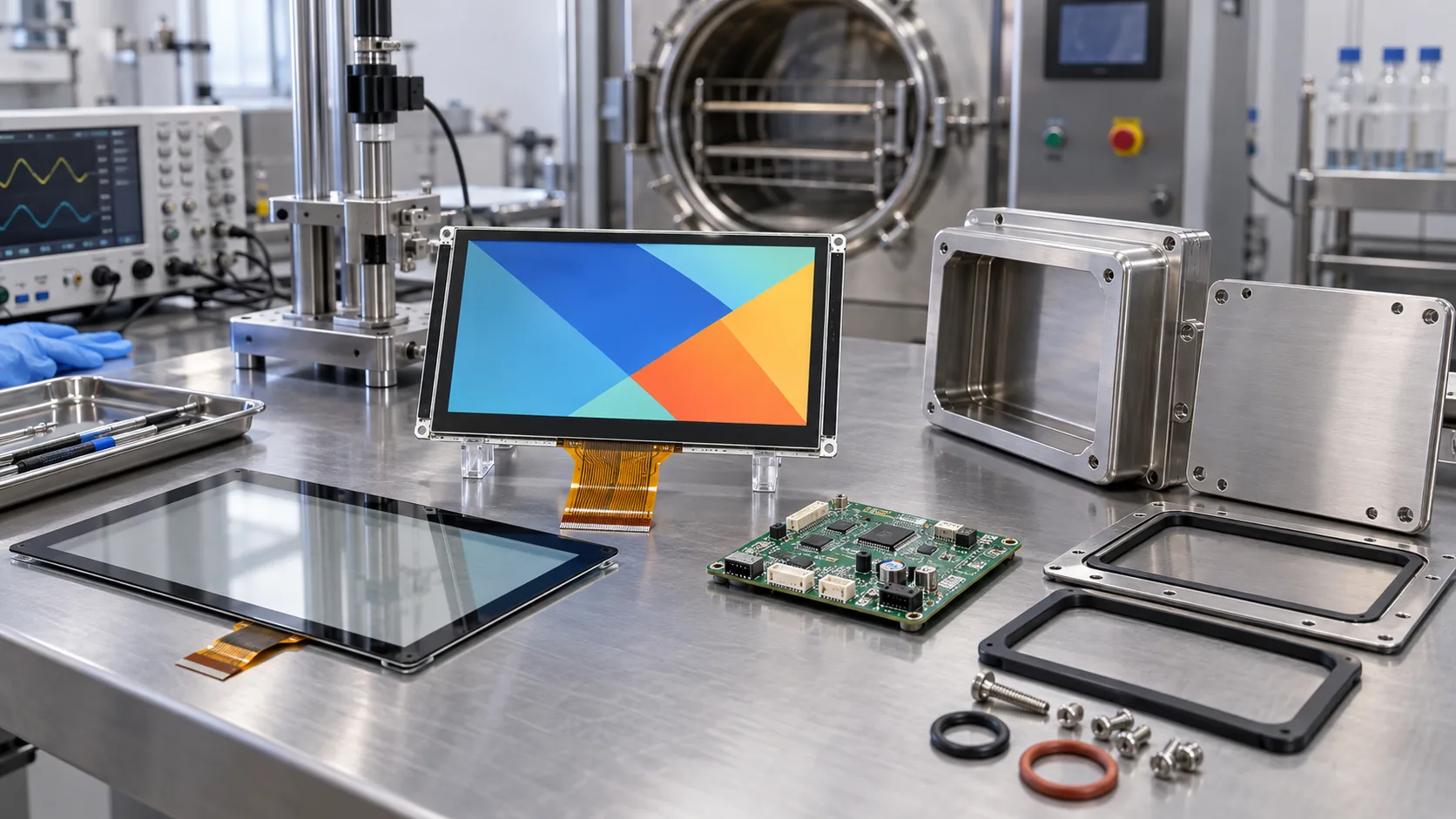 The module, lens, controller, gasket, enclosure, and cable path should be assessed as a complete industrial HMI assembly.
Build the HMI Prototype as an Assembly
The bare display is only one part of the product. A useful prototype includes the TFT, controller, FPC, front lens, gasket, enclosure, mounting method, power arrangement, and representative firmware. This makes it possible to test cable bend radius, connector access, module support, mounting pressure, lens alignment, grounding, and service removal before the mechanical design is locked.
Check the display under the expected local temperature and lighting conditions. The air near a control cabinet or process equipment can differ from the facility's nominal ambient conditions. Where the actual installed environment is demanding, evaluate wide-temperature TFT LCD modules against the full product requirement.
Use Scenario Testing Instead of a Generic Demo
An effective validation review uses real operating screens and real scenarios. Test startup, normal cycle progression, an action-required state, controlled recovery, controller restart, and communication interruption. Observe whether the display makes the current state clear without forcing users to interpret unclear icons or navigate unnecessary menus.
The local HMI should support the equipment workflow, but it should not be treated as the only system of record. Any detailed quality, batch, or traceability data belongs in the designated validated control or information system. Defining that boundary keeps the screen focused on point-of-use decisions and prevents a local display from being mistaken for a complete record source.
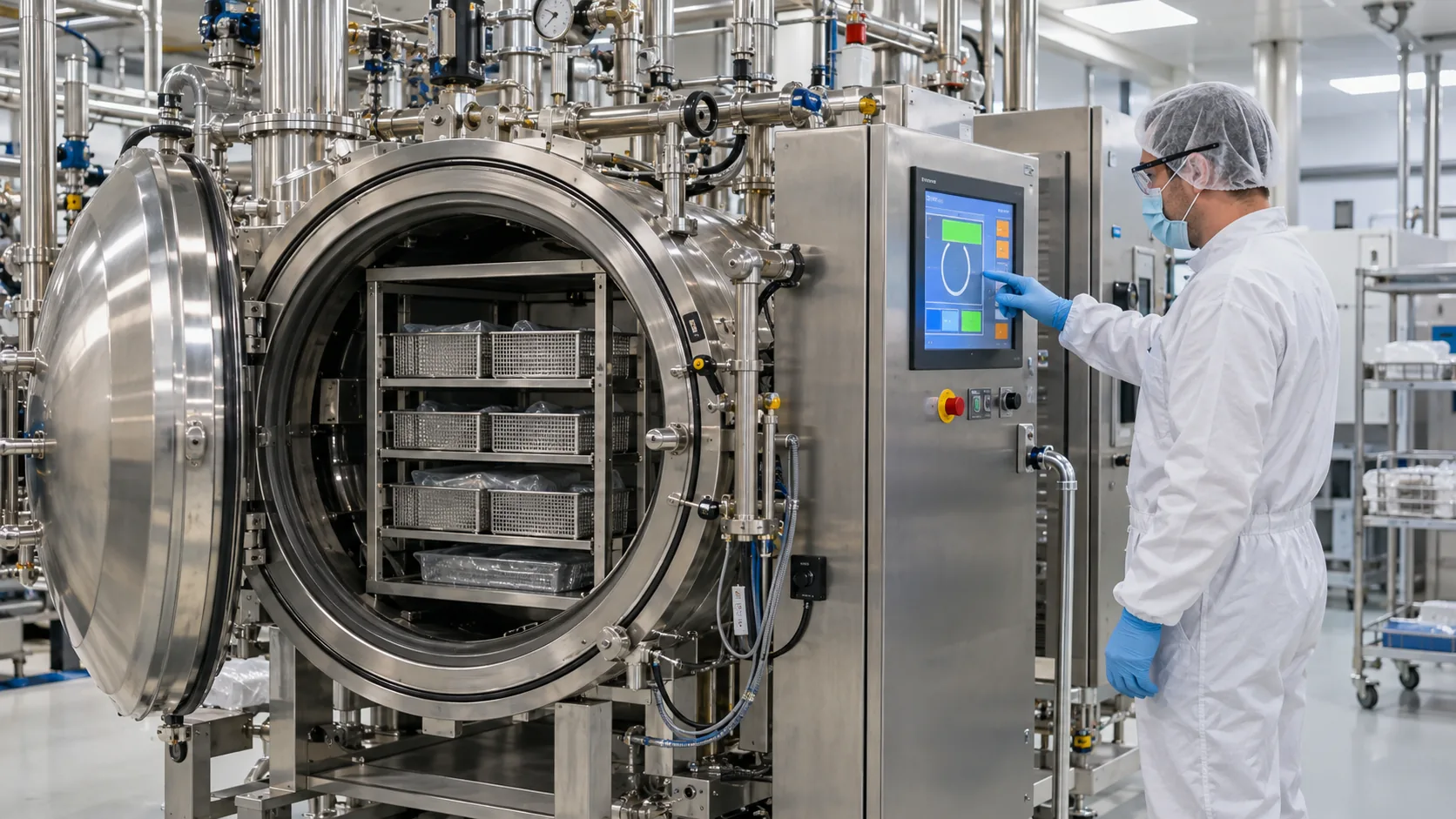 The local HMI should help trained users recognize current equipment state and follow the approved operating procedure.
Review the Boundaries Before Production Release
The screen, controller, and enclosure are part of a larger equipment design. Before production release, make sure responsibility is clear for the HMI content, user roles, alarm presentation, controller communication, local data retention, and any permitted service functions. A display module supplier can support the hardware selection and integration review, while the equipment OEM remains responsible for the final operating workflow and its documentation.
This division keeps a useful project from drifting into uncontrolled scope. It also makes sample review more productive: engineers can test optical performance, interface stability, mechanical fit, and touch behavior without confusing those hardware checks with validation of the machine's complete process. The result is a cleaner route from module sample to a maintainable industrial product.
Prepare a Better Display RFQ
The most productive RFQs begin with the equipment task. Include the machine type, user role, HMI sequence, target display size, active area, resolution, interface, control method, front-panel construction, expected operating range, cleaning exposure, mechanical limits, annual volume, and lifecycle expectation. A simplified screen flow and cabinet drawing can avoid weeks of assumptions.
Also clarify responsibility for controller firmware, enclosure tooling, sample testing, change notification, and supply continuity. Sunshine Display supplies industrial display modules for OEM equipment and can review the display integration route for industrial control systems.
The test for a successful sterilization-equipment HMI is straightforward: can trained users recognize the machine state and follow the intended next step without uncertainty? Contact Sunshine Display to discuss TFT LCD modules for industrial sterilization, laboratory processing, and controlled equipment applications.