A TFT LCD HMI on an energy storage cabinet can present live operational state, alarms, service access, and diagnostic information.
At two in the morning, a service technician does not need a decorative dashboard. They need to establish what the cabinet is doing, whether the condition needs a controlled response, and where to find the next approved action. In an industrial battery energy storage system, the cabinet display is the local view between power electronics, battery management, controls, and the people permitted to inspect the equipment.
That moment is a useful test for a TFT display for battery energy storage cabinets. The screen must deliver operational clarity before it delivers visual complexity. It needs to fit the mechanical and electrical realities of an industrial enclosure, while remaining usable during commissioning, normal operation, fault investigation, and maintenance.
Start With the First 30 Seconds
Before choosing resolution, screen size, or touch technology, define the first 30 seconds of use. What should a trained person recognize immediately after approaching the cabinet? Typical priorities can include operating state, availability, active alarm category, communication condition, safe service state, and the path to detailed diagnostics. The exact hierarchy must follow the system's safety strategy, not a generic HMI template.
Fast-changing values, menus, trends, and diagnostic pages make industrial TFT LCD modules a practical fit for the active HMI role. But the display design still needs restraint. A crowded first screen can hide a serious condition behind small text or competing colors. Build the interface around the decisions people make, then choose the display module that supports that task.
Conduct a Design Review Before the CAD Is Frozen
Treat the following questions as a design review, rather than a late procurement checklist:
| Review point | Why it changes the display decision |
|---|---|
| Viewing position | Door height and operator stance affect size, viewing angle, and lens reflection. |
| Ambient light | Equipment rooms, outdoor shelters, and service bays create very different readability needs. |
| Front panel | Lens thickness, sealing, anti-glare treatment, and gasket compression affect optics and touch. |
| Input method | Gloves, moisture, cleaning, access control, and critical actions determine whether touch, keys, or both fit. |
| Thermal location | Heat inside the cabinet can differ greatly from the site's ambient rating. |
| Service access | FPC routing, controller placement, connector access, and module replacement need an intentional plan. |
Viewing angle is especially important when the user is standing beside a cabinet door rather than directly in front of it. Where stable color and contrast off-axis matter, IPS TFT LCD modules can be a good candidate. The final decision should be made with an assembled sample behind the intended front window.
Rehearse the Failure Path
An energy storage HMI should be reviewed not only during normal operation, but also during the states that put pressure on the interface. Consider a controller restart, a network interruption, a low-light service visit, a door-open maintenance condition, or a communication fault between subsystems. What remains visible? Does the user know whether the displayed information is current? Can the intended service screen be reached predictably?
This is also where input design becomes practical. A sealed touch front can provide a clean industrial surface, but it must work with the gloves and procedures actually used in the field. Capacitive touch TFT LCD modules should be tested with the final cover lens, cleaning process, and electrical environment. Dedicated controls may still be appropriate for frequently used or critical functions.
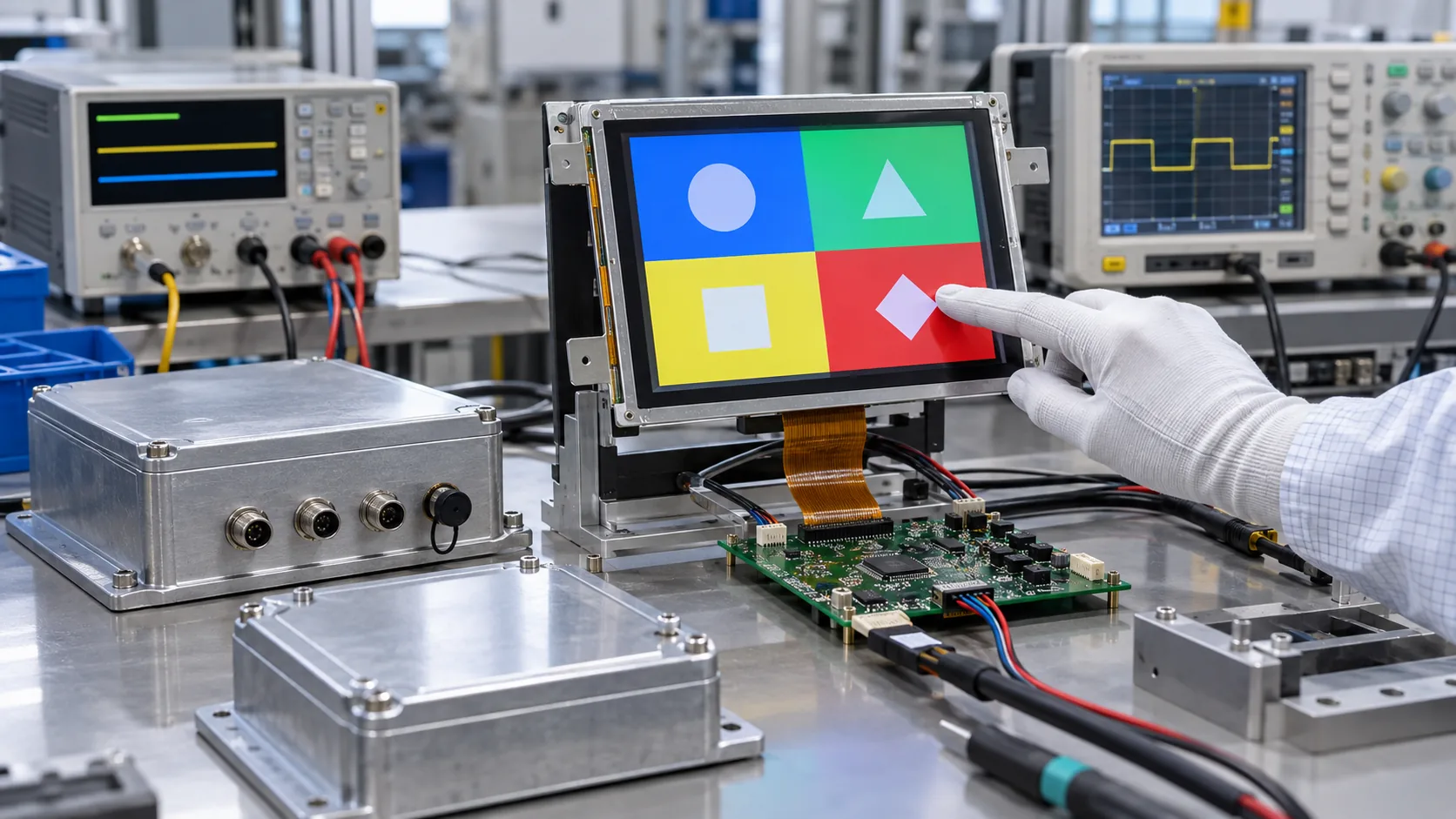 Electrical behavior, touch response, display performance, enclosure protection, and interface stability should be verified together in an OEM HMI prototype.
Build the Prototype as an Electrical and Mechanical System
A bare LCD sample cannot represent the completed product. The prototype should include the target display, controller, FPC, mounting method, lens, enclosure, power path, grounding, and representative firmware. Test startup, backlight behavior, interface recovery, touch response, and diagnostic page changes while the hardware is installed as it will be in production.
Mechanical details need the same attention. Confirm viewing area alignment, module support, cable bend radius, connector retention, screw clearance, gasket pressure, and access for service. Nearby power components, switching activity, and cable harnesses can make grounding and signal integrity more demanding than a benchtop setup suggests. For demanding site conditions, assess wide-temperature TFT LCD modules against the actual temperature at the installed HMI location.
Use Commissioning to Test Readability, Not Just Functions
Commissioning is where a technically correct screen meets the real cabinet. Check readability under room lighting and flashlight inspection. Verify that reflections from the lens do not hide a key state. Ask trained users to perform their normal start, stop, inspection, and service tasks without coaching. The goal is not to collect opinions about colors; it is to discover whether the interface guides the correct next step.
Record issues by cause: content hierarchy, optical design, mechanical fit, touch behavior, interface timing, or environmental exposure. This makes the next prototype more useful than a general note that the display “needs improvement.”
 The cabinet HMI must remain readable and predictable for trained technicians during inspection, startup, and controlled maintenance work.
Questions Buyers Should Settle Early
What belongs on the first screen? The current operating state, an action-required condition, and a clear route to approved diagnostics should be prioritized. Avoid copying every controller variable into the first page.
Can touch replace all physical controls? Sometimes, but only after evaluating gloves, water, cleaning, accidental activation, maintenance procedure, and safety requirements. The best answer is application-specific.
Why insist on a final-cabinet test? The lens, enclosure geometry, heat, lighting, grounding, and cable routing can change what users see and how the module performs. Product-level validation finds risks that a bare display test cannot.
For a quotation, share the cabinet drawing, active-area target, HMI content concept, interface, input method, operating range, front-panel construction, annual quantity, and expected lifecycle. Sunshine Display supplies industrial display modules for OEM equipment and can review a TFT HMI integration path. Contact Sunshine Display to discuss an energy storage, power-equipment, or industrial control cabinet display project.