What Test Equipment Needs From an LCD Module
Test and measurement equipment depends on clear information. Engineers and operators use the display to read values, compare waveforms, change settings, monitor alarms, and confirm pass or fail results. If the LCD module is hard to read, unstable, or difficult to integrate, the whole instrument feels less reliable.
Sunshine Display supplies LCD display modules for industrial and OEM applications, including small, medium-size, and larger color TFT LCD modules up to 32 inches. These modules are relevant for test instruments, measurement devices, laboratory equipment, field diagnostic tools, calibration systems, power analyzers, and control terminals. This is different from consumer phone or TV displays, where design priorities and supply models are usually different.
Test and measurement LCD modules need clear data display, stable touch operation, reliable integration, and long supply.
Data Readability Is the Core Requirement
A test instrument display often shows dense information: digits, units, status icons, waveform lines, menus, limits, and warning colors. The LCD module should keep this information readable from the expected operating distance and viewing angle.
Resolution should match the user interface. A small display with too much information can force fonts to become thin and hard to read. A larger display may improve usability, but it also affects enclosure size, power, cost, and mounting structure. Buyers should evaluate real UI screens, not only sample photos or color bars.
For equipment where operators view the screen from the side or from a standing position, IPS TFT LCD modules can help maintain color and contrast over wider angles. For controlled indoor instruments, standard TFT LCD modules may be practical when the viewing position and lighting are predictable.
Brightness and Contrast Should Match the Workplace
A laboratory instrument, production line tester, outdoor diagnostic tool, and handheld meter may all need different optical performance. Brightness alone is not enough. Contrast, cover lens reflection, anti-glare treatment, backlight uniformity, and UI color design all affect readability.
If the product includes a cover lens, check the final optical stack. A clear cover can improve appearance and cleaning, but it may add reflection. If the display is used near windows, strong lamps, or inspection stations, test it under real light sources before approving the module.
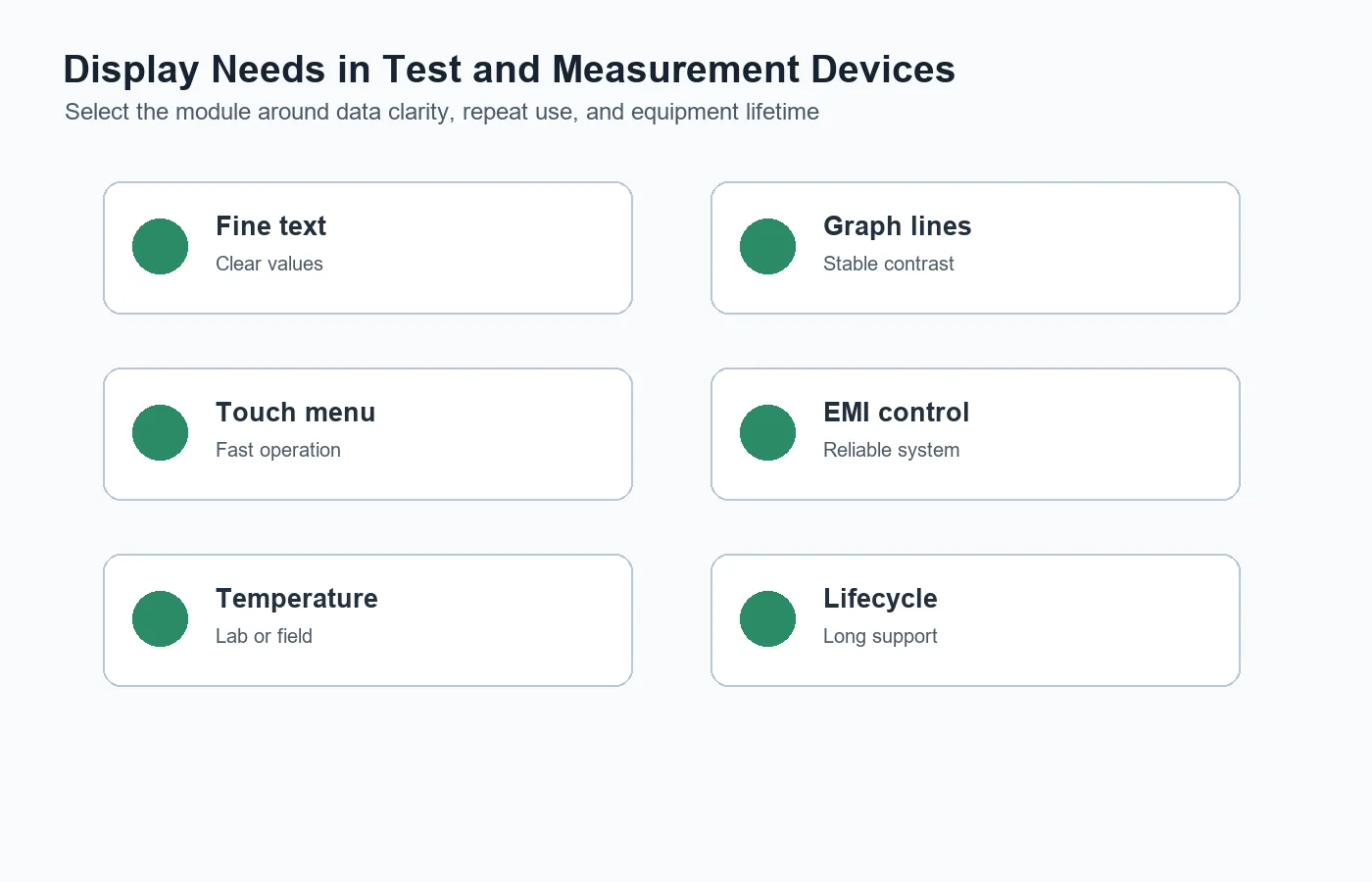 Instrument display selection should consider text clarity, graph visibility, touch menus, EMI control, temperature, and lifecycle.
Touch Operation Must Be Reliable, Not Decorative
Many modern instruments use touch menus to reduce mechanical buttons. Touch can improve interface flexibility, but it should be validated like an industrial input device. Operators may use dry fingers, gloves, or cleaning agents. Some instruments need accurate operation near the edge of the display, where poor tuning or cover design can cause missed touches.
Projected capacitive touch is often suitable when the product needs a flat front panel and a clean enclosure. Sunshine Display's capacitive touch TFT LCD modules can support OEM instrument designs, but the final touch result should be tested with the actual cover glass, grounding, cable, PCB, and firmware.
Electrical Noise Can Affect the Display System
Test equipment may include power conversion, relays, motors, probes, high-speed signals, long cables, or sensitive analog circuits. The LCD module and touch panel should be reviewed as part of the full electrical system. Noise may create display flicker, touch drift, reset behavior, or communication errors.
Engineers should review grounding, shielding, interface cable length, power ripple, ESD protection, and layout near the display connector. The best time to find these issues is during prototype validation, not after the product enters mass production.
Temperature and Field Use Matter
Not all test equipment stays in a controlled lab. Some devices are used in factories, vehicles, service tools, outdoor cabinets, or storage areas. Temperature range, humidity, vibration, and cleaning conditions should be included in the LCD module selection.
If the equipment may face cold or heat, review wide temperature TFT LCD modules early. The module should still be validated inside the complete product because enclosure material, backlight heat, gasket pressure, and power design can change performance.
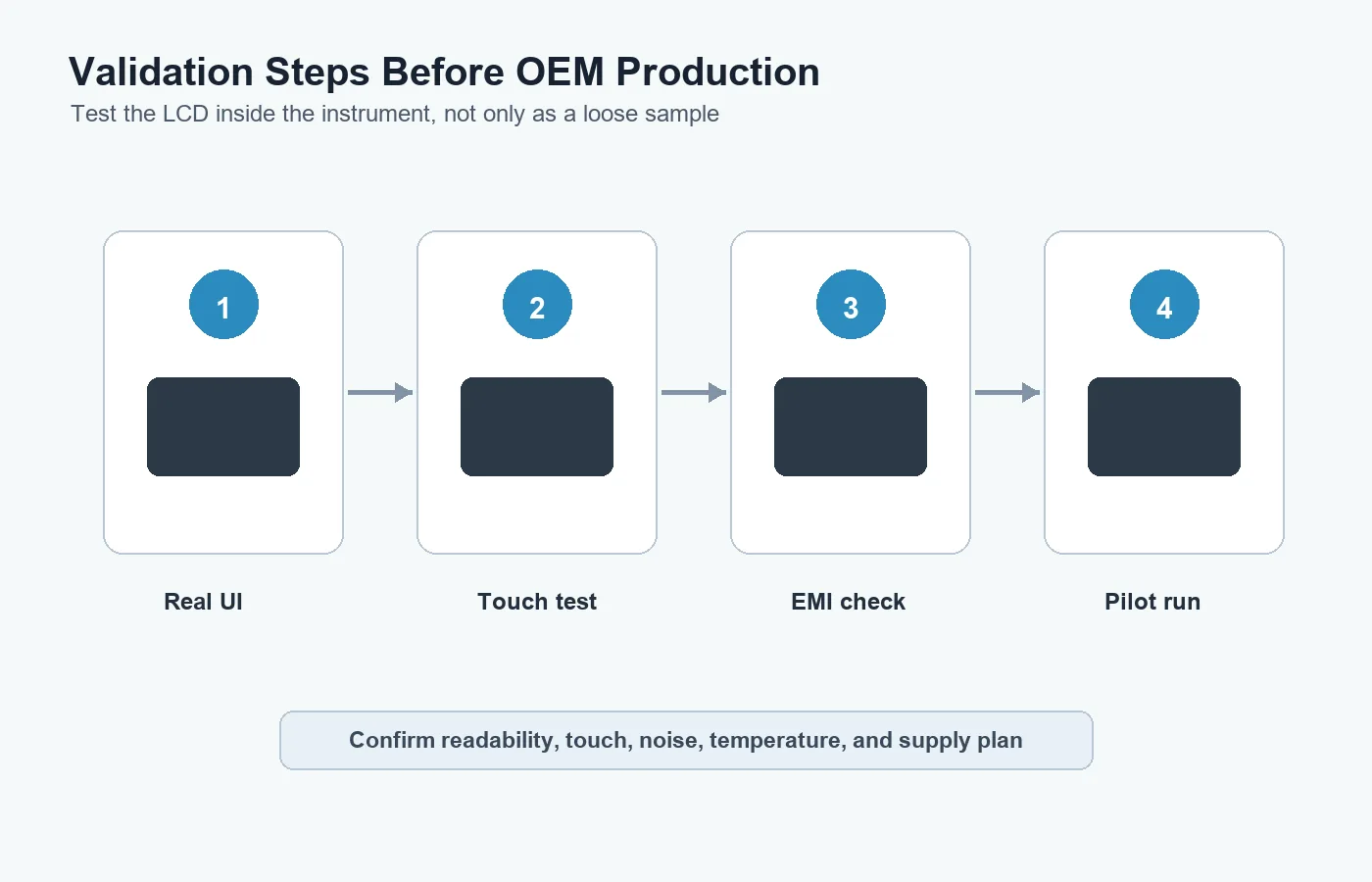 Validate the LCD module inside the real instrument before OEM production release.
Mechanical Integration Should Be Checked Early
The module drawing should be compared with the instrument enclosure before tooling. Check outline size, active area, viewing area, thickness, FPC route, connector position, screw bosses, gasket compression, and cover lens overlap. Small tolerance problems can become assembly defects when production starts.
The display should be tested after the real enclosure and PCB are installed. A loose LCD on a desk cannot reveal cable pinching, bezel shadow, pressure marks, touch edge issues, or grounding problems.
Lifecycle Planning Reduces Redesign Risk
Test and measurement equipment often has a longer market life than consumer electronics. A display change can affect UI layout, enclosure tooling, firmware, touch tuning, EMC testing, and production documents. Buyers should confirm lifecycle expectations, change notification process, alternative options, packaging method, and forecast planning.
When reviewing Sunshine Display's LCD display module product range, OEM teams should compare not only size and price, but also integration risk and long-term availability.
Buying Advice for OEM Teams
Before selecting a display, define the instrument type, screen size, UI density, viewing distance, touch requirement, brightness target, operating environment, electrical noise risk, interface, enclosure structure, and expected production life. Share this information with the supplier before sample approval.
Sunshine Display supports LCD display modules for industrial instruments and OEM equipment up to 32 inches. If your project involves test equipment, measurement devices, diagnostic tools, or production line testers, contact Sunshine Display to review display size, touch structure, drawings, and validation requirements.
FAQ
What is the best LCD module for test equipment?
The best module depends on UI density, screen size, brightness, viewing angle, touch requirement, operating environment, interface, and lifecycle. There is no single best display for every instrument.
Should test equipment use touch LCD modules?
Touch is useful when menus are complex or the front panel needs a clean design. It should be tested with the real cover glass, grounding, cable, PCB, and software interface.
Why is IPS useful for measurement instruments?
IPS can improve viewing angle and color stability, which helps when operators read the screen from different positions or when waveform and status colors must remain clear.
How can electrical noise affect an LCD module?
Noise can cause display flicker, touch drift, reset behavior, communication errors, or unstable backlight operation. System-level testing is important.
When should OEM teams involve the LCD supplier?
Involve the supplier before enclosure tooling and before final sample approval. Early review helps reduce drawing, cable, touch, optical, and lifecycle risks.