MIPI DSI TFT LCD Module Guide for Compact OEM Devices
MIPI DSI can help compact products use higher resolution LCD modules with fewer signal pins.
MIPI DSI TFT LCD modules are increasingly used in compact products that need higher resolution, richer UI, and cleaner internal wiring than older parallel display interfaces can easily provide. For OEM buyers and engineers working with color LCD modules under 32 inches, MIPI DSI can be a strong choice, but it also requires careful processor, firmware, FPC, and validation planning.
This guide explains when MIPI DSI makes sense, what to check before sample approval, and how to reduce risk when selecting a small TFT LCD module for embedded products. If you are still comparing sizes and structures, Sunshine Display's LCD display module product range is a useful starting point.
1. What Is MIPI DSI?
MIPI DSI, or Mobile Industry Processor Interface Display Serial Interface, is a high-speed serial interface commonly used between a processor and a display module. Instead of using many parallel RGB data lines, MIPI DSI transmits display data through differential high-speed lanes.
For compact products, this can reduce pin count and simplify connector space. It is especially useful when the display resolution is higher, the enclosure is tight, or the processor already supports a MIPI DSI output.
MIPI DSI is not automatically the best choice for every project. It is powerful, but it needs compatible hardware, correct initialization settings, stable signal routing, and enough firmware support.
2. Compare MIPI DSI With Other TFT Interfaces
Small TFT LCD modules may use SPI, MCU parallel, RGB, LVDS, or MIPI DSI depending on size, resolution, driver IC, and application. Each interface has different tradeoffs.
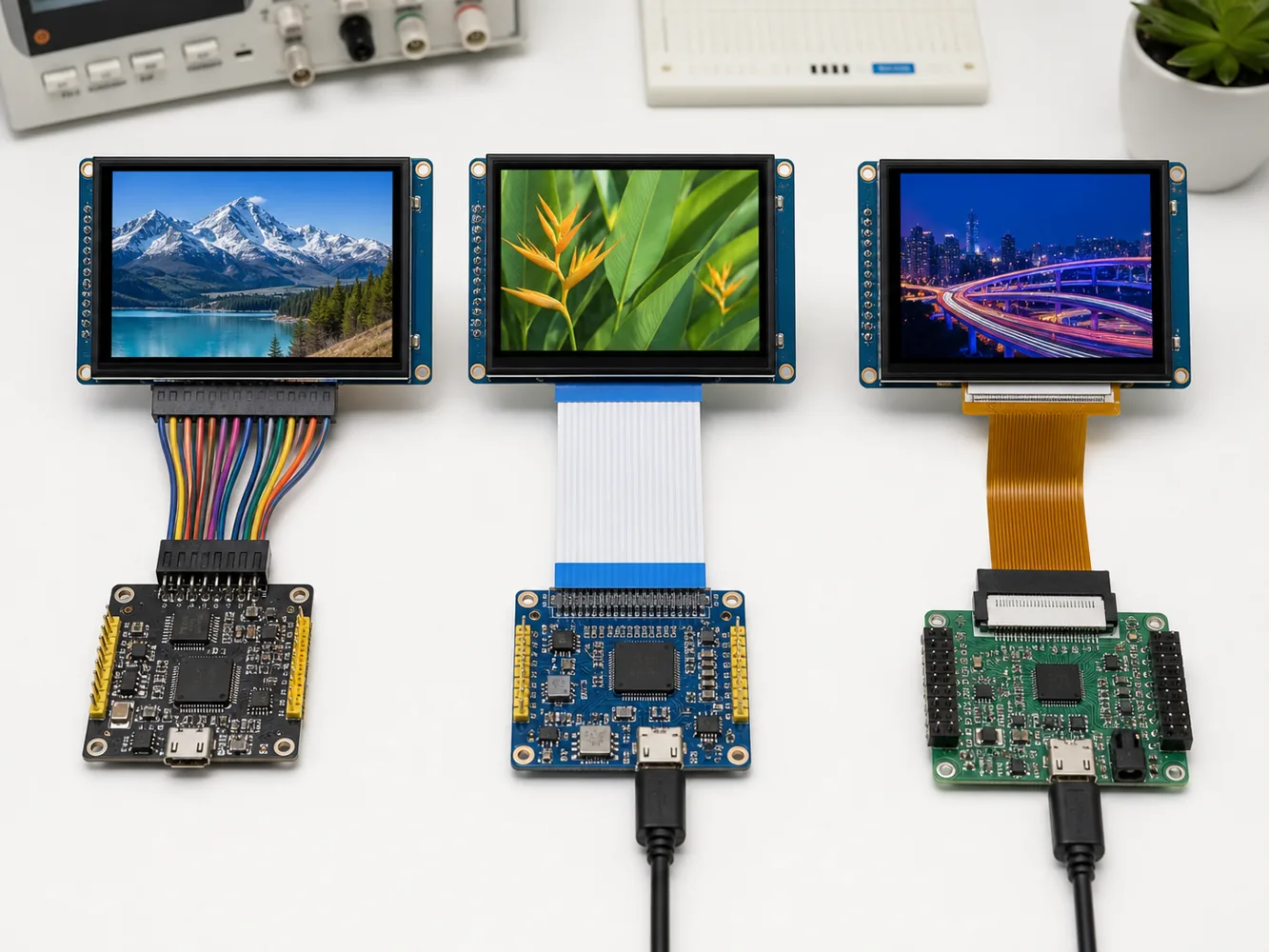 Interface choice affects pin count, refresh speed, firmware effort, PCB layout, and processor selection.
SPI is simple and uses fewer pins, but it may be too slow for larger or richer UI screens. RGB supports continuous display data and is common in embedded systems, but it requires more signal lines and careful timing. MIPI DSI offers higher bandwidth with fewer lanes, but processor compatibility and software support become more important.
If your project needs a simple standard display with mature supply, review standard TFT LCD modules first. If the project needs stronger color stability and viewing angle, IPS TFT LCD modules may be more suitable.
3. When MIPI DSI Is a Good Fit
MIPI DSI is often a good fit when the product needs higher resolution, a modern graphical interface, a compact FPC, or a processor platform that already supports MIPI display output. It is common in handheld terminals, medical instruments, smart home panels, portable test equipment, security devices, and high-end embedded HMI systems.
It may also help when the product has limited PCB connector space. A smaller signal interface can reduce routing pressure compared with wide parallel buses.
However, buyers should confirm whether the selected processor, operating system, bootloader, and display driver can support the panel. Hardware compatibility alone is not enough if the software team cannot initialize and tune the display reliably.
4. Key Parameters to Check
Before selecting a MIPI DSI TFT LCD module, review these parameters:
- Screen size, active area, outline size, and thickness
- Resolution and pixel format
- Number of MIPI lanes
- Lane speed and clock requirements
- Driver IC and initialization sequence
- Command mode or video mode support
- Supply voltage and backlight current
- FPC direction, pin assignment, and connector type
- Touch panel option and separate touch interface
- Operating temperature and lifecycle availability
The most common project risk is assuming that two MIPI displays are interchangeable because they use the same interface name. In practice, driver IC, timing, initialization command set, lane count, and FPC pinout may be different.
5. Touch Panel and Cover Lens Considerations
Many MIPI DSI LCD projects also require capacitive touch. Touch usually uses a separate controller and interface, such as I2C, and it may require cover glass, bonding, firmware tuning, and ESD review.
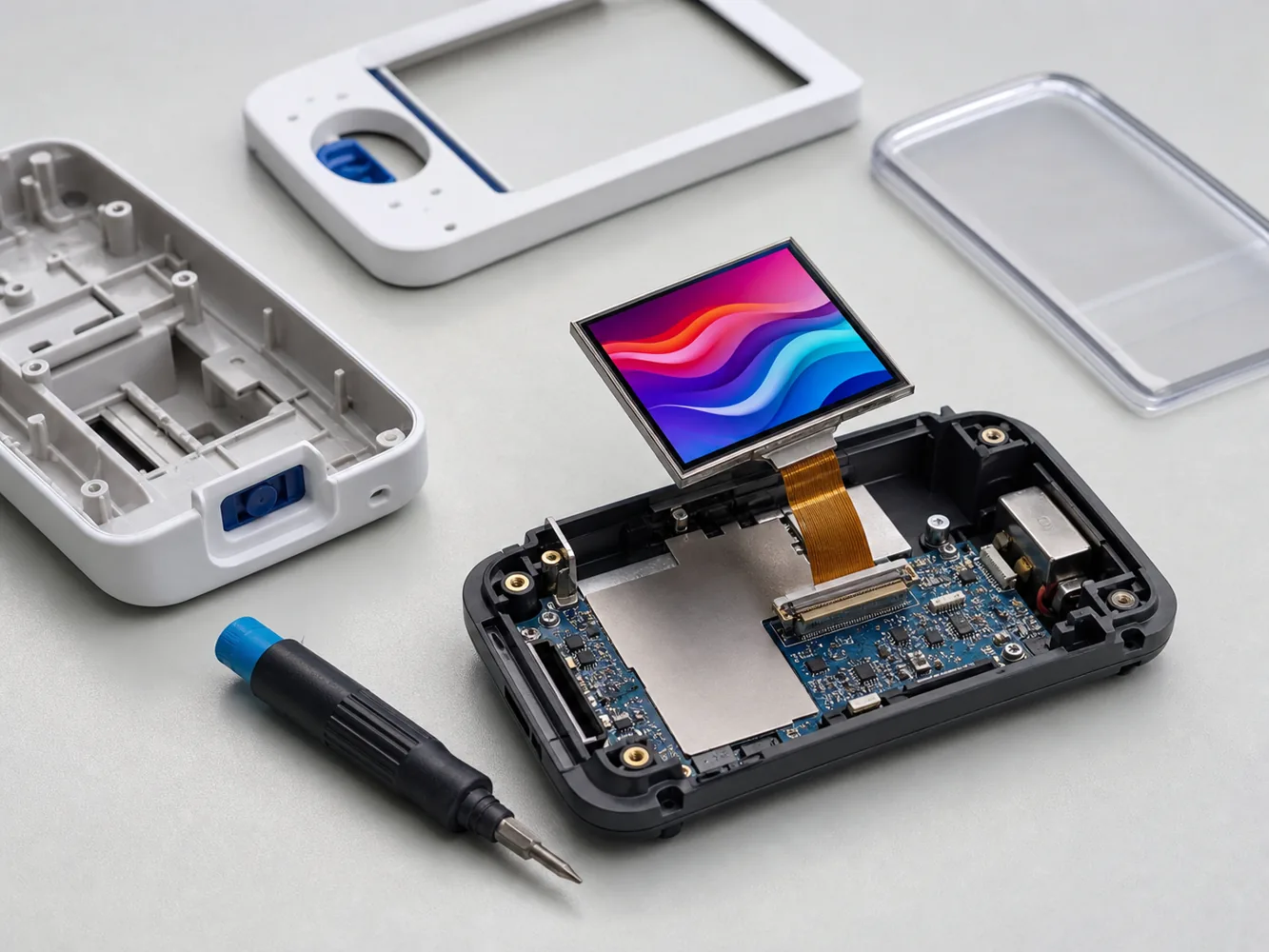 MIPI DSI projects should be validated with the real processor, FPC routing, enclosure, and touch structure.
For products that need touch operation, compare the mechanical and electrical structure with capacitive touch TFT LCD modules. Confirm cover lens thickness, touch active area, FPC routing, controller support, and grounding.
If the product is used in cold, hot, or harsh environments, also review whether wide temperature TFT LCD modules are required. MIPI signal stability and touch performance should be tested under the actual operating conditions.
6. PCB Layout and Signal Integrity
MIPI DSI uses high-speed differential signals, so PCB layout matters. Keep differential pairs length-matched, control impedance, avoid unnecessary stubs, and follow the processor and connector layout recommendations.
The FPC between display and mainboard should be reviewed early. Bending, connector position, cable length, grounding, shielding, and mechanical movement can affect signal stability. A display that works on an open bench may fail inside the final enclosure if the FPC is bent sharply or routed near noisy circuits.
For high-volume products, test multiple samples across temperature, supply tolerance, and production lots before approval.
7. Practical Buying Advice
MIPI DSI selection should involve both purchasing and engineering. Buyers should not compare only price and size. Engineering should confirm processor support, initialization code, lane count, FPC pinout, and validation plan before samples are approved.
Ask the supplier for datasheet, drawing, pin assignment, initialization reference, backlight parameters, touch information, and lifecycle status. If your project needs a custom FPC, cover lens, touch panel, optical bonding, or brightness change, confirm feasibility before locking the mechanical design.
MIPI DSI TFT LCD Module Checklist
Use this checklist before sample approval:
- Does the processor support the required MIPI DSI mode?
- Is the lane count compatible?
- Is the driver IC supported by your software platform?
- Is initialization code available?
- Is the FPC pinout confirmed?
- Is the connector available and production-friendly?
- Is the backlight current within the power budget?
- Is touch required, and is the touch controller supported?
- Has the display been tested inside the real enclosure?
- Is lifecycle and supply stability acceptable?
How Sunshine Display Can Help
Sunshine Display supplies small color LCD display modules under 32 inches for global B2B customers. For MIPI DSI projects, Sunshine Display can help review display size, resolution, interface, driver IC, FPC, connector, touch panel, cover glass, brightness, operating temperature, and sample validation requirements.
If your project needs a compact high-resolution TFT LCD module, share your processor platform, target screen size, resolution, interface requirements, touch needs, mechanical drawing, and expected volume. You can contact Sunshine Display to discuss suitable MIPI DSI TFT LCD module options before finalizing your design.
FAQ
Is MIPI DSI better than RGB for small TFT LCD modules?
It depends on the project. MIPI DSI can reduce pin count and support higher bandwidth, but RGB may be simpler if the processor and module already match well.
Can any processor drive a MIPI DSI LCD module?
No. The processor must support the required MIPI DSI mode, lane count, timing, and driver initialization.
Does MIPI DSI also include touch signals?
Usually no. Capacitive touch typically uses a separate touch controller and interface, often I2C, even when the display image uses MIPI DSI.
What is the biggest risk when changing MIPI LCD suppliers?
Driver IC differences, initialization commands, FPC pinout, lane count, and timing differences can prevent direct replacement.
Can Sunshine Display support custom MIPI DSI TFT LCD modules?
Yes. Sunshine Display can help review size, resolution, interface, FPC, connector, touch panel, cover glass, brightness, and sample validation needs.