LCD Backlight Lifetime Guide for Small TFT Modules
Backlight lifetime should be reviewed together with brightness, current, temperature, and duty cycle.
Backlight lifetime is one of the most important reliability topics in small color LCD display projects. A TFT LCD module may look excellent during sample approval, but the brightness seen on day one is not always the brightness users will see after years of operation.
For OEM products using LCD color display modules under 10 inches, this matters in industrial controllers, medical devices, handheld terminals, smart home panels, meters, POS equipment, charging devices, and embedded HMI systems. These products often need stable readability, predictable maintenance planning, and consistent appearance across production batches.
This guide explains how buyers, engineers, and product managers should evaluate LED backlight lifetime before choosing a small TFT LCD module.
1. What Backlight Lifetime Really Means
Most small TFT LCD modules use LED backlights. The LCD panel controls the image, but the backlight provides the light that makes the image visible. Over time, LED brightness gradually decreases. This is normal aging behavior, not necessarily a sudden failure.
Backlight lifetime is often described as the time until brightness drops to a certain percentage of the initial value. A common reference is L50, meaning the backlight has declined to 50 percent of original brightness under specified test conditions. Some projects may care about L70 or another threshold if the display must remain very bright.
The important point is that lifetime is not a fixed number in every product. It depends on LED current, operating temperature, brightness setting, duty cycle, thermal design, and the readability requirement of the final application.
2. Understand the Backlight Structure
A TFT LCD backlight is more than a row of LEDs. It usually includes LEDs, a light guide plate, reflector, diffuser films, brightness enhancement films, frame structure, and FPC or soldered power connection. The optical stack spreads LED light across the display area.
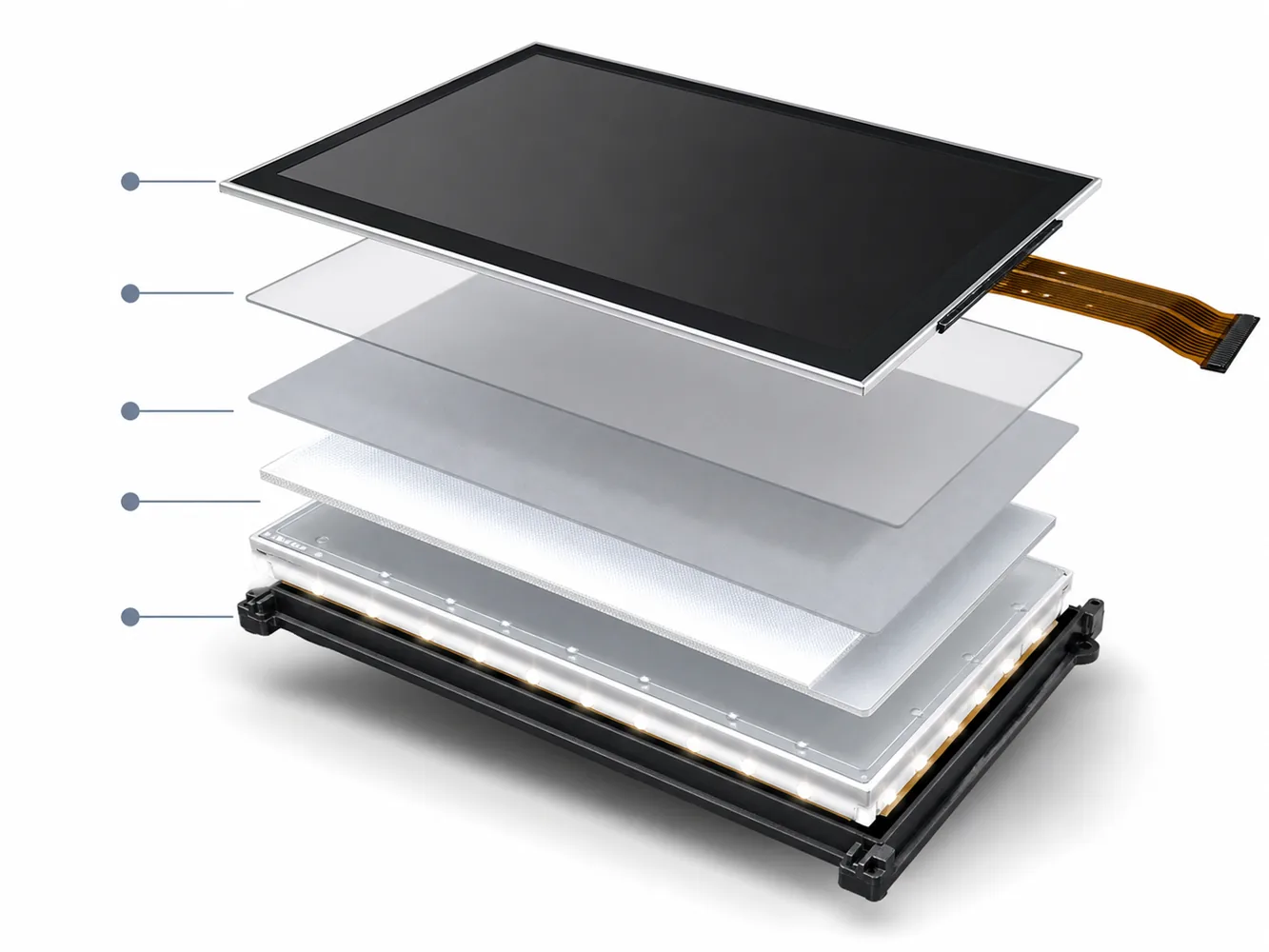 LEDs, light guide plates, diffuser films, and optical stack design all affect brightness uniformity and service life.
Uniformity, brightness, thickness, power consumption, and lifetime are all connected. Driving the backlight harder can increase brightness, but it may also increase temperature, current consumption, and aging speed.
For compact products, mechanical space is limited. The display may be close to batteries, processors, wireless modules, sealed plastic, or metal housings. These surrounding parts can affect heat dissipation and therefore backlight performance over time.
3. Brightness Requirements Should Match the Use Case
The best backlight design is not always the brightest one. A display used indoors may only need moderate brightness. A semi-outdoor device may need higher brightness, anti-glare cover glass, optical bonding, or a better viewing angle solution.
If the product uses very high brightness only to compensate for reflections from cover glass or poor optical design, the project may pay for it through higher power consumption and shorter backlight margin. For battery-powered devices, this can also reduce operating time.
Define the real environment early: indoor, outdoor, vehicle, factory floor, medical room, retail counter, or handheld inspection. Then define brightness target, readability target, and operating hours. This gives the supplier a practical basis for recommending the LCD module.
4. Check Current, Temperature, and Driving Method
Backlight LEDs are current-driven components. Buyers should check typical backlight current, recommended operating current, forward voltage, number of LED strings, and whether a constant-current driver is required on the mainboard.
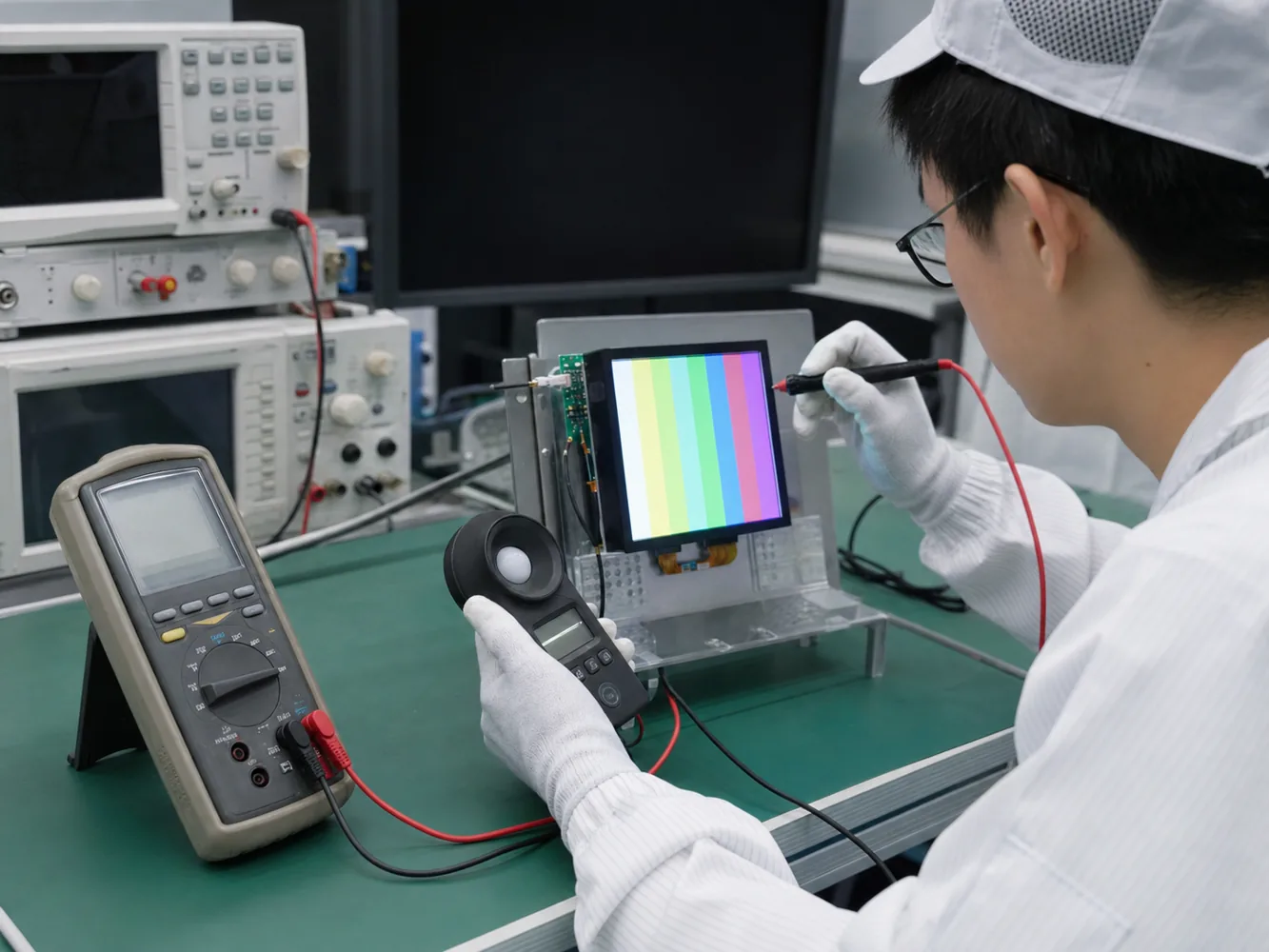 Backlight validation should measure both electrical current and optical brightness under realistic conditions.
Driving LEDs above the recommended condition may improve short-term brightness but can reduce lifetime and create thermal stress. For stable production, the mainboard should provide controlled current rather than relying on an unstable supply condition.
Temperature is equally important. A backlight tested at room temperature may behave differently inside a sealed enclosure at elevated temperature. If your product operates continuously or in warm environments, evaluate brightness and thermal behavior inside the final housing.
5. Plan for Dimming and Duty Cycle
Many products do not need full brightness all the time. Backlight dimming can reduce power consumption and improve lifetime. PWM dimming and current dimming are common approaches, and the right method depends on the display, driver circuit, camera compatibility, touch behavior, and user experience.
For equipment with standby modes, the display can dim after inactivity. For industrial HMIs, brightness can be adjusted by ambient light or operator setting. For handheld products, software can reduce brightness during low battery operation.
The expected duty cycle should be part of the buying discussion. A display used 8 hours per day has a different lifetime expectation from one used 24 hours per day. The supplier should understand the real operating pattern, not only the target brightness value.
6. Consider Long-Term Readability, Not Only Initial Specs
Backlight aging is only one part of readability. Contrast, polarizer quality, viewing angle, cover glass reflection, optical bonding, anti-glare treatment, and UI color design also affect whether users can read the screen after years of use.
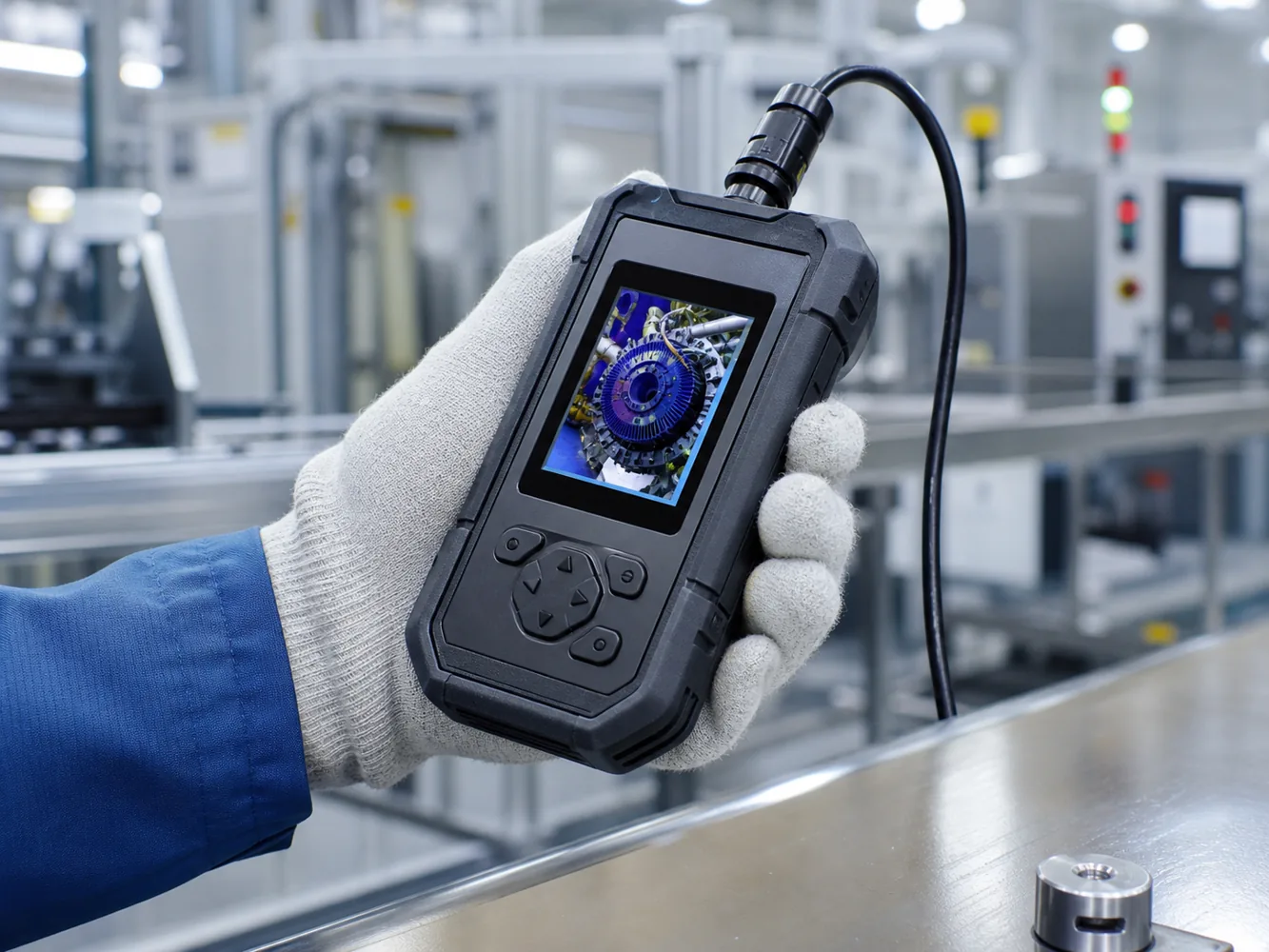 Industrial and handheld products often need stable readability over years of operation.
For OEM products, the key question is not whether the display can reach a high brightness number in a datasheet. The better question is whether the final product remains readable during its expected service life.
If the product is installed in equipment with long maintenance cycles, select a module with enough brightness margin. If the product is cost-sensitive and used indoors, avoid over-specifying brightness that the user does not need.
7. Practical Buying Checklist
Before approving a small TFT LCD module, review these points:
- What brightness does the final product actually need?
- Is the product used indoors, outdoors, or semi-outdoors?
- How many hours per day will the backlight operate?
- What is the target service life of the product?
- What is the typical and maximum backlight current?
- Will the mainboard use a proper constant-current driver?
- What is the expected operating temperature inside the enclosure?
- Does the product need dimming control?
- Is there enough brightness margin after aging?
- Are optical bonding, AG cover glass, or AR treatment needed?
How Sunshine Display Can Help
Sunshine Display supplies Industrial LCD display and touch screen under 32 inches for global B2B customers. For OEM projects, Sunshine Display can help review display size, brightness target, backlight current, interface, touch panel, cover glass, optical bonding, operating temperature, and production requirements.
If your product needs stable readability over a long service life, share the application, screen size, brightness target, daily operating hours, enclosure condition, interface, touch requirement, and expected volume. Sunshine Display can help recommend a practical LCD module structure before sample approval.
Contact Sunshine Display to discuss small TFT LCD modules with suitable backlight brightness, power consumption, and lifetime planning.
FAQ
What does LCD backlight lifetime mean?
It usually refers to the time until the LED backlight brightness decreases to a defined percentage of its initial brightness under specified conditions.
Does higher brightness reduce backlight lifetime?
Higher brightness often requires higher LED current, which can increase heat and accelerate aging if not managed correctly.
Should I choose the brightest LCD module available?
Not always. Choose brightness based on the real use environment, cover glass design, power budget, and expected service life.
Can dimming improve backlight lifetime?
Yes. Reducing average backlight current through dimming or standby control can reduce power consumption and help extend useful lifetime.
Can Sunshine Display help review backlight requirements?
Yes. Sunshine Display can help evaluate brightness, current, thermal conditions, optical design, and long-term readability for small TFT LCD module projects.