LCD or E-Paper for Remote Monitoring Displays?
Industrial remote monitoring devices, data loggers, field sensors, and low-power status terminals often need a display, but not every product needs the same display technology. Some devices need a color TFT LCD module for live dashboards, menu navigation, alarms, and service setup. Others only need a readable status screen that updates occasionally and remains visible with very low power. In those cases, an e-paper display module can be a strong option.
Sunshine Display supports industrial display modules, including LCD display modules up to 32 inches, color TFT LCD modules for OEM applications, e-paper display modules, and custom e-paper product OEM services. For buyers and engineers, the decision should be based on the use case: how often the screen updates, how much information it shows, how users interact with it, and how the product is powered.
Remote monitoring products may use TFT LCD for active dashboards or e-paper for low-power status display.
Start With the Update Pattern
The first question is simple: does the display need to change all the time? A control interface that shows live charts, fast alarms, setup menus, color indicators, and touch operation usually fits a TFT LCD module. A device that shows equipment ID, sensor status, battery level, last reading, maintenance state, or location information may not need continuous refresh.
E-paper is useful when the screen changes occasionally but needs to remain visible for a long time. The display can hold its image after refresh with very low holding power, which is valuable for battery-powered devices, solar-assisted monitors, warehouse labels, asset tags, and remote field equipment. For these products, the power saved between updates can matter more than refresh speed.
For OEM teams reviewing available display choices, Sunshine Display's industrial display module product range is a practical starting point for comparing TFT LCD and e-paper options.
When TFT LCD Is the Better Choice
TFT LCD modules are usually better when the product requires color, fast response, frequent UI changes, animation, touch menus, or detailed operator interaction. A service technician may need to scroll through settings, view trend graphs, acknowledge alarms, and configure communication parameters. In that type of workflow, a color LCD can make the interface easier to understand.
For controlled indoor equipment, standard TFT LCD modules may offer a balanced choice of cost, availability, and display performance. If the device is viewed from different positions, IPS TFT LCD modules can help maintain contrast and color stability. If the product uses a sealed touch interface, capacitive touch TFT LCD modules may be relevant.
The tradeoff is power. A TFT LCD normally needs backlight power while visible, so engineers should check backlight current, brightness setting, sleep mode, wake-up behavior, and thermal impact.
When E-Paper Fits Better
E-paper display modules fit products that prioritize low power, outdoor readability, and static information. Examples include industrial asset labels, remote sensor tags, equipment status signs, warehouse location labels, smart instrumentation labels, and solar or battery-powered monitoring devices. The screen can remain readable even when the device is sleeping, which is valuable when users need to inspect status without waking the full system.
E-paper also has a paper-like visual style with wide viewing angle and good readability under ambient light. For outdoor or semi-outdoor devices, this can be useful because the display does not rely on a backlight in the same way a TFT LCD does. However, engineers should still review temperature range, update speed, partial refresh behavior, ghosting, controller support, and firmware requirements.
If the product updates every second, e-paper is usually not the best choice. If it updates every few minutes, hours, or only after a status change, it may be a very efficient solution.
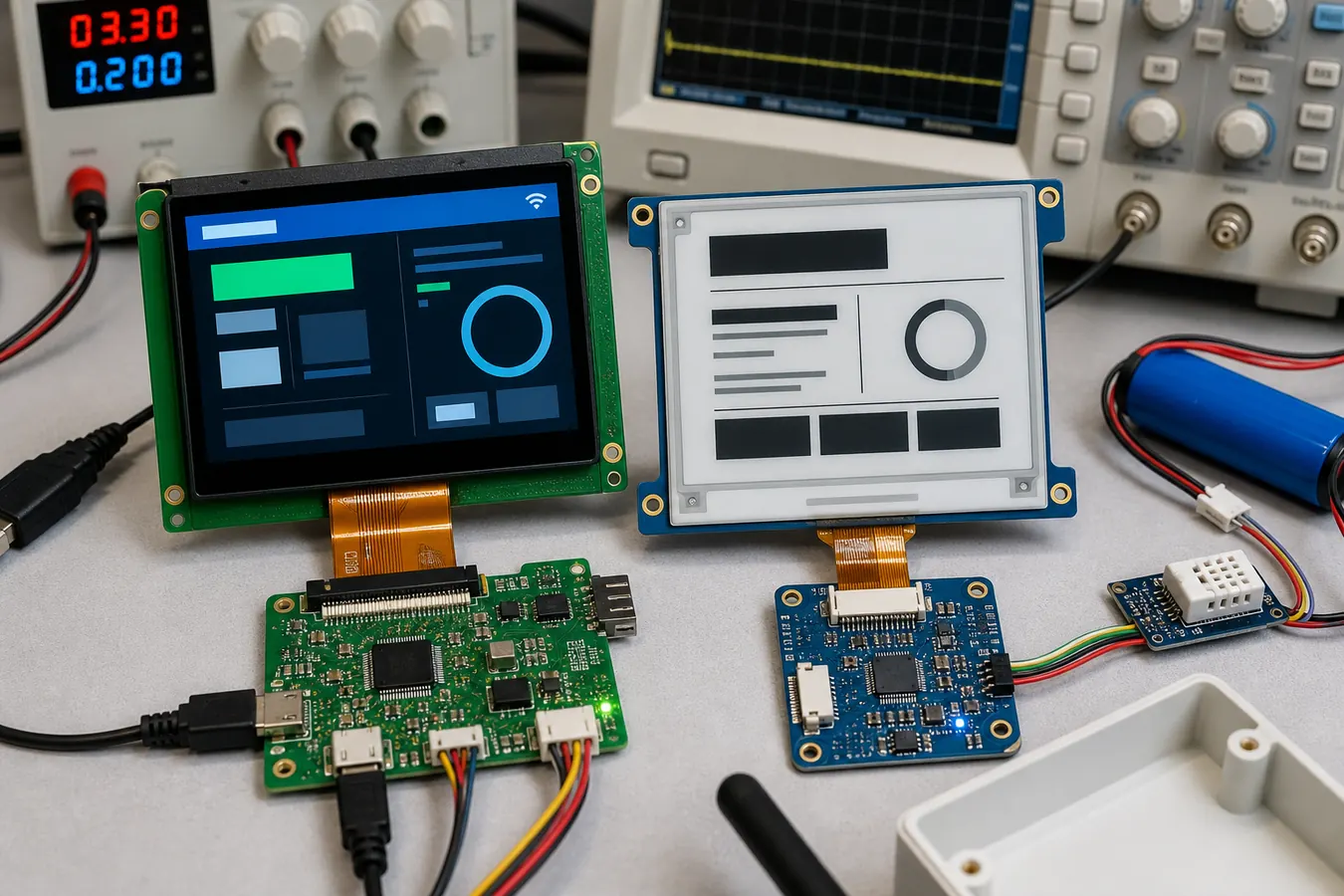 Engineering validation should compare refresh behavior, power budget, interface design, and enclosure fit.
Compare Power at the System Level
Display power should be calculated at the product level, not only from a panel datasheet. For a TFT LCD product, check backlight current, display-on time, sleep current, MCU power, touch controller power, and communication module behavior. For an e-paper product, check refresh current, update frequency, sleep current, wireless communication current, and battery capacity.
A remote sensor that reports once per hour may benefit from e-paper because the display can show the last reading while the system sleeps. A service terminal used for setup and alarms may still need a TFT LCD because technicians interact with it more actively. The best decision often comes from testing both technologies with the real firmware, battery, and enclosure.
Mechanical and Environmental Design
Remote monitoring devices may face vibration, dust, moisture, temperature variation, sunlight, and service handling. Whether the product uses TFT LCD or e-paper, the complete front-panel design should protect the module while keeping it readable. Review cover lens or window structure, gasket compression, FPC bend radius, connector clearance, mounting screws, enclosure wall thickness, and sealing requirements.
For harsh environments, review wide temperature TFT LCD modules for LCD-based products. For e-paper products, confirm low-temperature refresh behavior, storage limits, UV exposure, moisture protection, and enclosure material choices. The display is only one part of the device; the housing, PCB, battery, cable exits, and mounting method all affect reliability.
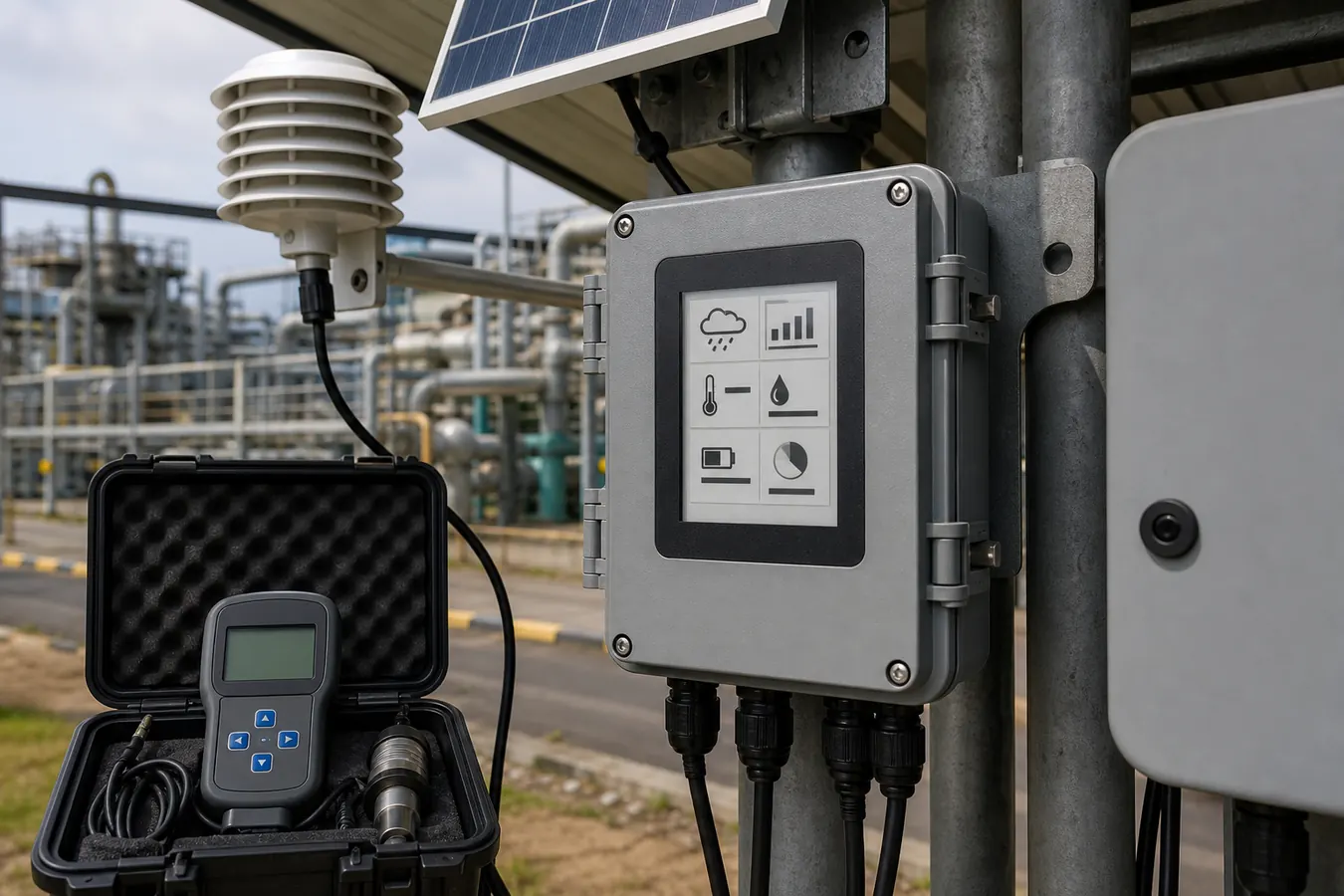 E-paper can keep field status visible with very low holding power in remote monitoring equipment.
Practical Buying Advice
Before selecting an LCD or e-paper display module for a remote monitoring product, prepare the screen size, update frequency, power source, battery life target, information density, viewing environment, interface, operating temperature, enclosure concept, mounting method, firmware capability, and expected production volume.
Choose TFT LCD when the product needs color UI, frequent interaction, live data, touch control, or fast alarm response. Choose e-paper when the product needs low power, static readability, sunlight-friendly information, and long sleep time. Sunshine Display can help OEM teams review both paths and choose the right industrial display module for the product architecture.
For LCD display modules, e-paper display modules, or custom e-paper OEM development, contact Sunshine Display with your application, target size, update method, power requirements, and enclosure plan.
FAQ
Is e-paper suitable for industrial remote monitoring devices?
Yes. E-paper is suitable when the device updates occasionally and needs readable status information with very low holding power.
When should a remote monitor use TFT LCD instead?
Use TFT LCD when the device needs color, fast refresh, touch menus, live data, detailed settings, or frequent operator interaction.
Does e-paper work without power?
E-paper can retain an image after refresh with very low or no holding power, but power is still needed to update the image.
What should engineers test before choosing e-paper?
Test refresh behavior, ghosting, update speed, temperature performance, controller support, firmware integration, battery life, and enclosure protection.
Can Sunshine Display support both LCD and e-paper projects?
Yes. Sunshine Display supports industrial LCD display modules, e-paper display modules, and custom e-paper OEM product development.