Packaging machine HMIs need TFT LCD modules that keep recipes, alarms, speed data, and service pages readable during production.
Packaging machines rely on clear operator information. The HMI screen may show recipe selection, machine speed, batch count, film tension, sealing temperature, alarm state, sensor status, and maintenance pages. When a packaging line is running continuously, the display is not just a nice interface. It directly affects setup time, operator confidence, troubleshooting speed, and production stability.
For OEM engineers and sourcing teams, selecting the right LCD module for packaging machine HMIs means balancing readability, touch or key operation, electrical stability, front-panel protection, and long-term supply. Sunshine Display supplies industrial display modules, including LCD display modules up to 32 inches, small and medium-size TFT LCD modules, touch display modules, e-paper display modules, and custom OEM display solutions. Buyers can compare options through the Sunshine Display industrial display module product range before narrowing the specification.
Start With the Real HMI Workflow
Packaging equipment can include filling, sealing, wrapping, labeling, coding, inspection, counting, and sorting functions. The HMI may need recipe management, production statistics, alarm logs, machine diagrams, temperature control, motor status, and service menus. The display size should be selected around these real screens, not only around the available panel opening.
A compact machine may use a 4.3 inch or 5 inch TFT LCD. A more advanced packaging line may need 7 inch, 10.1 inch, or larger modules to show process diagrams and multiple data zones clearly. If operators often change recipes or review alarms, a larger display with a well-organized UI can reduce errors and training time.
Readability on a Moving Production Line
Packaging lines are visually busy. Operators may read the HMI while products move on conveyors, stack lights flash, pneumatic actuators cycle, and stainless machine guards reflect overhead lighting. Brightness matters, but contrast, viewing angle, surface reflection, and UI design matter just as much.
For panels viewed from different standing positions, IPS TFT LCD modules can help maintain stable color and contrast. Standard TFT LCD modules can still work when the viewing direction is controlled and the UI uses strong contrast. In either case, the display should be checked with actual packaging screens, including alarm colors, small data fields, trend pages, and night-shift brightness settings.
Touch, Buttons, and Front-Panel Protection
Many packaging HMIs use capacitive touch for recipe selection, service menus, and parameter adjustment. Some machines still combine touch with physical start, stop, reset, jog, and emergency stop buttons. The display module should be selected with the full operator panel, not as a separate afterthought.
If touch is required, validate the final cover glass thickness, bonding structure, grounding, glove use, wet or oily finger operation, and EMC behavior. Packaging equipment may include motors, heaters, sensors, PLCs, and long wiring runs, so touch stability must be confirmed under realistic electrical conditions. Sunshine Display's capacitive touch TFT LCD modules can be reviewed when an integrated touch display stack is needed.
The front panel must also protect the LCD from cleaning, vibration, and repeated operation. Review cover lens material, anti-glare treatment, gasket compression, mounting screw position, active area alignment, and sealing requirements before approving the mechanical design.
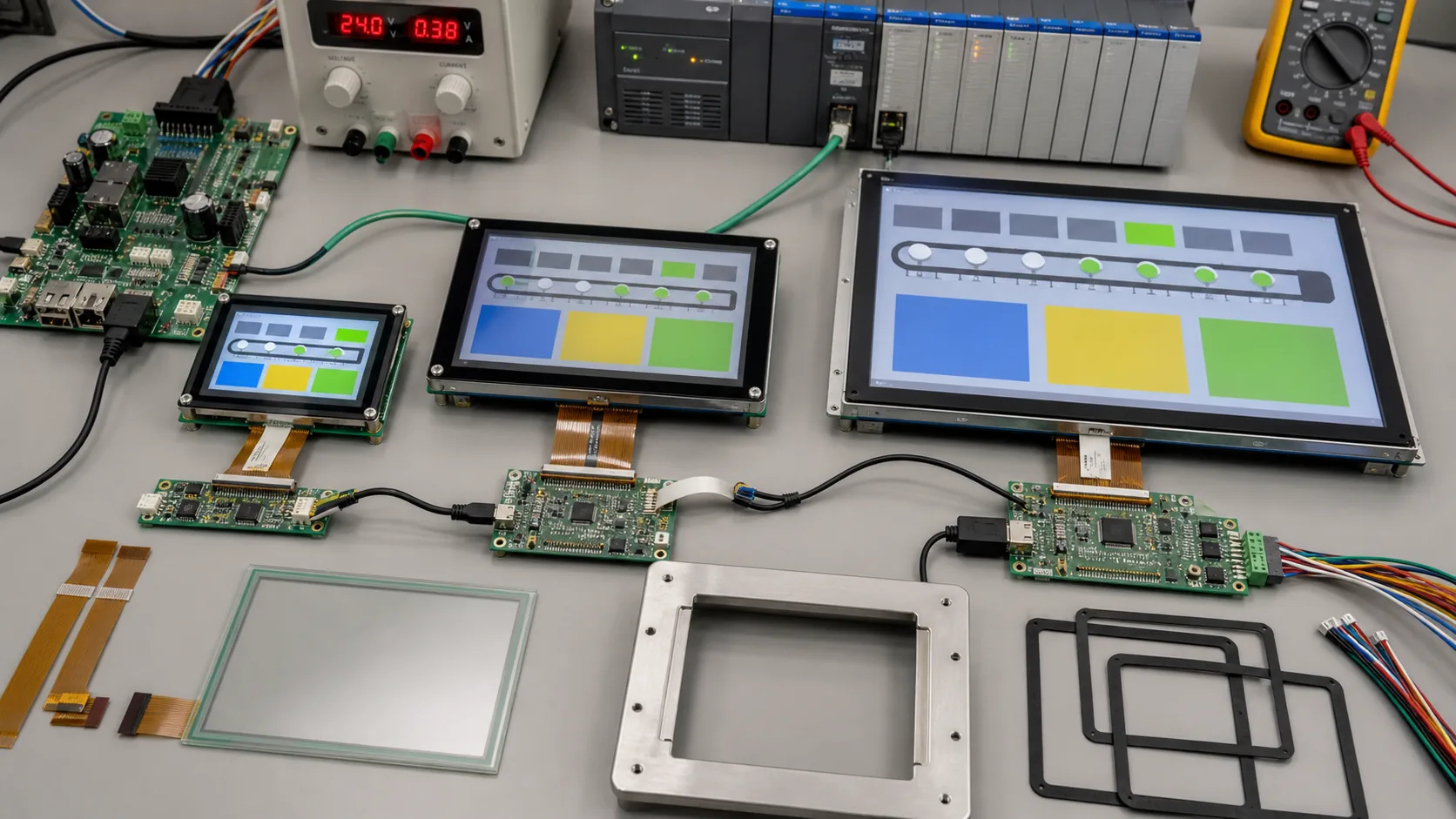 Validation should include real UI readability, touch stack, PLC/controller interface, cover lens, mounting, and wiring conditions.
Interface and Controller Matching
Packaging machines may use PLC-based controllers, embedded boards, industrial PCs, or custom mainboards. The LCD interface should match the controller architecture, required resolution, cable distance, and available development resources. Common options may include RGB, LVDS, MIPI DSI, HDMI through a controller board, or SPI for smaller displays.
Interface choice affects development risk. SPI can reduce pin count on compact modules but may limit refresh speed at higher resolutions. LVDS is common for medium-size industrial TFT LCD modules. RGB can be useful for lower-resolution panels. MIPI DSI may work well when the processor platform supports it. Buyers should confirm voltage, timing, initialization, backlight driver requirements, FPC direction, connector type, and demo code before sample approval.
Temperature, Cleaning, and Production Reliability
Packaging environments vary widely. Food, pharmaceutical, cosmetics, electronics, and industrial goods packaging lines have different cleaning, humidity, temperature, and enclosure requirements. Some panels are mounted in stainless housings, some near heaters, and some inside crowded electrical cabinets.
For equipment with wider environmental requirements, wide temperature TFT LCD modules may reduce risk. Backlight lifetime should also be checked because packaging lines often run for long shifts. The selected display should support the intended brightness level without excessive heat or premature backlight degradation.
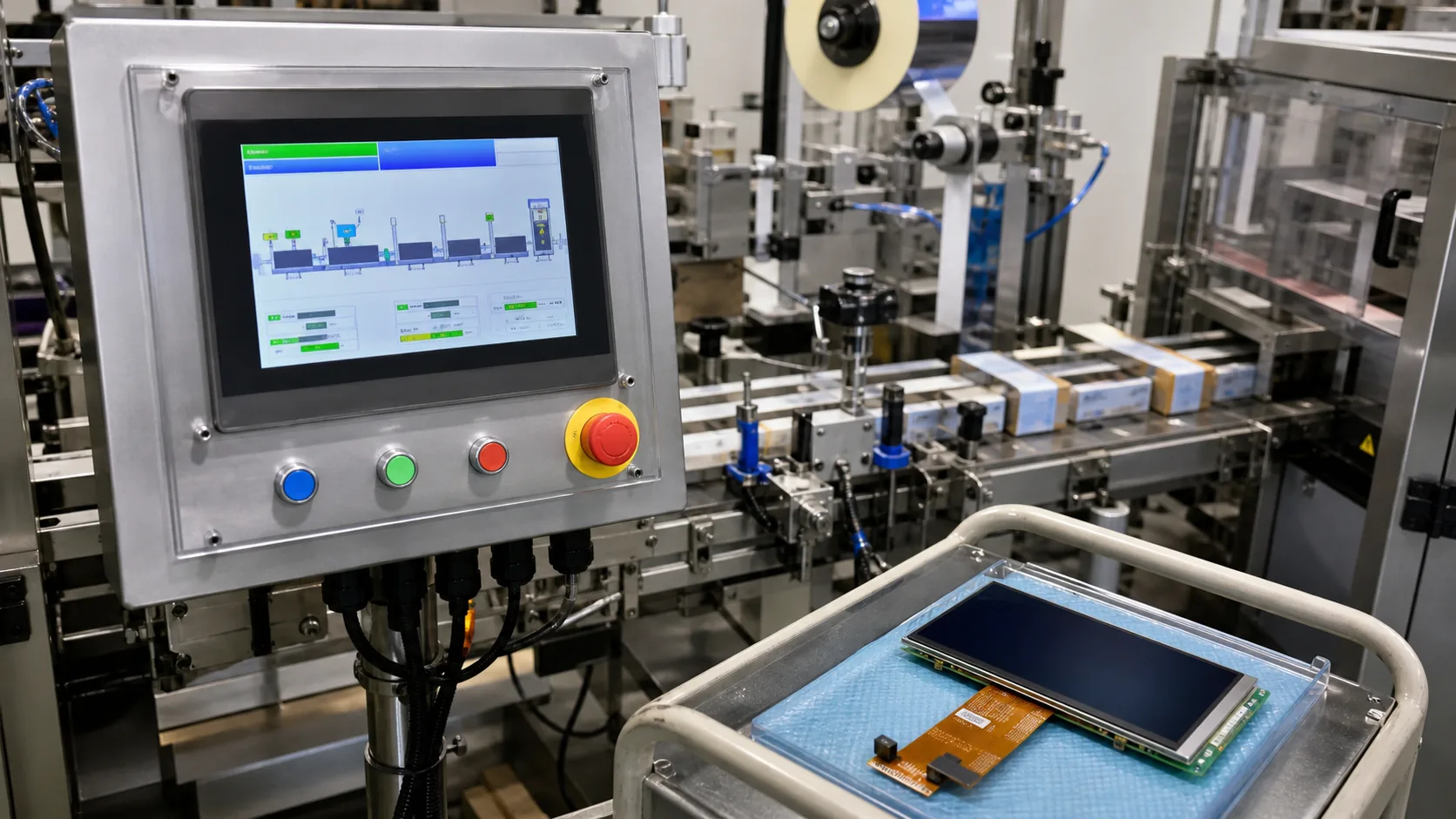 Packaging lines require readable displays, protected front panels, stable connectors, and display supply continuity.
Lifecycle and Change Control
Packaging machines often stay in production for many years. A display change can affect the enclosure, firmware, cable, front-panel printing, inspection documents, and spare parts. Before volume production, buyers should ask about panel lifecycle, driver IC availability, FPC and connector change control, backlight alternatives, and change notification procedures.
A complete approval package should include mechanical drawing, electrical specification, optical data, interface timing, inspection standard, reliability information, and packaging method. This documentation makes the transition from prototype to production more controlled.
Where E-Paper Can Support Packaging Operations
This article focuses on active TFT LCD HMIs. E-paper display modules are not suitable as the main interface for fast packaging machine operation, but they can support auxiliary use cases: warehouse labels, machine status tags, tooling identification, maintenance cards, or low-power production signs. E-paper is strongest when information changes occasionally and must remain visible with minimal standby power.
Practical Buying Advice
When sourcing an LCD module for a packaging machine HMI, provide target size, resolution, interface, brightness, viewing angle, operating temperature, touch requirement, cover glass structure, enclosure drawing, cable routing, expected quantity, and product lifecycle. Include real HMI screenshots if available, especially recipe, alarm, machine overview, and maintenance pages.
Sunshine Display can help OEM teams compare standard TFT LCD modules, IPS options, capacitive touch modules, wide temperature displays, and custom industrial display modules. To discuss a packaging machine HMI or industrial automation display project, share your requirements through the Sunshine Display contact page.
FAQ
What LCD size is common for packaging machine HMIs?
Compact machines may use 4.3 inch or 5 inch displays. More advanced HMIs often use 7 inch, 10.1 inch, or larger TFT LCD modules depending on UI density and enclosure space.
Should packaging HMIs use capacitive touch?
Capacitive touch is useful for recipes and menus, but it should be validated with the final cover glass, grounding, cleaning conditions, glove use, and EMC environment.
Is IPS useful for packaging machine displays?
IPS is useful when operators view the panel from side positions or different heights. Standard TFT LCD modules can still work when viewing direction and UI contrast are controlled.
What should buyers confirm before production?
Confirm display size, brightness, viewing angle, interface, touch behavior, cover glass, mounting, FPC direction, connector stability, backlight lifetime, lifecycle, and change control.