CNC machine panels need TFT LCD modules that keep tool paths, axis data, alarms, and setup menus readable in daily production.
CNC machine control panels are used in a demanding industrial environment. Operators rely on the screen to view tool paths, spindle status, axis position, machining progress, alarm messages, setup pages, and maintenance information. If the display is difficult to read or unstable in production, the operator experience and machine uptime are both affected.
For OEM engineers and sourcing teams, selecting the right LCD module for CNC machine control panels means balancing display size, readability, interface, front-panel structure, electrical reliability, and long-term supply. Sunshine Display supplies industrial display modules, including LCD display modules up to 32 inches, small and medium-size TFT LCD modules, touch display modules, e-paper display modules, and custom OEM display solutions. Buyers can review the Sunshine Display industrial display module product range when comparing display technologies and module sizes.
Start With CNC UI Requirements
CNC interfaces often show dense visual information. A single screen may include a tool path preview, coordinate values, spindle speed, feed rate, alarm status, soft keys, and parameter menus. The display needs enough resolution and active area to keep this information usable during actual operation.
A compact machine or auxiliary controller may use a 7 inch TFT LCD. Larger machine tools, machining centers, and operator panels may use 10.1 inch, 12.1 inch, 15.6 inch, or larger LCD modules. The best size depends on UI density, viewing distance, panel layout, and available enclosure space. A larger display is not automatically better if the interface, controller, and mechanical structure are not designed around it.
Readability in a Machining Workshop
Machining workshops can include bright overhead lights, coolant mist, metal surfaces, vibration, and operators viewing the panel from different angles. Brightness is important, but it should be considered together with contrast, viewing angle, cover glass reflection, and UI color choices.
For panels viewed from standing or side positions, IPS TFT LCD modules can help maintain stable contrast and color. A standard TFT LCD may still work for cost-sensitive machine panels when the viewing position is controlled. The practical test is simple: use real CNC screens with small numbers, thin lines, alarm colors, and tool path graphics under actual workshop lighting.
Touch, Keypads, and Handwheel Layout
CNC control panels often combine display, keypad, rotary controls, handwheel, emergency stop, and physical machine operation buttons. Some modern panels use capacitive touch for menus and setup pages, while many retain mechanical buttons for frequent operations.
If touch is required, validate it with the final cover glass, grounding, glove or oily finger conditions, EMC environment, and enclosure structure. Sunshine Display's capacitive touch TFT LCD modules can be considered when the project needs an integrated touch display stack.
For button-heavy panels, the LCD module must fit the front-panel layout without interfering with keys, knobs, mounting screws, or cable routing. Check active area, viewing area, bezel width, FPC direction, connector position, and bracket design before committing to tooling.
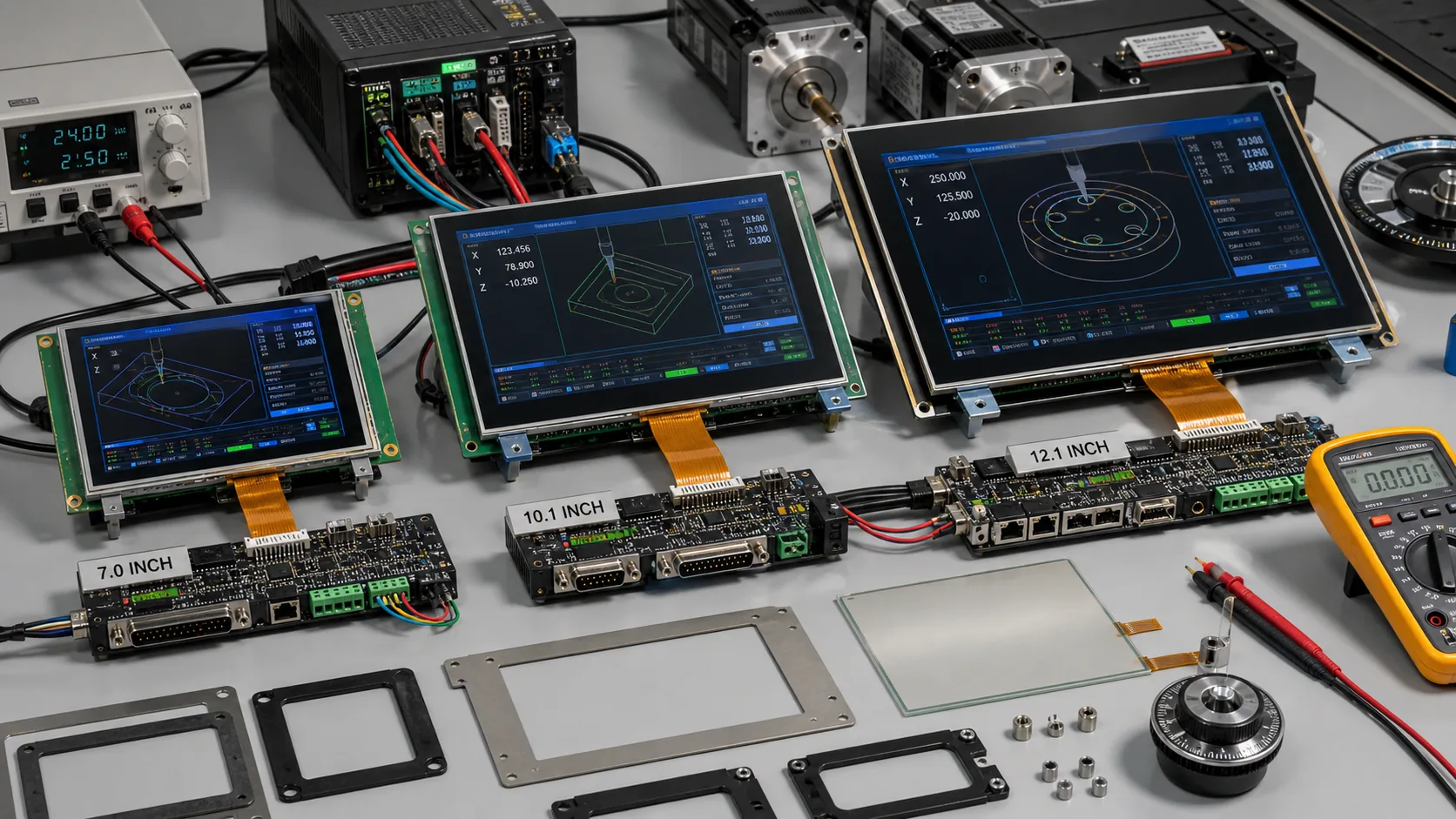 Validation should review interface, cover lens, mounting frame, handwheel layout, electrical noise, and real CNC UI readability.
Interface and Controller Compatibility
CNC panels may use embedded controllers, industrial PCs, or custom control boards. The LCD interface should match the controller architecture and resolution target. Common options may include LVDS, RGB, MIPI DSI, eDP, or HDMI through a controller board depending on display size and platform.
Interface choice affects development effort. LVDS is common for many medium-size industrial LCD modules. RGB can be practical for lower-resolution displays. MIPI DSI may be suitable when the processor supports it well. Larger panels may require a different interface strategy. Buyers should confirm timing, voltage, initialization, backlight driver requirements, cable length, EMI behavior, and driver support before sample approval.
Mechanical Protection and Environmental Stress
CNC equipment can expose the front panel to vibration, coolant, metal chips, cleaning, and repeated operator contact. The LCD stack should be reviewed with the enclosure, not as an isolated component. The design may include cover glass, anti-glare treatment, printed border, gasket, metal bracket, bonding, and sealing structure.
The module should not be compressed unevenly after assembly. Pressure marks, light leakage, touch instability, or viewing area misalignment usually come from mechanical design details. Review screw torque, gasket compression, bracket flatness, cover lens thickness, and tolerance stack before production tooling.
Temperature is also important. Control cabinets can become warm, and some machines operate in cold workshops or semi-outdoor environments. For harsh conditions, wide temperature TFT LCD modules may reduce risk.
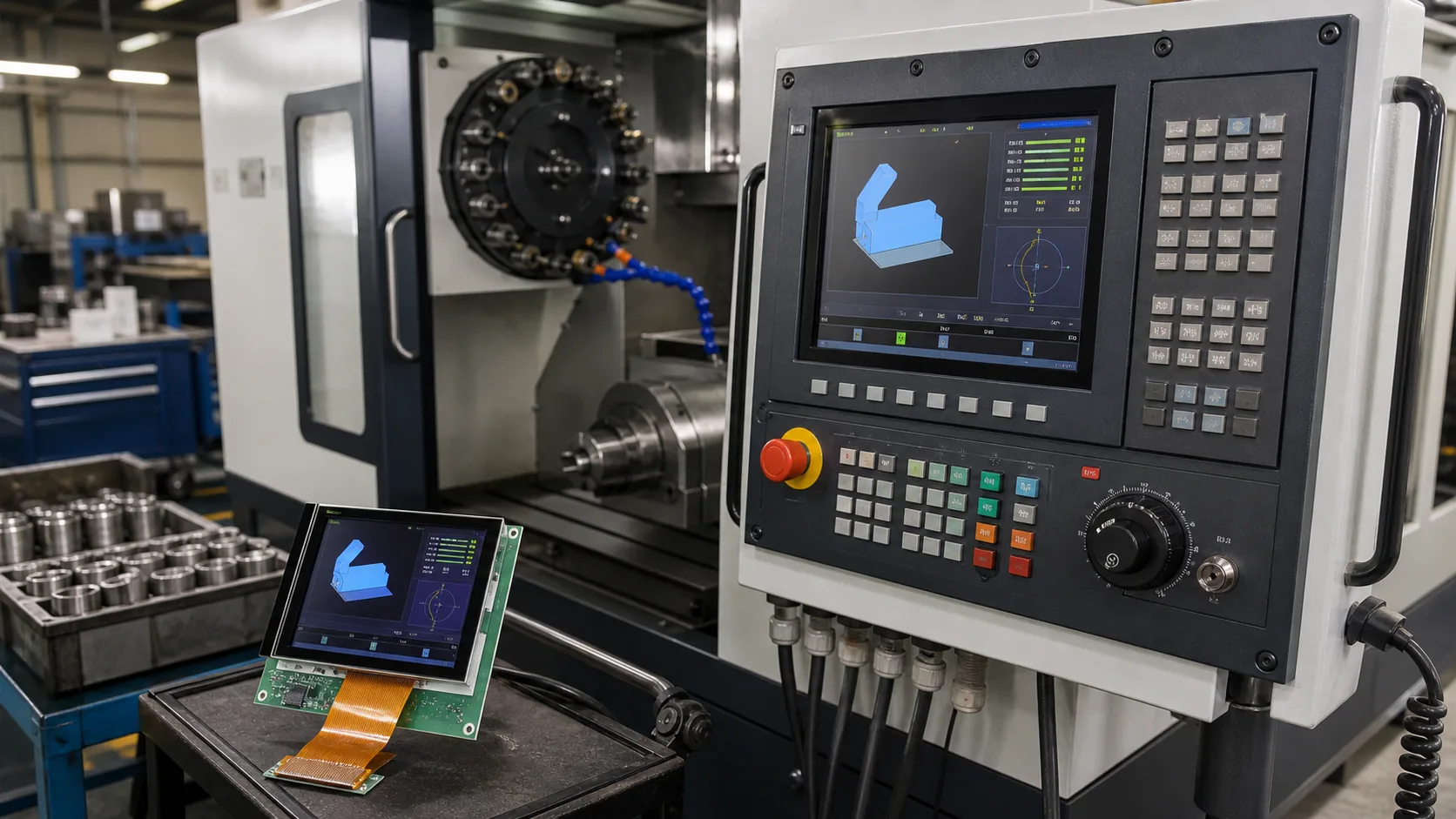 Machining environments require display readability, front-panel protection, connector reliability, and long-term module availability.
Lifecycle and Service Planning
CNC machines often remain in service for many years. A display change can affect the front panel, cable, firmware, spare parts, certification, and service documentation. Before mass production, buyers should ask about panel lifecycle, driver IC availability, backlight alternatives, FPC and connector change control, and sample approval records.
Stable documentation is also useful. Approve the display with a drawing, electrical specification, optical data, interface timing, inspection standard, reliability information, and packaging method. This reduces risk when the project moves from prototype to production.
Where E-Paper Fits Differently
This topic is mainly about active TFT LCD control panels. E-paper display modules are not suitable for fast CNC operation screens, but they can be useful for low-power asset labels, tool identification tags, maintenance status plates, or warehouse labels around a machining facility. For live tool path display and machine operation, TFT LCD remains the appropriate primary display technology.
Practical Buying Advice
When sourcing an LCD module for CNC machine control panels, provide the supplier with target size, resolution, interface, brightness, viewing angle, operating temperature, touch requirement, cover glass structure, enclosure drawing, cable routing, expected annual quantity, and product lifecycle. Include real CNC UI screenshots if possible.
Sunshine Display can help OEM teams compare standard TFT LCD modules, IPS options, capacitive touch modules, wide temperature displays, and custom industrial display solutions. To discuss a CNC control panel, machining center display, or industrial operator interface project, share your requirements through the Sunshine Display contact page.
FAQ
What LCD size is common for CNC machine panels?
Many CNC panels use medium or larger TFT LCD modules, such as 7 inch, 10.1 inch, 12.1 inch, 15.6 inch, or larger sizes depending on UI density and enclosure space.
Should CNC panels use IPS TFT LCD modules?
IPS is useful when operators view the panel from different angles or when stable contrast is important. Standard TFT LCD modules may still work when the viewing position is controlled.
Is capacitive touch suitable for CNC control panels?
Yes, but it should be tested with the final cover glass, grounding, EMC conditions, glove or oily finger use, and the physical keypad or handwheel layout.
What should buyers confirm before mass production?
Confirm interface compatibility, brightness, viewing angle, temperature range, touch behavior, cover glass, FPC direction, connector stability, backlight lifetime, lifecycle, and change control.