Environmental monitoring equipment needs displays that keep sensor trends, alarms, and maintenance status readable in industrial conditions.
Industrial environmental monitoring equipment must present clear information in places where conditions are rarely ideal. A monitoring device may track temperature, humidity, air quality, pressure, water quality, gas concentration, dust, vibration, or utility system status. Operators need to see trends, alarm states, calibration prompts, sensor faults, and service records without opening a laptop every time.
For OEM engineers and sourcing teams, choosing the right LCD module for environmental monitoring equipment means balancing readability, power consumption, interface design, enclosure protection, operating temperature, and long-term supply. Sunshine Display supplies industrial display modules, including LCD display modules up to 32 inches, small and medium-size TFT LCD modules, e-paper display modules, and custom OEM display solutions. Buyers can start from the Sunshine Display industrial display module product range when comparing display technologies and module sizes.
Define How the Data Will Be Used
Environmental monitoring products vary widely. Some devices show simple local readings. Others display multi-sensor dashboards, historical curves, threshold alarms, system diagrams, and maintenance menus. A compact monitoring transmitter may use a small TFT LCD or e-paper label, while a cabinet-level monitoring panel may need a 7 inch, 10.1 inch, or larger display.
The display size should follow the real workflow. If technicians only need quick status confirmation, a compact screen may be enough. If the device supports calibration, alarm review, sensor configuration, or trend analysis, a larger color TFT LCD module may make the product easier to operate. The key is to test real UI screens, not only sample graphics.
Readability in Industrial Environments
Monitoring equipment may be installed in utility rooms, factories, pump stations, water treatment areas, HVAC systems, battery rooms, warehouses, or semi-outdoor cabinets. Lighting, viewing angle, dust, humidity, and reflections can all affect readability.
For panels viewed from different heights or side positions, IPS TFT LCD modules can help maintain stable contrast and color. Standard TFT LCD modules can still be suitable when the viewing direction is controlled and the interface uses strong contrast. Brightness should be reviewed with cover glass reflection, anti-glare treatment, UI colors, and actual operating lighting.
TFT LCD or E-Paper?
TFT LCD modules are usually better for active dashboards, trend charts, configuration menus, touch operation, and frequent updates. They can show color alarms, graphs, and multi-page interfaces clearly. For products with rich interaction or continuous data review, a TFT LCD is normally the main display choice.
E-paper display modules fit a different need. They are useful when information changes occasionally and must remain visible with very low standby power. For example, e-paper can show device identity, calibration date, service status, sensor location, warehouse label data, or a low-power field status plate. E-paper offers sunlight readability and bistable image retention, but it is not suited for fast animated data or frequent full-screen updates.
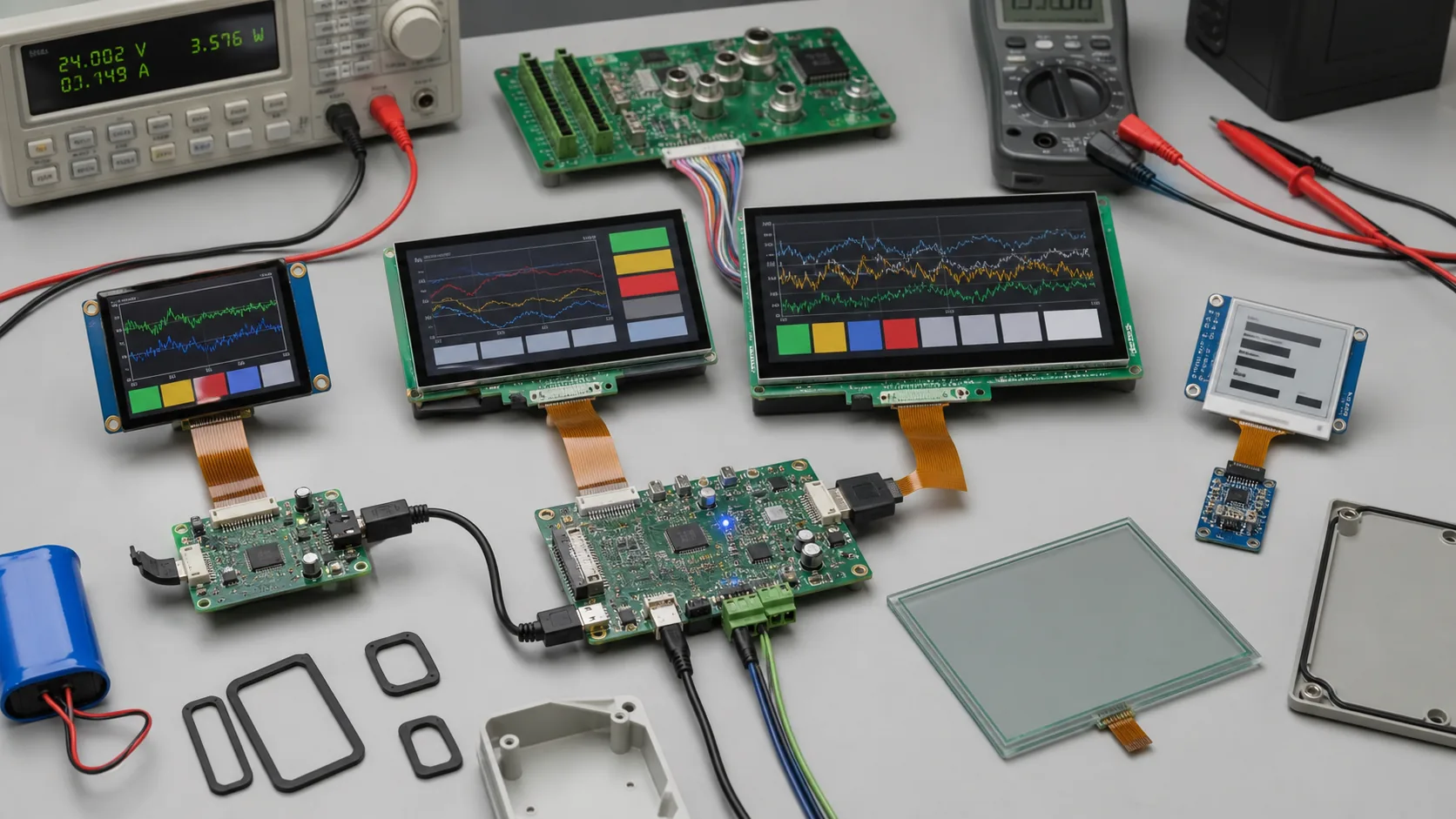 Validation should compare TFT LCD and e-paper options with the real controller, sensor data, power budget, enclosure, and operating environment.
Interface, Controller, and Power Design
The display interface should match the host controller, refresh requirement, cable distance, and power budget. Smaller TFT LCD modules may use SPI or RGB. Medium-size modules may use RGB, LVDS, MIPI DSI, or HDMI through a controller board depending on the platform. E-paper modules often use SPI and may require waveform handling or a dedicated controller.
Power design matters in monitoring equipment. A mains-powered cabinet panel can support a higher-brightness TFT LCD. A battery-powered or solar-assisted field device may need a lower-power display strategy, dimming control, sleep modes, or e-paper for static information. Engineers should calculate active current, standby current, display update frequency, wireless communication current, and expected field service interval.
Touch, Buttons, and Enclosure Protection
Some monitoring devices use physical buttons for simple menu navigation. Others use capacitive touch for setup, alarm review, and calibration screens. If touch is required, validate it with the final cover glass thickness, grounding, cable routing, wet operation risk, glove use, and EMC conditions. Sunshine Display's capacitive touch TFT LCD modules can be reviewed when the product needs an integrated touch display stack.
The enclosure should protect the display from dust, humidity, cleaning, vibration, and installation stress. Review cover lens material, gasket compression, bonding method, active area alignment, cable glands, FPC exit direction, connector retention, and mounting torque before final approval.
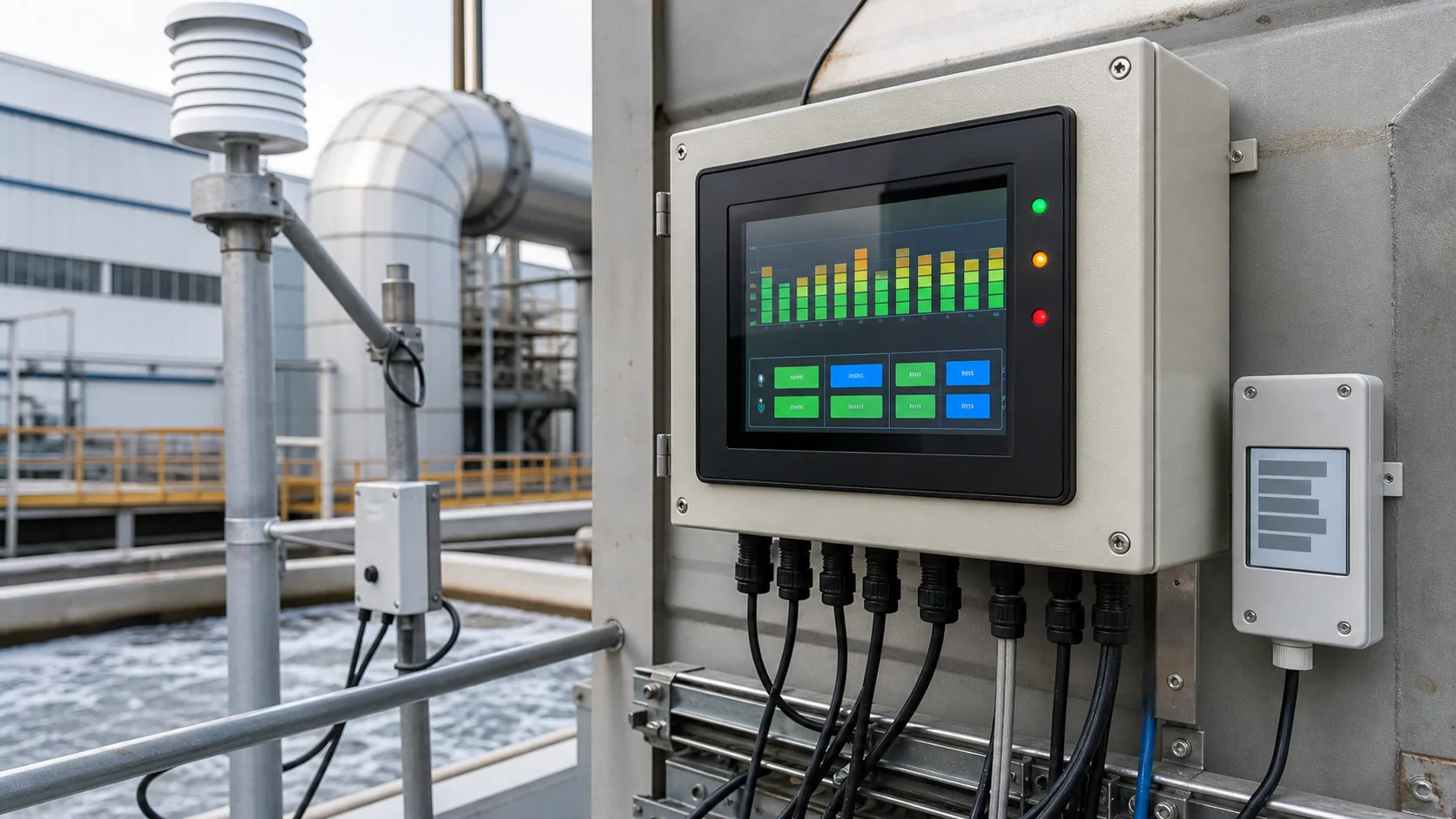 Some monitoring systems use TFT LCD for active data review and e-paper labels for low-power static equipment status.
Temperature, Humidity, and Long-Term Reliability
Environmental monitoring products may operate in cold storage, warm utility rooms, outdoor cabinets, or humid process areas. The selected display module should be checked against operating temperature, storage temperature, backlight lifetime, humidity exposure, and front-panel sealing requirements.
For harsher operating conditions, wide temperature TFT LCD modules may reduce project risk. Buyers should also ask about backlight lifetime at the target brightness level and whether the display supplier can support change control for long-running industrial projects.
Lifecycle and Production Planning
Monitoring equipment often stays in the field for years. A display change can affect the enclosure, PCB, firmware, user documentation, spare parts, and certification records. Before mass production, confirm panel lifecycle, driver IC availability, FPC and connector change control, backlight alternatives, and sample approval records.
A complete documentation package should include mechanical drawing, electrical specification, optical data, interface timing, inspection standard, reliability information, and packaging method. This makes production qualification and future maintenance more controlled.
Practical Buying Advice
When sourcing a display for environmental monitoring equipment, provide target size, resolution, interface, power source, brightness, update frequency, operating temperature, touch or button plan, enclosure drawing, cable routing, annual quantity, and product lifecycle. Include real UI screenshots if available, especially trend, alarm, calibration, and status pages.
Sunshine Display can help OEM teams compare standard TFT LCD modules, IPS modules, capacitive touch options, wide temperature displays, e-paper display modules, and custom industrial display solutions. To discuss a monitoring device, data logger, sensor cabinet, or low-power field display project, share your requirements through the Sunshine Display contact page.
FAQ
What display is best for environmental monitoring equipment?
TFT LCD is better for active dashboards, trends, alarms, and touch menus. E-paper is useful for low-power labels or static status information that changes occasionally.
What size LCD is common for monitoring devices?
Compact devices may use 3.5 inch to 5 inch displays, while cabinet-level monitoring panels may use 7 inch, 10.1 inch, or larger LCD modules depending on UI density and viewing distance.
Is e-paper suitable for outdoor monitoring products?
E-paper can be readable in sunlight and hold static information with very low standby power. The complete product still needs proper enclosure, temperature validation, sealing, and update behavior testing.
What should buyers confirm before production?
Confirm display size, brightness, viewing angle, interface, power budget, operating temperature, cover glass, enclosure fit, connector stability, lifecycle, and change control.