LCD Modules for Industrial Pump Control Panels
Pump control panels need LCD modules that remain readable around pipes, VFD cabinets, alarms, and maintenance workflows.
Industrial pump systems rely on clear status information. Operators need to see pressure, flow, running state, alarm history, maintenance mode, VFD status, and fault codes without guessing. In a pump room, the display is not a decorative part of the machine. It is the main interface between the control system and the person responsible for keeping water, coolant, chemicals, or process fluids moving.
For OEM engineers and buyers, choosing the right LCD module for industrial pump control panels means balancing readability, electrical stability, front-panel protection, interface compatibility, and long-term supply. Sunshine Display supplies industrial display modules, including LCD display modules up to 32 inches, small and medium-size TFT LCD modules, touch display modules, e-paper display modules, and custom OEM display solutions. A practical starting point is the Sunshine Display industrial display module product range when comparing size, technology, and customization options.
Match the Display to the Pump Workflow
A pump panel may be used by operators, maintenance teams, and commissioning engineers. Each group reads different information. Operators care about run status, alarm state, mode selection, pressure, flow, and level. Maintenance teams need fault history, service menus, runtime data, and I/O diagnostics. Commissioning engineers may need parameter screens, motor status, and communication data.
The LCD size should match this workflow. Simple pump controllers may use a compact 4.3 inch or 5 inch TFT LCD. More complex pump stations, booster systems, and multi-pump cabinets may benefit from 7 inch, 10.1 inch, or larger displays, especially when the UI includes piping diagrams, trend curves, alarm tables, and service pages. The goal is not the largest screen by default; it is the clearest screen for the actual task.
Brightness and Viewing Angle in Equipment Rooms
Pump rooms can be dim, bright, wet, or crowded with pipes and cabinets. The operator may view the panel from the side while standing between equipment. In these conditions, brightness alone is not enough. Contrast, viewing angle, cover glass reflection, and UI color design all affect readability.
For panels that may be checked from different positions, IPS TFT LCD modules can help maintain stable contrast and color across wider angles. Standard TFT LCD modules may still be suitable for controlled viewing positions and cost-sensitive projects. Engineers should test the display in realistic lighting with the actual UI, including alarm colors, small labels, trend charts, and low-brightness night operation.
Touch, Keys, and Front Panel Protection
Pump control panels often combine physical buttons with a display. Emergency stop, manual/auto selectors, reset buttons, and local start/stop controls may remain mechanical for safety and usability. The LCD module then provides data, menus, diagnostics, and visualization.
If the design uses touch, the touch stack must be validated with the final cover lens and enclosure. Wet environments, gloves, grounding, VFD noise, cable routing, and cover glass thickness can affect capacitive touch behavior. For projects that need an integrated touch solution, Sunshine Display's capacitive touch TFT LCD modules can be reviewed during early design.
Front-panel protection should be defined before approving the module. Check cover lens thickness, printing area, gasket compression, bonding method, active area alignment, screw position, and sealing structure. A good electrical display choice can still fail if the enclosure compresses the LCD unevenly or blocks the viewing area.
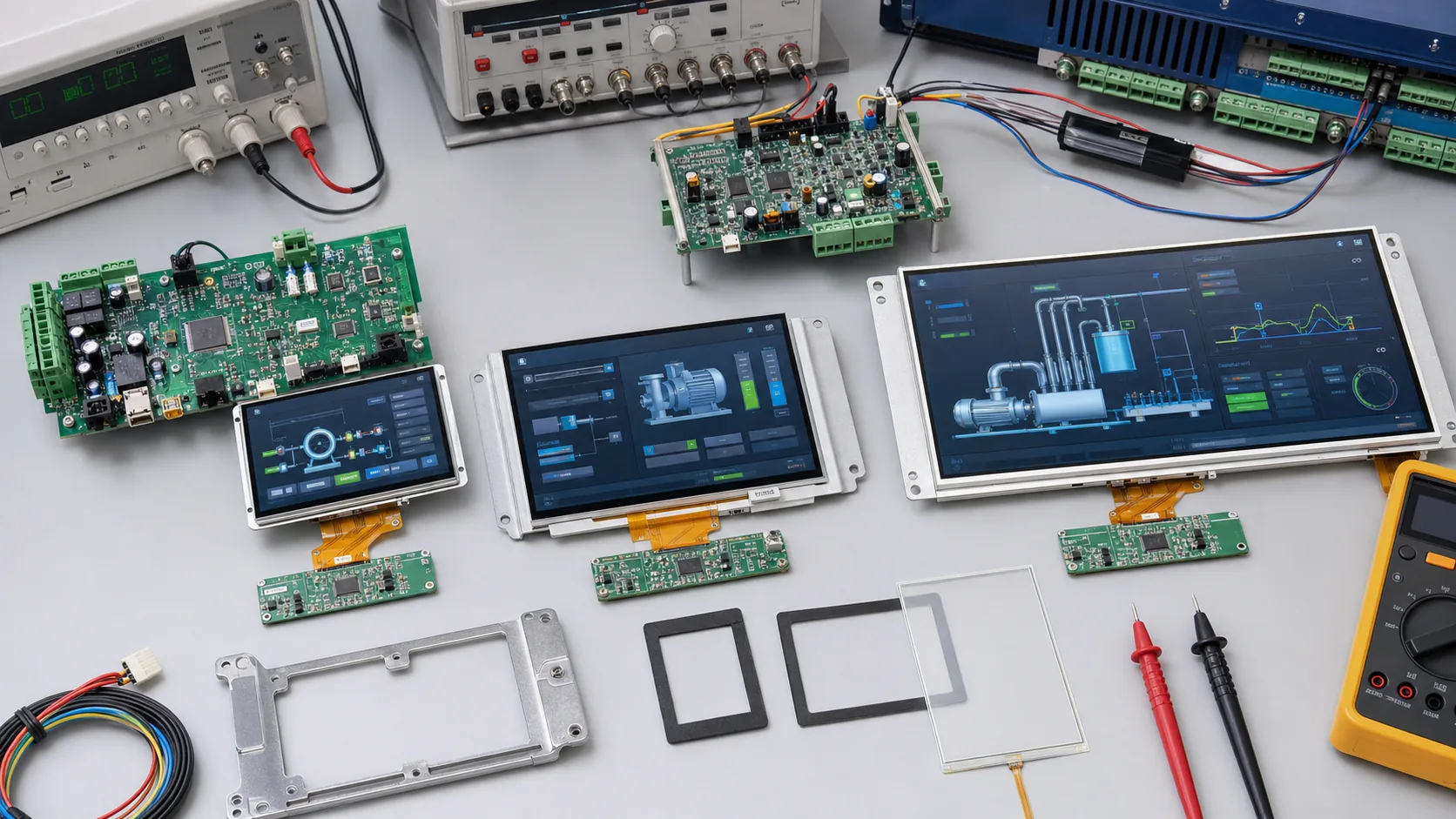 Display samples should be checked with the real controller, interface, touch stack, enclosure, and electrical environment.
Interface and Electrical Stability
Pump systems often include VFDs, contactors, relays, motors, sensors, and long cable runs. This environment can create electrical noise that affects the display, touch panel, or controller board. The display interface should be selected with the host controller and cabinet layout in mind.
Common TFT LCD interfaces may include RGB, LVDS, MIPI DSI, or SPI for smaller screens. RGB and LVDS are common in many industrial applications, while MIPI DSI can be practical when the processor platform supports it well. For smaller control panels, SPI can reduce pin count, but refresh performance and resolution should be checked carefully.
Engineers should review power sequencing, logic voltage, backlight current, PWM dimming, ESD protection, signal integrity, connector retention, and grounding. If the LCD cable crosses noisy areas of the cabinet, shielding and routing become important. Display validation should be done with the pump controller and VFD environment, not only on a clean desk.
Temperature, Humidity, and Long Service Life
Pump control panels may operate in utility rooms, factories, water treatment stations, agriculture systems, HVAC equipment, and outdoor pump houses. Temperature and humidity conditions can vary widely. The display module should be selected according to operating temperature, storage temperature, backlight lifetime, surface treatment, and enclosure protection.
For harsher environments, wide temperature TFT LCD modules may reduce project risk. If the product must show static service information or asset identity with minimal power, an e-paper display module can also be considered as a secondary status label. However, for active pump operation, alarms, and real-time data, a TFT LCD module is usually the better main interface.
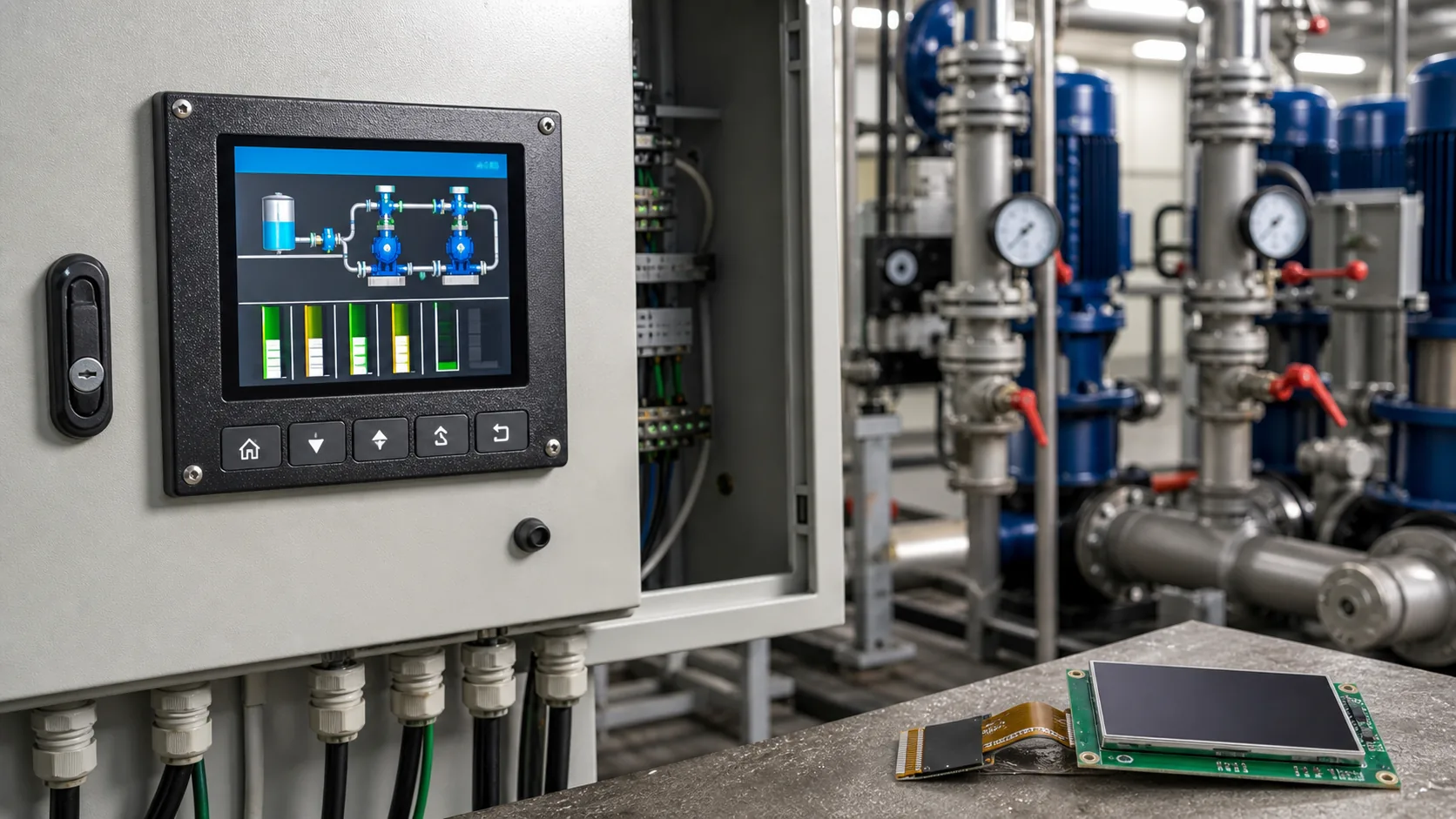 Pump rooms require display readability, front-panel protection, connector reliability, and stable long-term supply.
Supply Stability and Change Control
Pump control equipment often remains in the field for many years. A display change can affect firmware, enclosure tooling, front panel printing, cable design, certification, and spare parts. Before approving a module for production, buyers should confirm lifecycle status, driver IC availability, backlight alternatives, FPC change control, connector stability, and notification procedures.
It is also useful to approve the LCD with a complete documentation package: drawing, electrical specification, optical data, interface timing, inspection criteria, reliability information, and packaging method. This reduces risk when the project moves from sample testing to production.
Practical Buying Advice
When sourcing an LCD module for a pump control panel, send the supplier your target size, resolution, interface, brightness requirement, operating temperature, touch or key design, cover glass structure, annual quantity, expected product lifetime, and sample schedule. Include screenshots of the real pump UI if possible. A piping overview page, alarm page, parameter page, and trend page will reveal different display requirements.
Sunshine Display can help OEM teams compare standard TFT LCD modules, IPS options, capacitive touch modules, wide temperature displays, and custom industrial display modules. To discuss a pump controller, booster system, water treatment panel, or fluid control project, share your display requirements through the Sunshine Display contact page.
FAQ
What LCD size is common for pump control panels?
Simple pump controllers may use 4.3 inch or 5 inch TFT LCD modules. Multi-pump systems, booster stations, and panels with trend data or piping diagrams may use 7 inch, 10.1 inch, or larger displays.
Should pump control panels use touch screens?
Touch can be useful for menus and diagnostics, but many panels still keep physical buttons for start, stop, reset, and emergency functions. If touch is used, validate it with the final cover glass, grounding, wet operation, and VFD noise conditions.
Is IPS necessary for pump room displays?
IPS is helpful when operators view the panel from side positions or different heights. Standard TFT LCD modules can still work when the viewing position is controlled and the UI is designed with sufficient contrast.
What should buyers check before mass production?
Confirm interface compatibility, brightness, viewing angle, temperature range, touch behavior, cover glass structure, connector direction, FPC length, backlight lifetime, lifecycle status, and change control process.