LCD Module Storage and Handling Guide for OEM Buyers
Proper storage and handling help protect LCD glass, polarizers, FPCs, and touch panels before assembly.
LCD display modules are precision electronic and optical components. A small TFT LCD module may pass factory testing, but poor storage, rough handling, moisture exposure, FPC bending, or electrostatic discharge can create problems before the module is installed in the final product.
For OEM buyers, engineers, and product managers using color LCD display modules under 10 inches, storage and handling control is part of product reliability. It affects sample evaluation, incoming quality inspection, pilot production, mass production, and after-sales stability.
This guide explains practical storage and handling points for small TFT LCD modules, especially for industrial controls, medical instruments, handheld terminals, smart home devices, meters, POS products, and embedded HMI systems.
1. Why Storage and Handling Matter
An LCD module includes glass, polarizer, backlight, driver IC, FPC, connector, touch panel, adhesive layers, protective film, and sometimes cover glass or optical bonding. These parts are sensitive to mechanical stress, dust, moisture, static electricity, and surface contamination.
Damage is not always obvious immediately. A cracked glass edge, scratched polarizer, compressed backlight film, bent FPC, contaminated connector, or weakened adhesive can create display defects later during assembly or field use.
The goal is simple: keep the module in the same condition from supplier shipment to final assembly.
2. Keep Packaging Sealed Until Use
LCD modules should remain in their original packaging until they are ready for inspection or assembly. Anti-static bags, trays, foam, cartons, desiccant, and protective films are designed to reduce transport and storage risk.
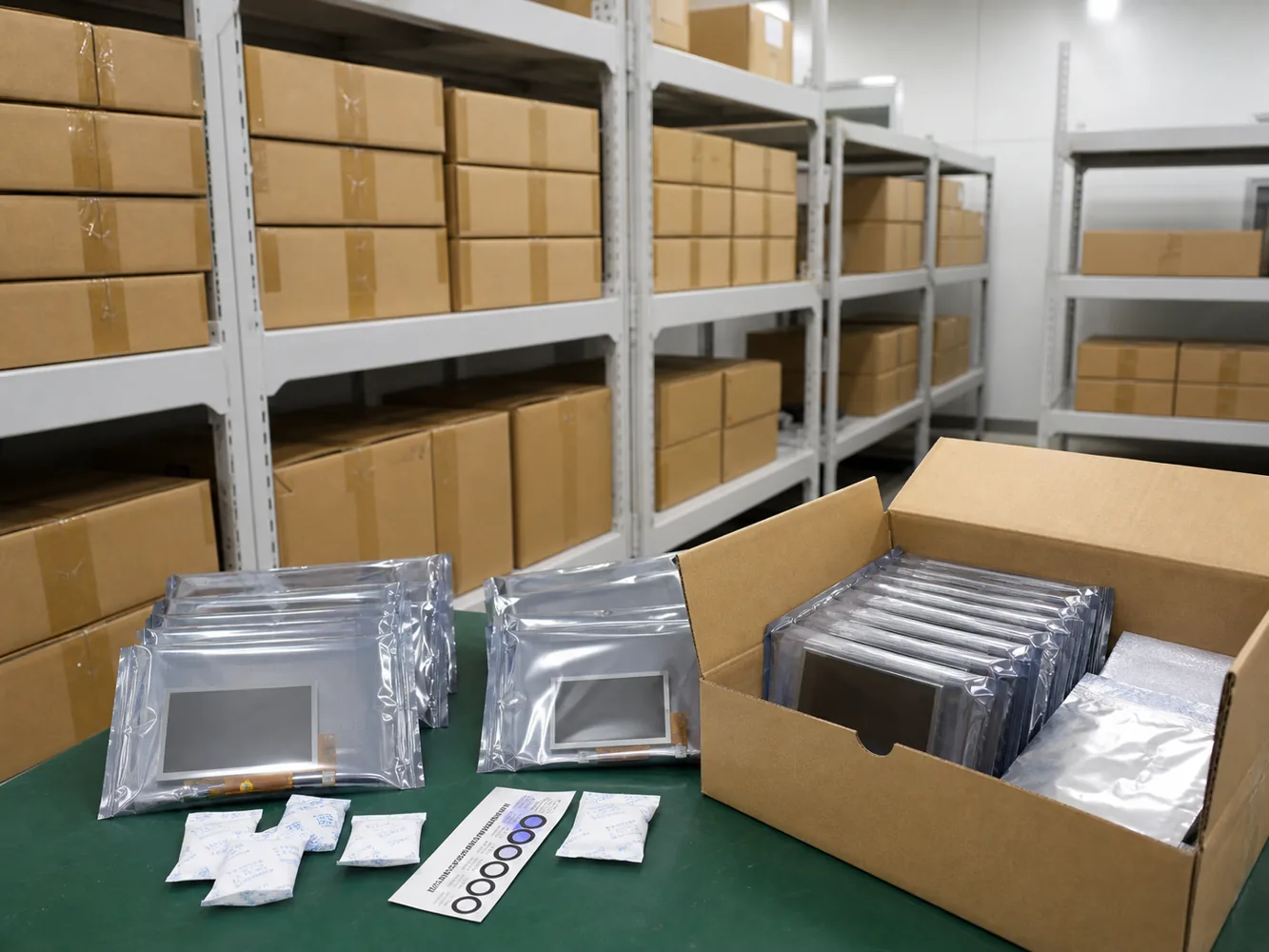 Sealed packaging, desiccant, and controlled storage conditions reduce moisture and contamination risk.
Opening packaging too early increases the risk of dust, fingerprints, moisture, and accidental contact with the display surface or FPC. If modules are opened for incoming inspection, reseal them correctly and keep them separated from general electronic parts, tools, screws, and metal fixtures.
For long-term storage, confirm whether the supplier has recommended storage temperature and humidity ranges. Avoid direct sunlight, high humidity, corrosive gas, heavy stacking, and areas close to heat sources.
3. Control Temperature and Humidity
LCD modules should be stored in a clean, dry, and stable environment. Excessive humidity can affect polarizers, adhesives, connectors, and packaging materials. High temperature can accelerate aging of optical films, adhesive layers, and protective materials.
Temperature cycling can also create condensation risk when modules move between cold and warm environments. If products arrive from cold transport conditions, allow cartons to stabilize before opening them.
For projects with strict reliability needs, warehouse records should include temperature and humidity control. This is especially useful for medical, industrial, automotive accessory, and long-lifecycle equipment projects.
4. Use ESD-Safe Handling
Electrostatic discharge can damage display driver ICs, touch controllers, FPC contacts, or related circuits. Even when the module still works during a quick power-on test, latent damage may reduce long-term reliability.
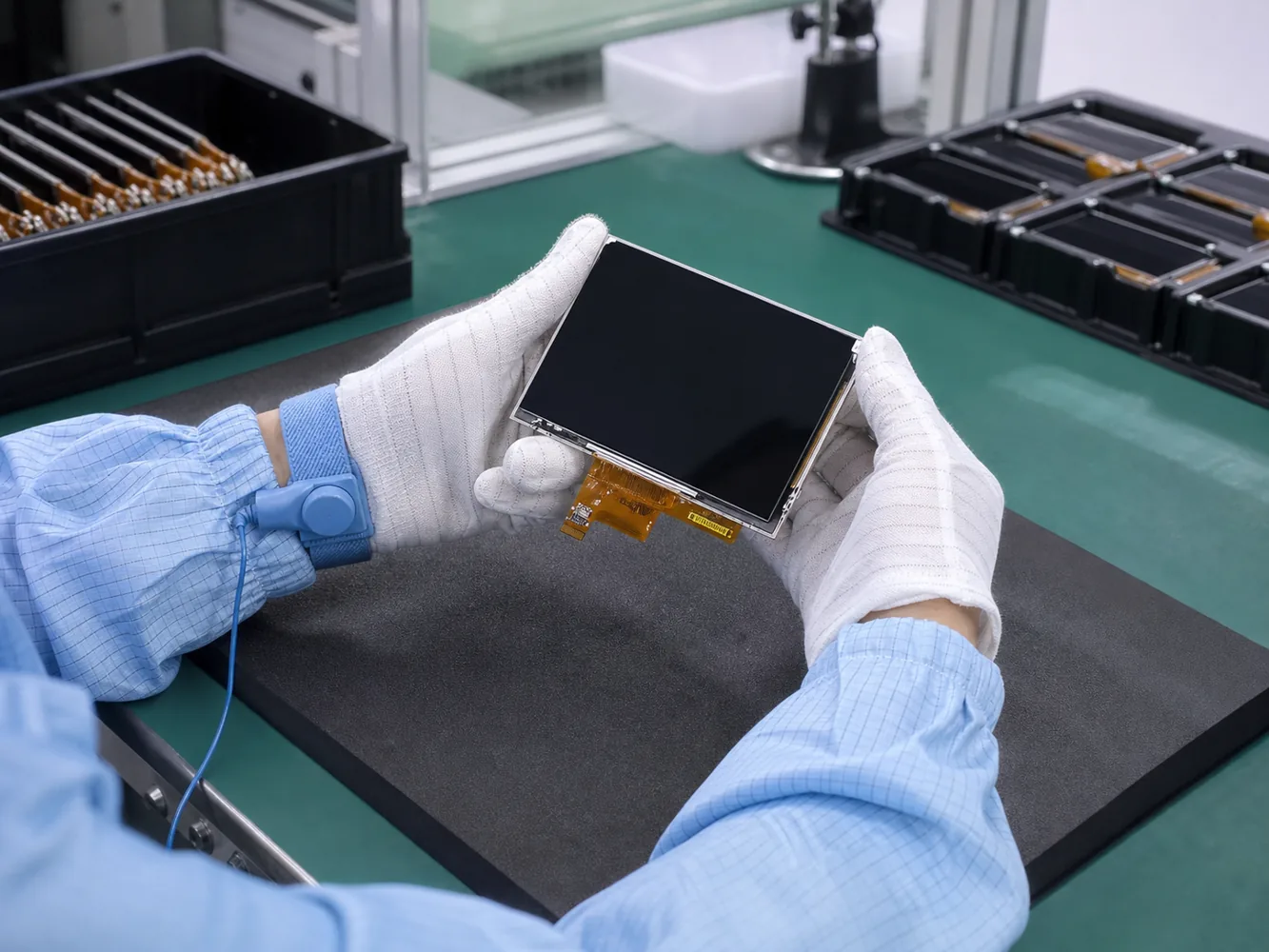 Operators should handle LCD modules by the edges and protect FPCs, connectors, and display surfaces.
Operators should use ESD-safe workstations, wrist straps, gloves, grounded mats, and anti-static trays. Handle LCD modules by the edges. Avoid touching connector contacts, FPC traces, exposed IC areas, display surface, and polarizer film.
If the module includes capacitive touch, be careful with the touch FPC and controller area. Touch modules are often handled frequently during mechanical assembly, so handling instructions should be clear before pilot production.
5. Protect the FPC and Connector
The FPC is a common damage point. Sharp bending, pulling, repeated folding, compression, or misalignment can cause intermittent connection problems or complete failure. The connector area should also be protected from dust, oil, fingerprints, and mechanical force.
During assembly, confirm the FPC bend radius, insertion direction, connector lock method, and cable routing. Do not use the FPC as a handle. Do not press the LCD module into the enclosure by pushing on the FPC or connector.
If the product has a compact enclosure, mechanical engineers should review cable space early. A display that works on the bench can fail in the final product if the FPC is forced into an unnatural shape.
6. Inspect Before Assembly
Incoming inspection should check packaging condition, part number, quantity, protective film, display surface, glass edge, polarizer, FPC, connector, backlight appearance, and visible contamination.
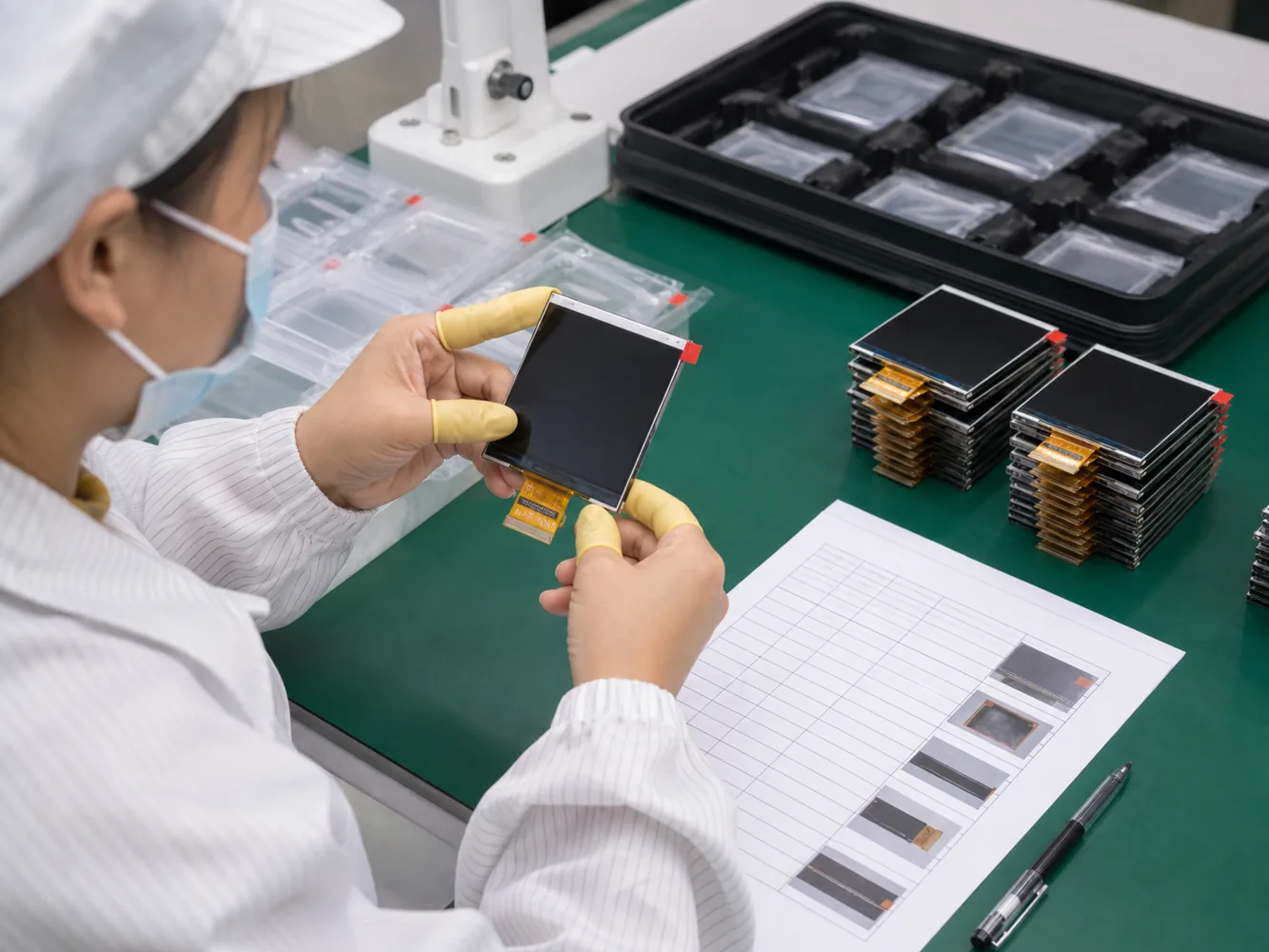 Incoming inspection should check packaging, glass surface, polarizer, FPC, connector, and protective film condition.
Power-on inspection can include full white, full black, red, green, blue, grayscale, and actual UI screens. Check for scratches, bright spots, dark spots, line defects, uneven backlight, abnormal color, flicker, and touch response if applicable.
Inspection should be done under controlled lighting. Removing protective film too early can create unnecessary surface risk, so define when the film should be removed in your assembly process.
7. Plan Storage for Production and Service Parts
Mass production may require buffer inventory, replacement parts, or long-term service stock. If modules will be stored for months, define first-in-first-out control, packaging condition checks, and storage environment records.
For custom LCD modules, keep product revision, FPC version, cover glass version, touch firmware, and supplier lot information traceable. Traceability helps resolve quality issues faster if a problem appears during assembly or after shipment.
For export products, buyers should also consider long-distance transportation, customs delay, seasonal humidity, and local warehouse conditions.
Practical Buying Checklist
Before approving a display module for production, review these points:
- Are storage temperature and humidity requirements clear?
- Should modules remain sealed until assembly?
- Is desiccant or humidity control required?
- Are operators trained for ESD-safe handling?
- Is the FPC bend radius acceptable in the final enclosure?
- Are connector contacts protected from contamination?
- Is incoming inspection defined before mass production?
- Are protective films removed at the correct stage?
- Is lot traceability required?
- Are service parts stored under the same conditions as production parts?
How Sunshine Display Can Support Your Project
Sunshine Display supplies LCD display and touch screen under 32 inches for global B2B customers. For OEM projects, Sunshine Display can support display selection, packaging review, FPC design, connector options, touch panel structure, cover glass, optical bonding, and sample validation.
If your project needs stable production quality, share the application, screen size, interface, touch requirement, enclosure design, inspection standard, and expected storage conditions. Sunshine Display can help recommend a practical LCD module structure and handling approach.
Contact Sunshine Display to discuss LCD Modules & Touch Screen for your OEM project.
FAQ
Should LCD modules stay sealed before assembly?
Yes. Keeping modules sealed helps reduce dust, moisture, fingerprints, ESD exposure, and accidental surface damage.
Can poor handling damage a TFT LCD module?
Yes. Rough handling can damage glass, polarizer, FPC, connector, touch panel, backlight films, or internal electronic components.
Why is ESD control important for LCD modules?
ESD can damage driver ICs, touch controllers, FPC contacts, and system circuits, including latent damage that may appear later.
What should incoming inspection include?
Check packaging, part number, glass surface, polarizer, FPC, connector, protective film, backlight, display colors, and touch response when applicable.
Can Sunshine Display advise on LCD module packaging?
Yes. Sunshine Display can help review packaging, storage, handling, FPC design, and inspection needs for small TFT LCD module projects.