Industrial HMI LCD Display Module Selection Guide
Industrial HMI displays should be selected around readability, reliability, touch design, and system integration.
Industrial HMI products need display modules that remain readable, stable, and serviceable in real equipment, not only in a lab demo. The LCD module becomes part of the operator interface, control workflow, enclosure design, electrical system, and long-term maintenance plan.
For OEM buyers, engineers, and product managers, the display decision should cover size, resolution, brightness, viewing angle, touch structure, operating temperature, interface, cover glass, backlight lifetime, and supply stability. Sunshine Display supports LCD display modules up to 32 inches for industrial, medical, commercial, and embedded applications.
This guide explains how to select an industrial HMI LCD display module with fewer project risks and better long-term usability.
1. Start With the Operator Environment
An HMI screen should be selected around how people actually use the equipment. A display mounted at eye level on a control cabinet has different requirements from a panel mounted low on a machine, a wall-mounted control station, or a mobile inspection terminal.
Review viewing distance, operator position, lighting conditions, gloves, cleaning process, vibration, enclosure material, and expected daily operating hours. These conditions determine whether the project needs a compact panel, a medium-size HMI, or a larger LCD display module.
The display should support the workflow. If operators need to compare process values, alarms, trend charts, and machine states, a larger active area and higher resolution may reduce mistakes.
2. Choose Size and Resolution Together
Screen size alone is not enough. A larger module with low resolution may still show poor detail, while a smaller high-resolution panel may require careful UI design to remain readable from normal operating distance.
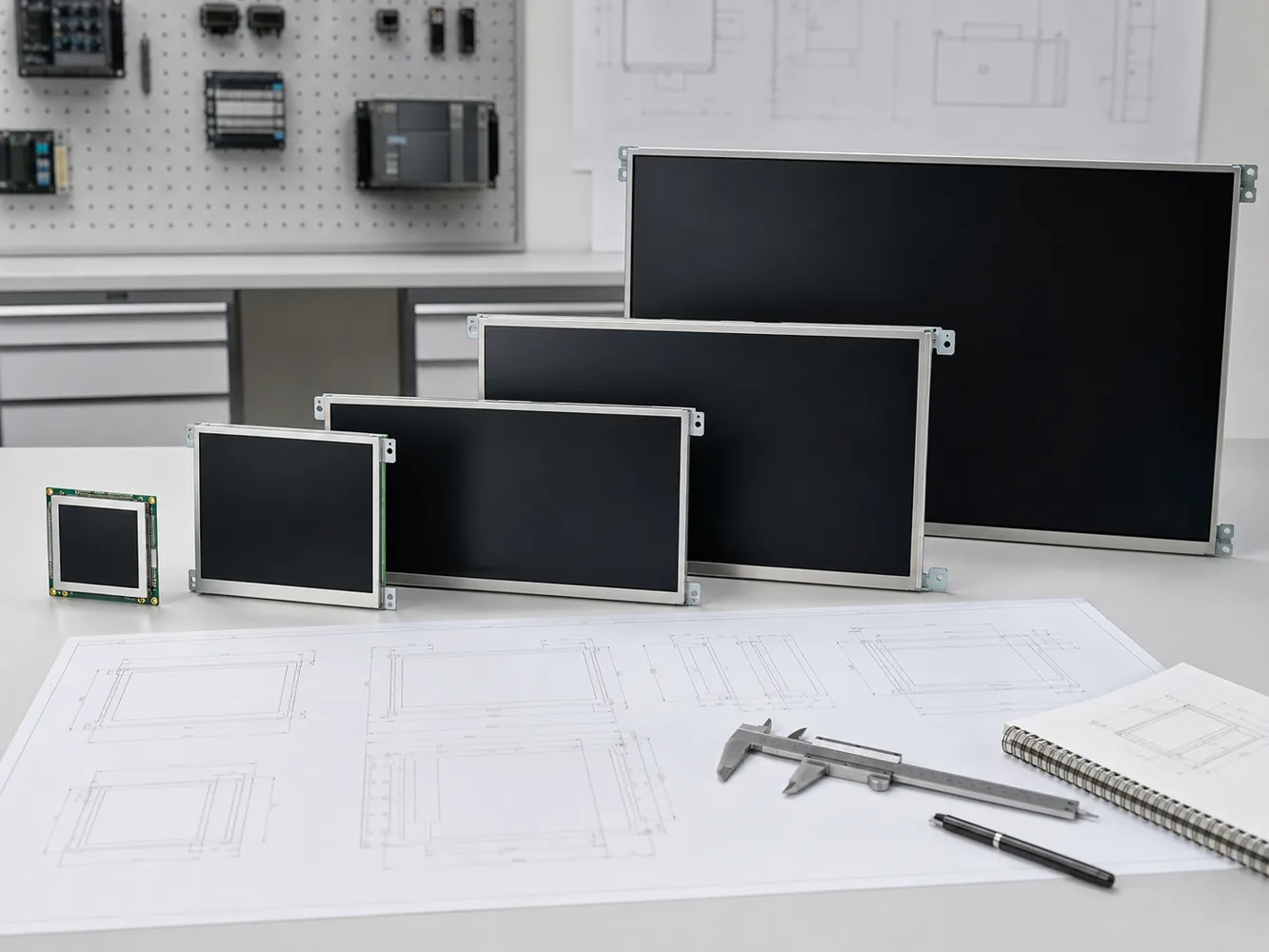 HMI projects should compare active area, outline size, resolution, mounting space, and user viewing distance.
For industrial HMI design, compare active area, outline dimensions, mounting method, resolution, interface, cover lens, and available enclosure space. If your team needs a mature baseline option, standard TFT LCD modules are often a practical starting point.
For larger control panels, check whether the UI will include trend curves, alarm lists, icons, process diagrams, multi-language text, or maintenance menus. These details influence both resolution and aspect ratio.
3. Check Brightness, Contrast, and Viewing Angle
Industrial environments can have strong overhead lighting, reflections from metal surfaces, or operators approaching from the side. Brightness and viewing angle should therefore be reviewed with the final enclosure and cover glass.
For equipment where users stand, move, or view the screen from different positions, IPS TFT LCD modules can improve color and contrast stability compared with basic viewing-angle structures.
Brightness should match the environment rather than simply chase the highest number. Higher brightness may increase power consumption, temperature, and backlight aging. For semi-outdoor or bright factory use, optical bonding, anti-glare cover glass, or anti-reflective treatment may also matter.
4. Select the Right Touch Structure
Touch operation is common in modern HMI systems, but the correct touch structure depends on the use case. Capacitive touch offers a smooth user experience, while some environments may require glove support, water tolerance, thicker cover glass, or physical buttons beside the display.
If the HMI needs a modern touch interface, review capacitive touch TFT LCD modules together with cover glass, bonding method, touch controller, grounding, and ESD protection.
The touch design should be tested with the real enclosure. Metal frames, gasket pressure, air gaps, cover lens thickness, electrical noise, and cable routing can all affect touch stability.
5. Consider Temperature, Enclosure, and Reliability
Industrial HMI products may operate near motors, power supplies, heaters, outdoor doors, or sealed cabinets. Temperature, humidity, vibration, and electrical noise can influence display performance.
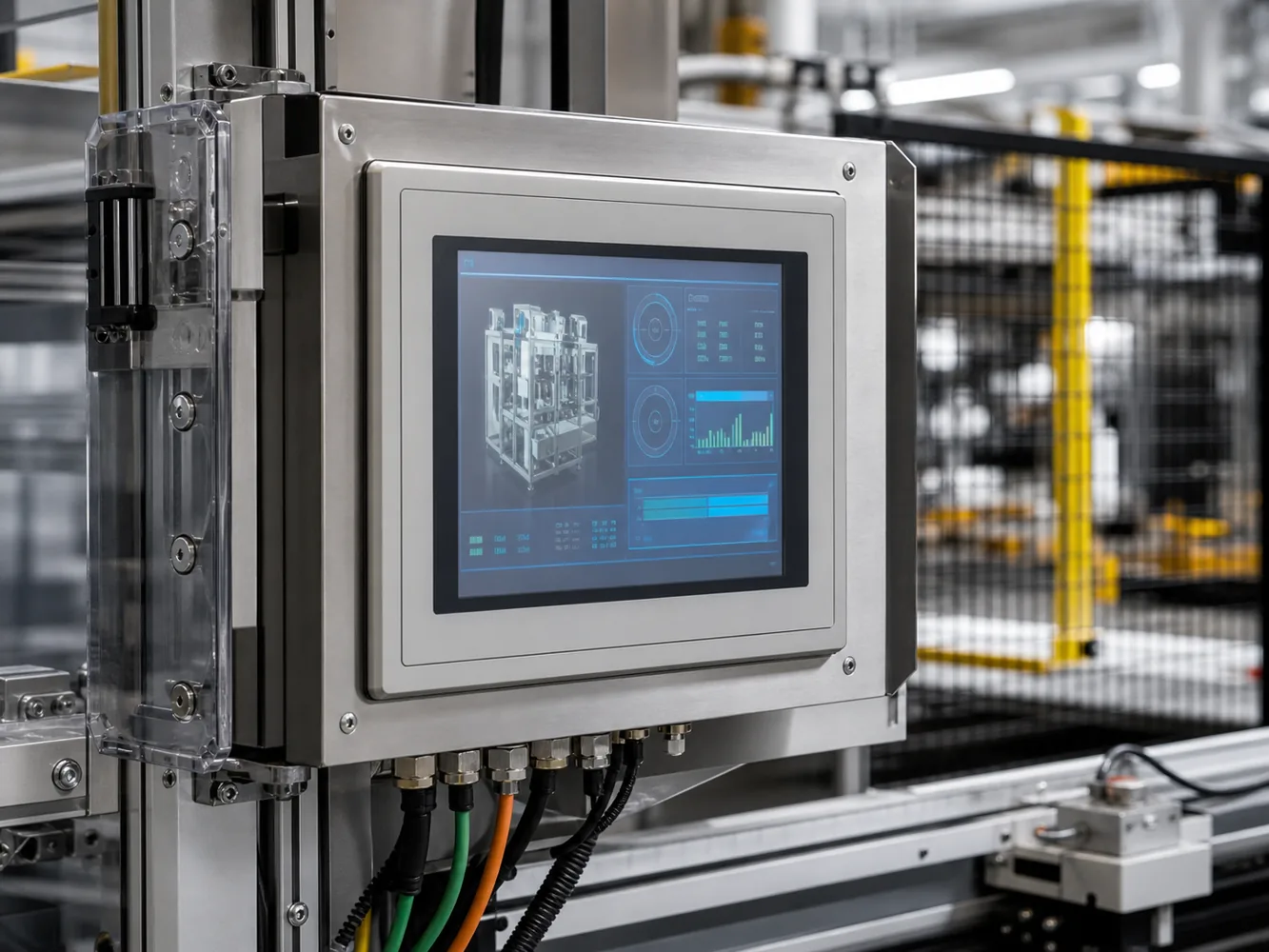 Touch structure, cover glass, grounding, and operating environment should be reviewed together.
If the equipment works in harsh environments, consider wide temperature TFT LCD modules and validate the final assembly across the expected operating range.
Reliability review should include backlight lifetime, FPC routing, connector retention, cover glass strength, ESD protection, EMI behavior, and supply continuity. For long-lifecycle machinery, change control and alternative planning are also important.
6. Match Interface and Mainboard Capability
The display interface should match the processor, firmware, PCB layout, and performance target. Common options include RGB, LVDS, MIPI DSI, SPI, and MCU parallel interfaces depending on size and resolution.
For HMI systems with rich graphics, interface bandwidth and processor support can be limiting factors. Confirm driver IC support, initialization settings, timing, voltage levels, and cable length before PCB layout.
For larger panels, signal integrity, shielding, connector design, and mechanical cable routing become more important. A display that works on an open bench should still be validated inside the real enclosure.
7. Review Supply Stability Before Approval
Industrial products often have longer market life than consumer devices. Buyers should check lifecycle, lead time, MOQ, packaging, quality inspection, and change notification process before mass production.
If the HMI is part of certified equipment, a display change can create extra validation cost. It is better to discuss lifecycle and alternatives early instead of treating the LCD module as a simple commodity component.
Practical Buying Checklist
Before approving an industrial HMI LCD module, review these points:
- Required screen size and active area
- Resolution and UI readability
- Brightness, contrast, and viewing angle
- Touch or non-touch structure
- Cover glass, optical bonding, AG or AR treatment
- Operating temperature and enclosure condition
- Interface, voltage, and processor compatibility
- Backlight current and lifetime target
- FPC, connector, mounting, and cable routing
- Lifecycle, MOQ, lead time, and change control
How Sunshine Display Can Help
Sunshine Display supplies LCD display modules up to 32 inches for global B2B customers. For HMI projects, Sunshine Display can help review display size, resolution, brightness, viewing angle, interface, touch panel, cover glass, optical bonding, operating temperature, FPC, connector, and sample validation requirements.
If you are developing an industrial control panel, medical device, commercial terminal, machine interface, or embedded display system, share your application, target size, UI requirements, interface, enclosure design, touch needs, operating environment, and expected volume. You can contact Sunshine Display to discuss suitable LCD display module options before finalizing your HMI design.
FAQ
What size LCD module is best for an industrial HMI?
The best size depends on viewing distance, UI complexity, enclosure space, and operator workflow. Compare active area, resolution, and mounting requirements together.
Are IPS LCD modules useful for HMI products?
Yes. IPS modules can improve viewing angle and color stability, which is useful when operators view the screen from different positions.
Should industrial HMI displays use capacitive touch?
Capacitive touch is common, but the decision depends on gloves, water exposure, cover glass thickness, ESD requirements, and the operating environment.
Why is wide temperature important for industrial LCD modules?
Industrial equipment may operate in hot, cold, or sealed environments, so the display should be validated across the expected temperature range.
Can Sunshine Display support larger HMI LCD modules?
Yes. Sunshine Display supports LCD display modules up to 32 inches and can help review size, interface, touch, brightness, cover glass, and reliability requirements.