E-paper can keep supplementary equipment and maintenance information visible on an industrial lockout tag without continuous display power.
Industrial maintenance teams need clear information at the point where equipment is isolated, inspected, or serviced. A disconnect cabinet, pump controller, conveyor drive, or process skid may need an equipment identity, maintenance state, authorized-work reference, inspection reminder, or change notice that remains visible between technician visits. Printed cards are simple, but they become outdated and require manual replacement.
An e-paper display module can support these information needs in a low-power, sunlight-readable product. Its image remains visible without continuous panel power, making it suitable for a battery-powered or wireless status device. However, the distinction is important: an e-paper tag is supplementary communication hardware, not a replacement for approved lockout/tagout procedures, physical energy isolation, training, verification, or site safety controls.
Start With the Safety Workflow, Not the Screen
Before selecting a panel, define exactly what the product is allowed to communicate. Useful supplementary content may include equipment identity, current maintenance stage, assigned work reference, inspection status, synchronization state, or a service reminder. The device should reinforce an existing controlled process rather than introduce ambiguity into a critical task.
Keep the safety architecture independent of the display. If a screen fails, loses power, or contains stale data, physical isolation and approved procedures must still protect people. The product specification should state which information is advisory, how it is updated, who is responsible for it, and how users recognize an out-of-date state.
E-paper is a particularly good match when data changes occasionally. A tag may update when a work order begins, an inspection is completed, an approved status changes, or a device returns to service. Between updates, the image remains visible without continuously powering a backlight or display driver.
Calculate the Complete Power Budget
Low standby panel power is only one part of the device. Each update wakes the controller, storage, radio, and display driver; it may also transmit or receive information through a wireless network. Battery and service interval calculations need to include expected update rate, retries, temperature, firmware behavior, and the current required for a full screen refresh.
Measure representative hardware instead of estimating from a panel data sheet alone. Test sleep current, wake-up current, update duration, image quality, communication recovery, and low-battery behavior. If the product uses solar charging or a replaceable battery, test the energy budget across realistic light and temperature conditions.
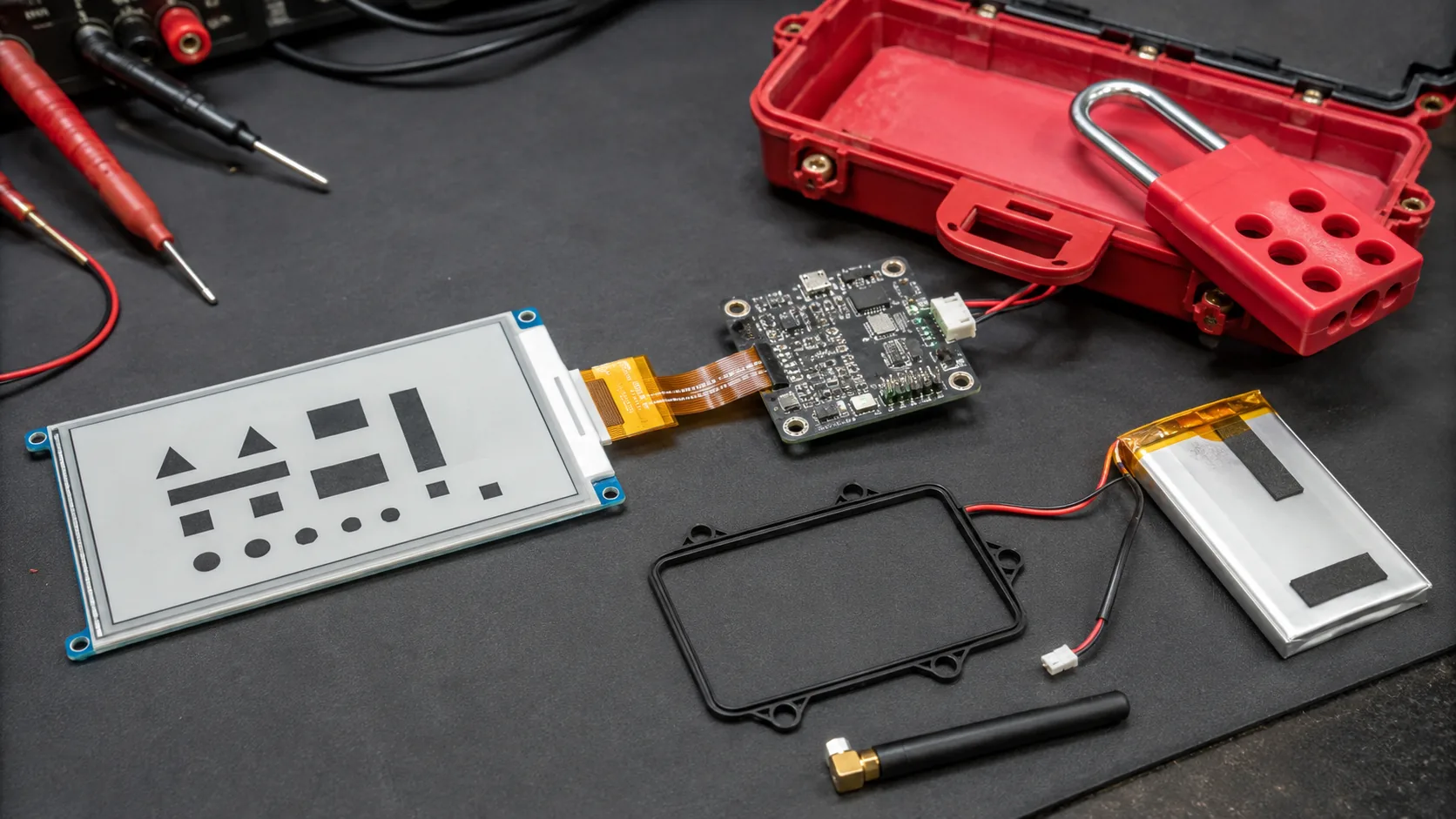 Module, controller, battery, wireless interface, enclosure, gasket, and attachment hardware should be reviewed as a complete product.
Choose Size, Contrast, and Refresh Behavior
The e-paper active area should suit the actual reading distance and information hierarchy. A compact tag may show identity and a simple condition marker. A larger device can present a maintenance checklist, equipment drawing, or multi-step service state. Do not reduce the most important information to fit a dense desktop-style layout.
Black-and-white e-paper usually offers strong contrast for industrial tags. Accent-color options can emphasize a condition, while color e-paper may suit richer product identification. Check the chosen panel's refresh time, ghosting behavior, temperature response, controller support, and content layout. E-paper is not intended for fast animations, real-time video, or frequently changing live trend displays; those uses are generally better suited to industrial TFT LCD modules.
Engineer a Product, Not Just a Module
An e-paper panel needs protection from impact, moisture, cleaning chemicals, UV exposure, vibration, and electrostatic discharge. The front window must preserve reflective readability, while the enclosure must protect the display stack without introducing point stress. Gasket compression, attachment points, connector access, and the relationship between the panel and a lockout hasp should all be evaluated in the physical design.
For an OEM product, the scope may include the e-paper module, controller board, FPC, battery system, wireless interface, antenna, front lens, enclosure, firmware, and assembly test. Sunshine Display industrial display modules can be reviewed alongside the complete device requirements. This prevents a workable display prototype from becoming difficult to seal, power, attach, or service.
Plan Content for Persistent Information
Reflective e-paper works best with a deliberate layout: high contrast, clear hierarchy, large text, restrained icons, and few unnecessary changes. Put equipment identity and the most important current condition first. Avoid making the user scroll through a long message to understand the key point.
Since the last image persists after power loss, users need a visible freshness strategy. A last-update indicator, synchronization state, or separate physical LED can help distinguish current information from an old image. Critical decisions should never rely on a wireless update that has not been confirmed by the site's approved process.
If an active local interface is also needed, a capacitive touch TFT LCD assembly can serve the dynamic HMI role, while an e-paper display retains long-lived maintenance information. The two technologies can complement each other when their purposes are clear.
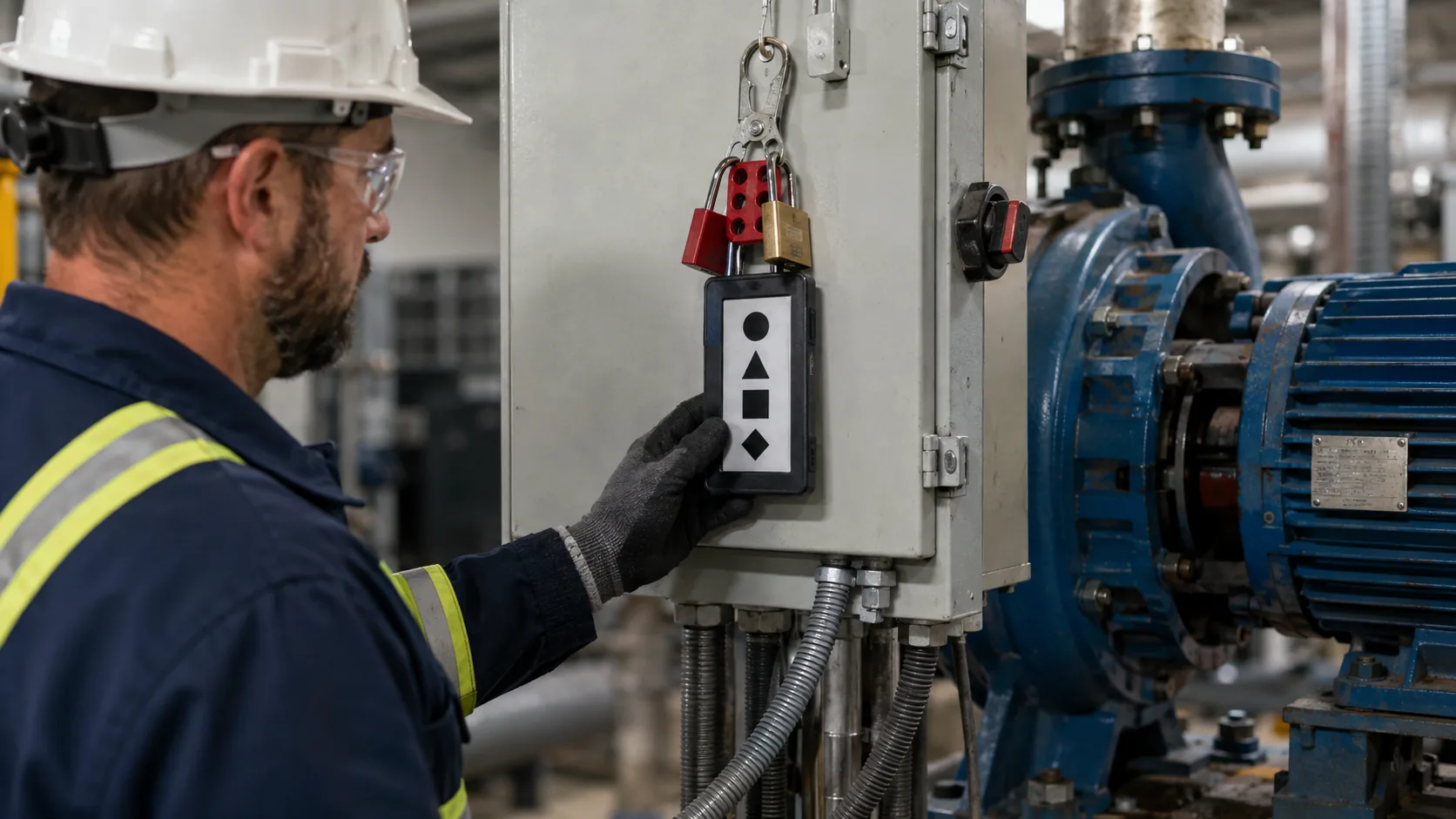 Digital tags can support clear equipment identification and maintenance coordination when used within an approved safety process.
Validate in the Real Maintenance Environment
Test the finished product at actual equipment, not only on an electronics bench. Verify attachment security, reading angle, factory lighting, contamination, glove handling, enclosure sealing, battery replacement, and wireless coverage. Test full and partial refresh, cold and hot behavior, image retention, recovery from interrupted updates, and whether users can correctly understand the display state.
For outdoor or severe indoor sites, check the expected temperature range and product materials. A wide-temperature TFT LCD module may be appropriate for related active HMI functions, while e-paper remains the persistent low-update layer. Supply continuity and controlled changes should be addressed before production release.
Practical OEM RFQ Checklist
Provide the application, display size, resolution, color mode, viewing distance, update frequency, interface, controller, battery or power source, wireless requirement, operating environment, enclosure target, attachment method, annual quantity, and expected lifecycle. Include mechanical drawings, desired screen layouts, and the intended maintenance workflow.
Sunshine Display supports e-paper display modules and OEM customization for industrial products. Contact Sunshine Display to discuss a low-power e-paper maintenance tag or industrial status device.
FAQ
Can e-paper replace a lockout tagout procedure?
No. An e-paper device is only a supplementary information tool. Site-specific lockout/tagout procedures, physical energy-isolation devices, training, verification, and applicable regulations remain essential.
Why use e-paper on an industrial maintenance tag?
E-paper retains the last image without continuous display power and is readable in bright light, making it useful for persistent device, work-order, or status information.
What can be customized in an e-paper tag product?
Subject to feasibility and volume, OEM customization can include the module, controller, FPC, enclosure, attachment method, battery, communication interface, firmware, front panel, and final assembly.