AI-generated concept illustration: A bulk order needs a repeatable acceptance process as well as an approved sample.
A bulk e-paper display order is a commitment to a repeatable component, not just a larger purchase of a successful sample. The engineering team needs modules that fit the approved design. Production needs predictable handling and test instructions. Purchasing needs a clear delivery plan. Service needs to know what will be available when a deployed unit requires repair. Those requirements should appear in the sourcing decision before the price comparison is finalized.
For OEM buyers, the most effective procurement process connects three pieces of evidence: an agreed specification, a qualified sample build, and a controlled production release. Each should describe the same module revision and intended use. A quotation can only be compared fairly when the included hardware, documentation, testing, and commercial assumptions are explicit.
Freeze What the Supplier Is Actually Quoting
Create a controlled specification package with a revision number. Include active area, outline dimensions, connector details, cable orientation, interface, power requirements, operating conditions, and the content the screen will show. Attach the enclosure drawing or clearance model where relevant. Specify which dimensions are critical and how they will be checked at receiving inspection.
Clarify the scope of supply. A bare panel, a module with driver electronics, and a finished wireless label are different purchasing items. Ask which controller, cables, software resources, and accessories are included. Identify responsibilities for the enclosure, wireless communications, firmware, and end-product testing. A low quote with an incomplete scope is difficult to compare with a more complete assembly.
Where requirements remain open, list them as questions rather than allowing assumptions to become purchase terms. For example, ask whether a particular display mode is supported by the proposed module revision and which driving resources are supplied. Sunshine Display's module portfolio can support an initial discussion, but the approved part documentation should govern the order.
Turn a Good Sample Into an Acceptance Reference
An approved sample should be accompanied by the conditions under which it was evaluated. Preserve the test images, controller configuration, power sequence, operating temperature, and measurement method. Without those details, two teams can disagree about performance while testing different conditions. A photograph of a sample is useful context, but it is not a complete acceptance specification.
Build a test set that exercises the actual application. Include fine text, dense graphics, blank regions, repeated updates, and transitions between representative content. Define acceptable visible artifacts and how they are assessed. Agree on viewing conditions so that inspection does not depend on whichever lighting happens to be available at a workstation.
Record mechanical and electrical observations separately. A sample can look excellent while its cable routing is unsuitable for production assembly. Check connector engagement, mounting clearances, startup behavior, and integration with the target electronics. Document any workaround used in the prototype so it does not disappear from the discussion when the purchase order is prepared.
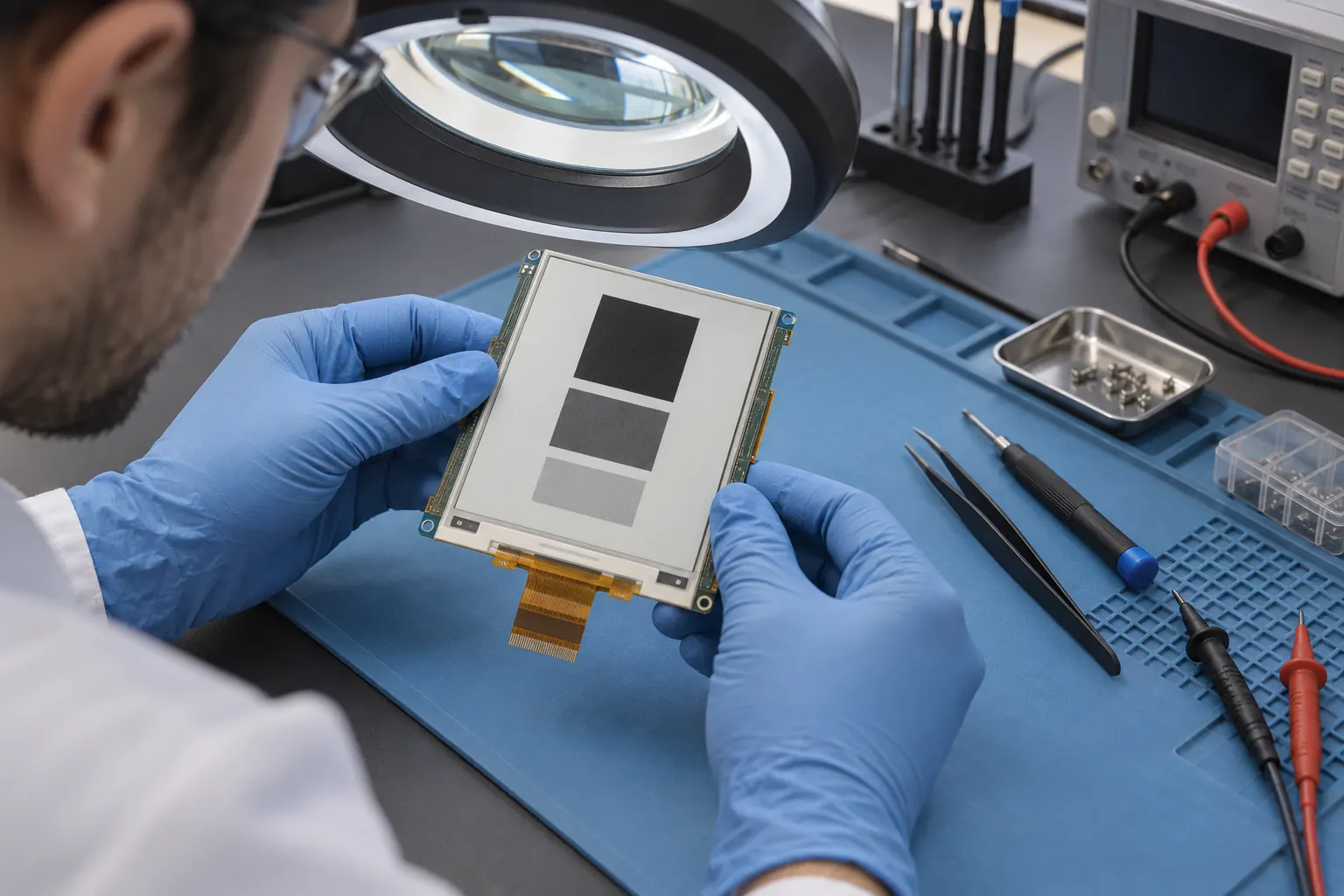 AI-generated concept illustration: Use controlled viewing conditions and test content during inspection.
Make Incoming Inspection Reproducible
Agree on the inspection plan before the first shipment. Identify the sample selection method, defect categories, test equipment, evidence to retain, and the action taken when a lot does not meet the agreement. Avoid informal requirements such as "same as the sample" when a measurable description or controlled visual reference is possible.
Keep traceability at a useful level. Receiving staff should be able to connect a shipment to its part number, revision, lot information, and supporting records. Production should preserve enough information to investigate a later issue without mixing unrelated batches. The exact method can be simple, but it should survive normal material handling and stock movements.
Define a quarantine and review process for suspect material. Specify who may release it and what evidence is needed. A production shortage should not silently convert an unreviewed deviation into an accepted component change. Establish the supplier contact and expected response path before a problem occurs, when there is time to agree a practical process.
Compare Costs at the Finished-Product Level
Unit price matters, but it should sit beside tooling, sample builds, incoming inspection, assembly yield, packaging, freight, inventory, and field service in the comparison. Use the same assumptions for each supplier. Separate known costs from estimates and show which variables have the largest effect on the result.
For a connected e-paper product, include the electronics beyond the panel in the energy and maintenance estimate. The image-retention property does not establish battery life for a complete device. Ask for measured update and standby behavior in the intended design. If the application actually requires continuous visual interaction, compare the architecture with standard TFT LCD modules before locking the procurement specification.
Avoid treating a large initial order as the only way to obtain useful pricing. Discuss staged releases, forecast visibility, buffer stock, and production scheduling where appropriate. Any arrangement should reflect actual demand and agreed commercial terms. The aim is to make supply planning workable for both parties while limiting avoidable inventory exposure.
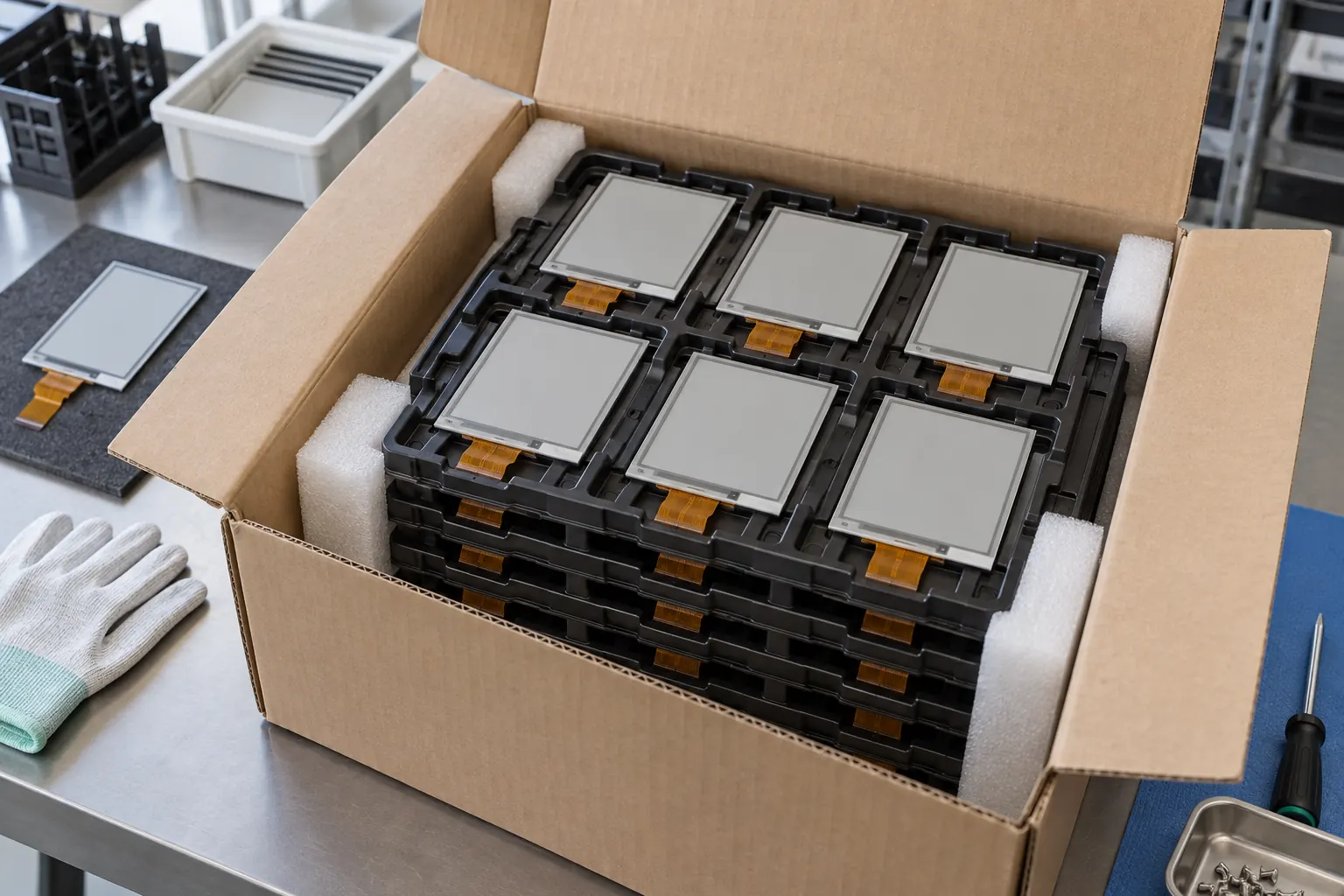 AI-generated concept illustration: Review packaging and cable protection before releasing shipment quantities.
Qualify the Journey From Factory to Assembly Line
Packaging is part of component protection. Review how trays support the module, restrain movement, and protect flexible cables during shipment and unpacking. Ask for storage and handling instructions for the selected part. Include the receiving and line-side process in the pilot so that damage introduced after delivery is not confused with a manufacturing problem.
Plan a small production build using the intended operators, tools, and work instructions. Track assembly difficulties, damaged parts, retest rates, and time spent resolving ambiguous instructions. Use the results to improve the process before releasing the full quantity. The pilot should expose practical variation, not simply reproduce an engineer's carefully handled bench sample.
Long-term supply requires a change process. Ask how revisions, material changes, and discontinuation notices will be communicated. Decide which changes trigger requalification and who owns that decision. Keep the approved reference package accessible to purchasing and engineering so an apparently equivalent replacement can be reviewed consistently.
For a bulk e-paper module program, contact Sunshine Display with the specification revision, annual demand estimate, sample schedule, and acceptance priorities. A clear RFQ makes the quotation more useful and the subsequent production conversation more precise. The objective is a component supply that remains understandable from the first sample through later replenishment orders.