As electric vehicles continue to grow worldwide, EV charging stations are becoming an essential part of modern transportation infrastructure. From public parking lots and highway service areas to commercial buildings, residential communities, logistics hubs, and industrial parks, charging stations are now expected to operate continuously in highly demanding outdoor environments.
In this environment, the display is much more than a simple screen.
It is the main communication interface between the charging station and the user. It shows charging status, payment information, fault alerts, operating instructions, QR codes, energy consumption, and safety reminders. If the display cannot work reliably in extreme temperatures, strong sunlight, rain, dust, or long-term outdoor exposure, the entire user experience may be affected.
This is why a wide temperature display solution is becoming increasingly important for EV charging station manufacturers.
At Sunshine Display, we focus on customized LCD and TFT display solutions for industrial, outdoor, and smart equipment applications. EV charging stations are one of the key application areas where display reliability, readability, and long-term stability matter deeply.
Why EV Charging Stations Need Wide Temperature Displays
Unlike consumer electronics used indoors, EV charging stations are installed in open environments. They may face high summer temperatures, freezing winter conditions, strong UV exposure, rain, snow, dust, and continuous vibration from outdoor surroundings.
A standard commercial display may work well in an office or indoor kiosk, but it may not be suitable for long-term outdoor EV charging use.
In many regions, charging stations must remain functional in temperatures from below freezing to very hot outdoor conditions. The display module needs to start up quickly, maintain stable brightness, avoid image lag, and keep touch performance reliable.
For this reason, wide temperature display modules are commonly designed to support operating ranges such as:
- -20°C to +70°C
- -30°C to +80°C
- -40°C to +85°C, depending on project requirements
This wide operating temperature range helps the charging station remain usable in both cold and hot climates.
The Display Is the User’s First Point of Trust
When a driver arrives at a charging station, the display is often the first component they interact with. A clear and responsive screen gives users confidence that the charger is working properly.
If the display is dim, frozen, delayed, unreadable under sunlight, or unresponsive to touch, the user may assume the whole charger is unreliable.
For EV charging stations, the display must clearly show:
- Charging instructions
- Connector status
- Charging power
- Battery percentage
- Estimated charging time
- Payment information
- QR code scanning interface
- Error messages
- Safety reminders
- Maintenance or service notifications
A reliable display helps reduce user confusion, improves charging efficiency, and supports a smoother charging experience.
Key Requirements for EV Charging Station Displays
A display used in EV charging equipment must meet a combination of electrical, optical, mechanical, and environmental requirements. The following factors are especially important.
1. Wide Operating Temperature Range
Temperature is one of the biggest challenges for outdoor charging stations.
In cold environments, LCD response time may become slower. In hot environments, display components may suffer from brightness degradation, color shift, or long-term reliability issues.
A wide temperature TFT LCD is designed with materials and components suitable for extended temperature operation. This helps the display maintain stable performance across different climates.
For charging station manufacturers selling products to multiple regions, choosing a wide temperature display from the beginning can help reduce future redesign risks.
2. High Brightness for Outdoor Readability
Outdoor charging stations are often exposed to direct sunlight. If the screen brightness is too low, users may not be able to read the charging information clearly.
For outdoor EV charger applications, high brightness displays are commonly required. Depending on the installation environment, brightness may range from:
- 700 nits
- 1000 nits
- 1500 nits or higher
High brightness helps improve readability, especially in parking lots, highways, and open-air charging areas. However, brightness alone is not enough. The display also needs good contrast, proper surface treatment, and suitable optical design.
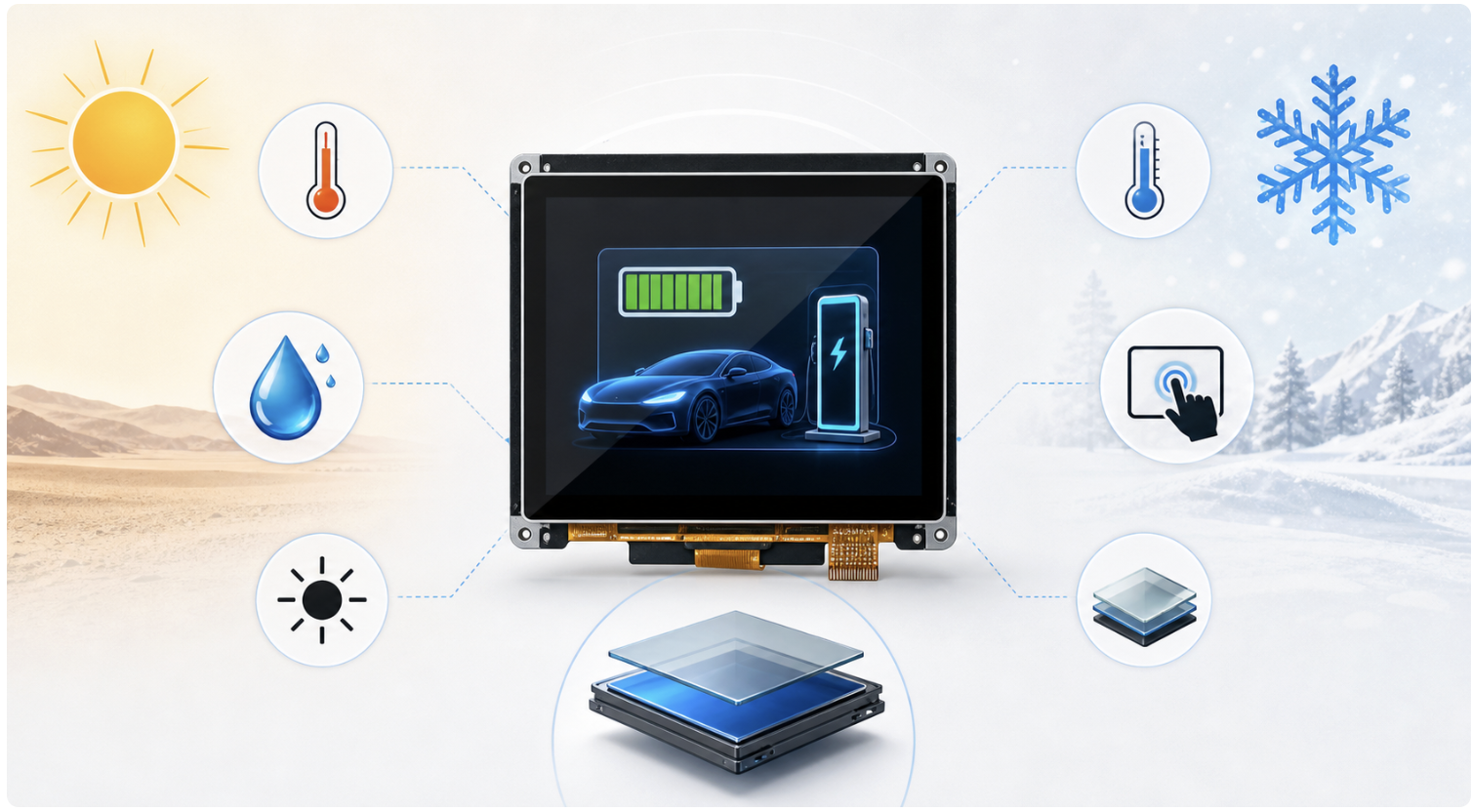
Recommended inline image: wide temperature TFT LCD solution with high brightness, touch panel, water resistance, and optical bonding.
3. Optical Bonding for Better Visibility and Durability
Optical bonding is widely used in outdoor display applications. It bonds the LCD panel and cover glass or touch panel together with optical adhesive.
This process can help:
- Reduce internal reflection
- Improve sunlight readability
- Increase contrast
- Enhance impact resistance
- Reduce moisture and dust intrusion
- Improve overall display durability
For EV charging stations, optical bonding is a valuable option because the display must remain clear and stable in outdoor conditions.
4. Touch Panel Reliability
Many EV charging stations use touch displays for operation. Users may need to select charging modes, confirm payment, scan codes, or follow on-screen instructions.
The touch panel must remain responsive in different environments. Depending on the design, EV charging station displays may use:
- Capacitive touch panel
- Customized cover glass
- Anti-glare surface treatment
- Anti-fingerprint coating
- Glove touch support
- Water-resistant touch optimization
For outdoor public use, the touch panel also needs to handle repeated operation, dust, moisture, and possible impact.
5. Anti-Glare and Anti-Reflective Surface Treatment
Sunlight reflection can make a display difficult to read even if the brightness is high.
Anti-glare and anti-reflective treatments can help reduce reflection and improve visibility. These treatments are especially useful for outdoor EV charging stations installed in open spaces.
A good display solution should balance brightness, contrast, viewing angle, and surface reflection control.
6. Mechanical Customization
EV charging station designs vary widely. Some chargers use small status displays, while others use larger touchscreens for full user interaction.
Display size, interface, cover glass shape, mounting structure, and cable design may all need customization.
Common customization items include:
- Display size
- Cover glass dimensions
- Touch panel structure
- Interface type
- FPC cable length and shape
- Backlight brightness
- Mechanical mounting design
- Logo or silk printing on cover glass
- Waterproof sealing design
A customized display solution can help the display fit smoothly into the charging station housing.
7. Long-Term Supply and Industrial Reliability
EV charging infrastructure projects often require long product life cycles. Manufacturers need stable supply, consistent quality, and reliable technical support.
For industrial display projects, long-term availability is very important. If a display becomes unavailable too quickly, it may create redesign costs, certification issues, and production delays.
Working with a display supplier experienced in industrial and outdoor applications can help reduce these risks.
Typical Display Sizes for EV Charging Stations
EV charging station displays can vary depending on the charger type and user interface design.
Common sizes may include:
- 4.3 inch TFT LCD
- 5 inch TFT LCD
- 7 inch TFT LCD
- 8 inch TFT LCD
- 10.1 inch TFT LCD
- 12.1 inch or larger display solutions
Small displays are often used for basic status and simple operation. Larger touch displays are used for advanced charging interfaces, advertising, payment systems, and interactive user guidance.
The best display size depends on the charger design, target market, user interface complexity, installation environment, and budget.
Recommended Display Features for EV Charging Applications
For EV charging station projects, a suitable display solution may include the following features:
- Wide temperature TFT LCD
- High brightness backlight
- Wide viewing angle
- Optical bonding
- Capacitive touch panel
- Anti-glare cover glass
- UV-resistant materials
- Industrial-grade components
- Customized interface
- Stable long-term supply
- Outdoor readability optimization
Why Display Quality Affects Brand Image
In the EV charging industry, reliability is not only about charging speed or power modules. The user interface also plays a major role in how customers judge the equipment.
A clear, stable, and responsive display makes the charger feel professional. A poor display can make even a technically strong charger appear unreliable.
For public charging operators, display quality can affect:
- User satisfaction
- Payment success rate
- Charging efficiency
- Maintenance cost
- Brand reputation
- Equipment uptime
For charging station manufacturers, choosing the right display solution can improve product competitiveness and reduce after-sales issues.
Sunshine Display Solutions for EV Charging Stations
Sunshine Display provides customized LCD, TFT display and touch screen solutions for industrial, smart, and outdoor equipment applications.
For EV charging station projects, Sunshine can support display customization based on the customer’s product structure and application requirements.
Possible solution options include:
- Wide temperature LCD modules
- High brightness TFT displays
- Capacitive touch displays
- Optical bonding service
- Customized cover glass
- Interface customization
- Backlight customization
- Industrial display module support
Whether the project requires a compact display for basic charging status or a larger touchscreen for full user interaction, the display should be selected according to the actual working environment.
Learn more about Sunshine LCD display solutions here:
Future Trends in EV Charging Station Displays
As EV charging infrastructure continues to expand, display requirements will become more advanced.
Future charging station displays may need to support:
- Smarter user interfaces
- Multi-language operation
- Digital payment systems
- Advertising content
- Remote monitoring
- Better sunlight readability
- Lower power consumption
- Higher durability
- More customized industrial designs
In addition, charging stations are becoming part of smart city infrastructure. This means the display may not only serve charging users, but also provide information, guidance, and commercial content.
A reliable display solution will become an important part of the overall smart charging experience.
Conclusion
EV charging stations must operate in challenging outdoor environments. From hot summers to cold winters, from direct sunlight to rain and dust, every component must be designed for reliability.
The display is one of the most visible and important parts of the charging station. It directly affects user experience, brand image, and daily operation efficiency.
A wide temperature display solution can help EV charging stations deliver stable performance, clear readability, responsive interaction, and long-term durability.
For manufacturers developing EV charging equipment, choosing the right display partner is a key step toward building reliable and competitive products.
At Sunshine LCD, we are committed to supporting customers with customized display solutions for industrial and outdoor applications.
Explore more display solutions at:
#EVCharging #EVChargingStation #LCDDisplay #TFTLCD #WideTemperatureDisplay #IndustrialDisplay #OutdoorDisplay #TouchPanel #OpticalBonding #EVInfrastructure #SmartCharging #SunshineLCD #DisplaySolution