1. Introduction: The Invisible Gap in Your Pocket
Have you ever wondered why your smartphone screen looks like the icons are painted directly onto the glass, while your old dashboard display feels recessed behind a thick plastic window? This striking visual difference isn't just luck; it’s the result of a sophisticated manufacturing shift that has redefined our premium tactile experience. The tech industry finally solved the age-old frustrations of sunlight glare and bulky frames with a process called Full Lamination. Once you experience this level of visual fidelity, it becomes nearly impossible to go back to a budget, non-bonded screen.
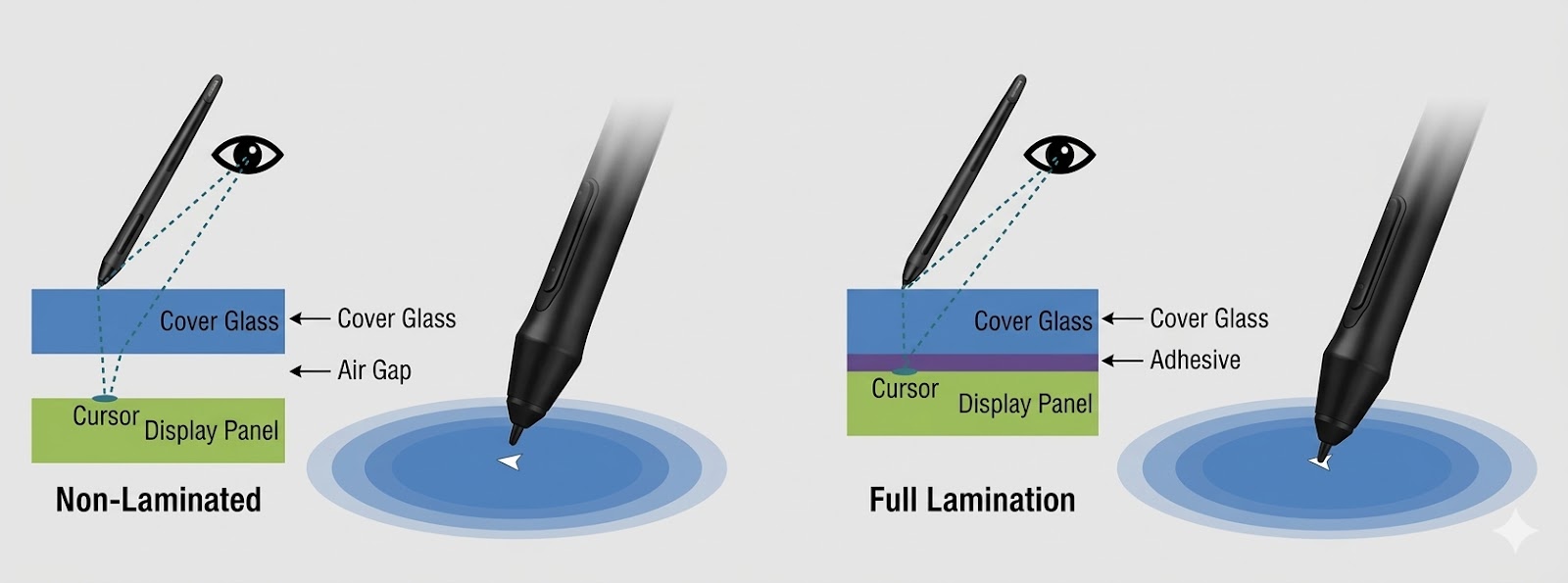
2. The End of the Air Gap: Why "Empty Space" Was Ruining Your View
The primary technical shift involves creating a seamless sandwich of the touch layers, display panels, polarizers, and cover glass. In traditional screens, a physical "air gap" exists between these components, causing light to bounce around and reflect internally. By bonding these layers together into a single, solid unit, manufacturers can drastically improve transparency and clarity. This is particularly noticeable with OLED displays, where the absence of air results in purer blacks and significantly more vivid color performance.
"There is an air gap between the layers of a traditional screen, which causes light to refract and reflect, affecting viewability. Optical bonding technology eliminates layers of air, making the display clearer, especially in bright light."
This lack of internal space is what creates that high-end "painted-on" look that defines modern luxury electronics. When the image appears to sit directly against the glass, the device feels like a precision tool rather than a hollow, layered assembly. It’s an invisible magic trick that makes every swipe and tap feel more intimate and immediate.
3. Touch Sensitivity: Closing the Distance for Speed
Beyond the obvious visual upgrades, full lamination significantly improves how a device responds to your physical input. Because the touch layer now fits snugly against the display panel, the physical distance a signal must travel is virtually eliminated. This reduction in touch latency creates a more effortless user experience where the interface feels like an extension of your own hand. As we move toward more gestural interfaces, these saved milliseconds are critical for the fluid "feel" of a modern operating system.
4. The "Weatherproofing" Side Effect: Dust and Moisture Protection
A structural benefit of this seamless bond is the creation of a permanent barrier against the elements. Because there are no internal gaps, dust and water vapor are physically unable to enter the display assembly to cause fogging or internal contamination. This rugged durability is why the technology is standard for automotive on-board monitors and demanding industrial equipment. In these high-stakes environments, maintaining a crystal-clear view despite humidity or debris is a matter of both safety and longevity.
5. The Maintenance Trap: The Hidden Cost of Better Visuals
There is a significant counter-intuitive downside to this visual perfection: it introduces what experts call the "repairability tax." In an older, non-bonded screen, a technician could often replace a cracked outer touch layer separately for a fraction of the cost. With full lamination, the entire module is a fused single piece, meaning even a minor crack usually necessitates an expensive, full-unit replacement. This trade-off is increasingly enforced by design, as manufacturers prioritize a thinner aesthetic over the consumer's ability to perform simple fixes.

6. The Chemistry of the Bond: OCA vs. OCR
Achieving this bond requires specialized materials, namely Optical Glue Lamination (OCA) or Liquid Optical Glue Lamination (OCR). OCA utilizes a solid optical glue and is the gold standard for mobile phones due to its incredible light transmittance. Meanwhile, OCR uses a fluid glue filling, which makes it the go-to choice for the complex surfaces of modern curved screens. The ultimate evolution of this process is "In-Cell" technology, which actually embeds the touch sensors directly into the LCD panel itself rather than just bonding a separate layer on top.
7. Conclusion: The Future is Seamless
Full lamination has successfully transitioned from an exclusive feature of high-end "Retina" displays to a baseline requirement for modern automotive and industrial tech. It has fundamentally altered our relationship with our screens, delivering the deep blacks and instant responsiveness we now take for granted. As our devices continue to trend toward thinner, more seamless designs, the visual payoff remains undeniable. However, it’s worth asking if the pursuit of the "perfect" visual experience is worth the loss of our ability to repair the tech we rely on every day.
Sunshine Display Technology Limited is a professional LCD manufacturer offering a wide range of LCD displays and solutions tailored to various applications.
View Our Product:
Click here to view standard TFT module products.
Click here to view IPS TFT module products.
Click here to view sunReadable TFT module products.
Click here to view TFT with Capactive Touch Screen products.